
AI's Dual Edge: Opportunity and Cultural Preservation in Guatemala's Indigenous Business Sector
Guatemala's indigenous entrepreneurs grapple with integrating AI, balancing modern business efficiency with the imperative of cultural preservation. Experts urge a 'cosmovisión' approach to digital transformation.
Click play to listen to this article read aloud using text-to-speech.
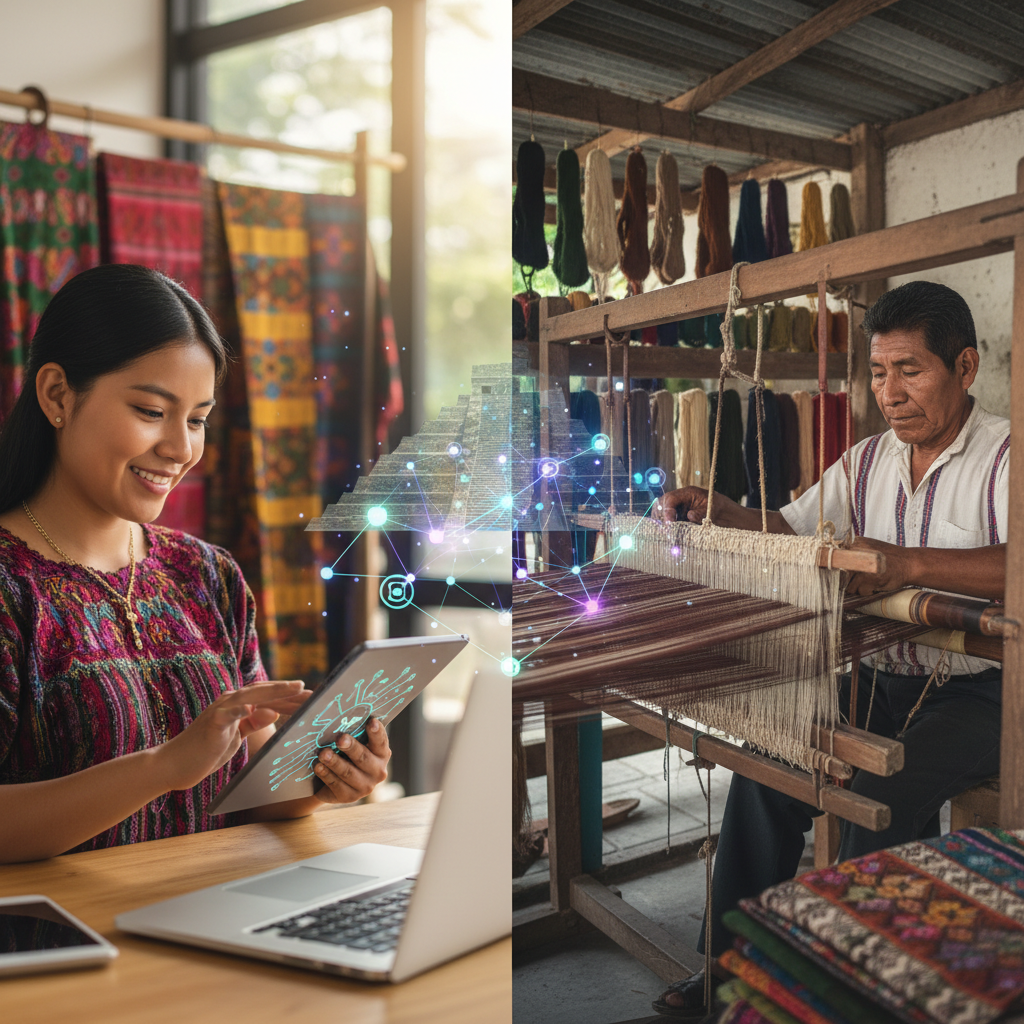

GUATEMALA CITY – The digital revolution, spearheaded by artificial intelligence, is reaching even the most remote corners of North America, and Guatemala is no exception. For the nation's vibrant indigenous business sector, particularly those led by Mayan women, AI presents a complex tapestry of opportunity and profound challenge.
While global corporations tout AI's potential for efficiency and market expansion, the conversation in Guatemala often pivots to its impact on ancestral knowledge, linguistic diversity, and community-centric economic models. "We cannot simply adopt technology without considering its spiritual and cultural footprint," states Dr. Ixchel Cúmez, Director of the Instituto de Estudios Mayas at the Universidad Rafael Landívar. "Our cosmovisión dictates that innovation must serve the collective good and respect the wisdom passed down through generations, not erode it."
In the highlands of Sololá, where women's weaving cooperatives thrive, the promise of AI-powered inventory management or e-commerce platforms is undeniable. Doña María Xicay, a leader of the Asociación de Tejedoras K'iche' in Chichicastenango, acknowledges the pressure. "Our younger members see how AI could help us reach international markets directly, bypassing intermediaries," she explains. "But we also worry: will algorithms understand the intricate patterns of our huipiles, the stories woven into each thread, or will it reduce our art to mere data points?"
This concern is echoed by policymakers and tech advocates. Ricardo Morales, head of the Cámara de Comercio de Pueblos Indígenas (CCPI), emphasizes the need for culturally sensitive AI development. "We are advocating for initiatives that prioritize data sovereignty for indigenous communities," Morales states. "This means ensuring that the vast amounts of cultural data, from traditional medicine to agricultural practices, are not exploited but rather used to empower our communities through AI tools developed with and by us."
One promising avenue is the development of AI models trained on indigenous languages. The Academia de Lenguas Mayas de Guatemala (ALMG) is collaborating with local tech startups to create natural language processing tools for K'iche', Kaqchikel, and Q'eqchi'. "Imagine AI assistants that can help translate ancient texts, preserve oral histories, or even facilitate business negotiations in our own tongues," says Dr. Cúmez. "This is AI as an ally, not an intruder."
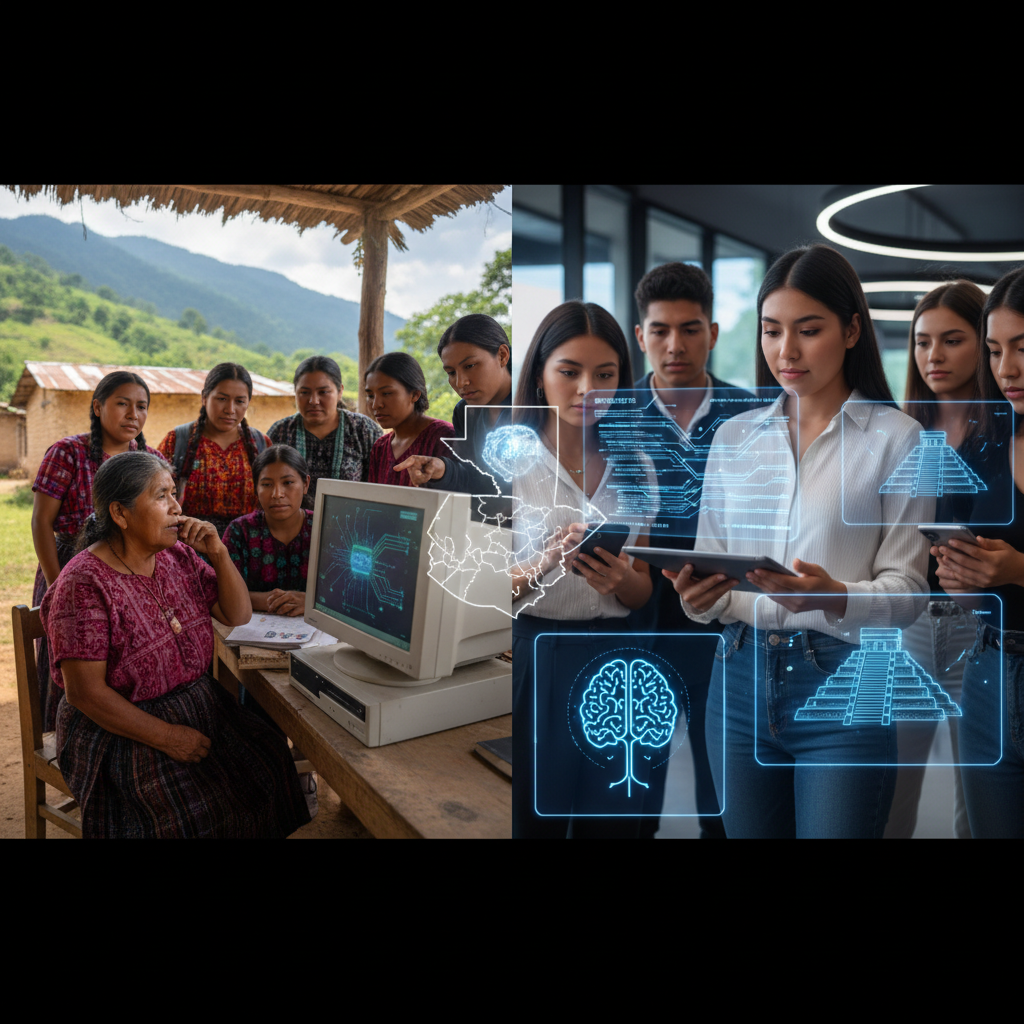
However, the digital divide remains a significant hurdle. Access to reliable internet, affordable devices, and digital literacy training are foundational requirements that many indigenous communities still lack. The Ministerio de Economía has announced a new 'Digital Inclusion for Indigenous Businesses' program, aiming to provide subsidized internet access and training workshops. Yet, the pace of implementation is critical.
As Guatemala navigates this new technological frontier, the challenge for its indigenous business sector is to harness AI's power while safeguarding the rich cultural heritage that defines it. It's a delicate balance, requiring thoughtful policy, community engagement, and a deep respect for the raíces that nourish the nation.
Related Articles
Guatemala's Digital Divide: AI's Promise and Peril for Indigenous Communities
Xiomàra Hernándèz
AI in the 'Pura Vida' Republic: Legislative Debate on Digital Ethics Heats Up
 Carlòs Ramirèz
AI's 'Glass Ceiling' for Women: New Study Reveals Persistent Bias in STEM
 Amèlia Whitè
AI na Favela: Nova Iniciativa Transforma Oportunidades para o Homem Brasileiro
 Luciànò Ferreiràs