AI's Dual Edge: Digital Divide Threatens Tamil Communities in Sri Lanka
As Sri Lanka embraces AI for governance, concerns mount over its equitable distribution, particularly for war-affected Tamil regions. Experts warn of deepening digital divides and the potential for exclusion if infrastructure disparities are not addressed.
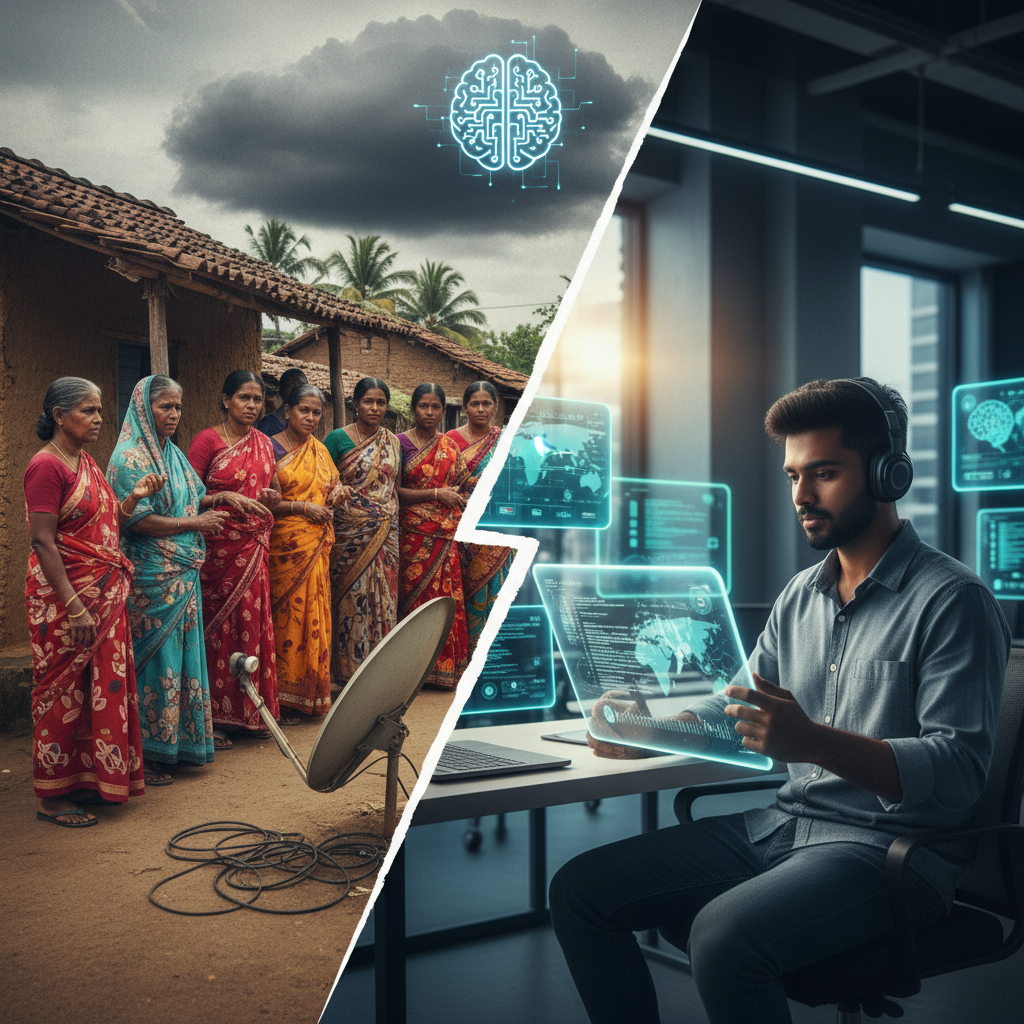

COLOMBO – Sri Lanka's ambitious push towards AI-driven governance, championed by the Ministry of Technology, is raising critical questions about equitable access and its impact on marginalized communities, especially in the Northern and Eastern Provinces. While the government touts AI as a panacea for efficiency and development, a growing chorus of voices, particularly from the Tamil-speaking regions, warns of a potential exacerbation of existing digital divides.
“The enthusiasm for AI is palpable in Colombo, but for many in Kilinochchi or Mullaitivu, the foundational infrastructure for such advancements remains a distant dream,” states Dr. S. Balakrishnan, a Senior Lecturer in Computer Science at the University of Jaffna, speaking to this correspondent. “Without reliable internet access, consistent electricity, and digital literacy programs tailored to our communities, AI risks becoming another tool that widens disparities rather than bridging them.”
President Ranil Wickremesinghe’s administration has outlined plans to integrate AI into public services, from healthcare diagnostics to agricultural yield prediction. However, the legacy of conflict and underinvestment in the North and East means these regions often lag significantly in digital infrastructure. Fiber optic penetration, for instance, remains noticeably lower in districts like Mannar and Vavuniya compared to the Western Province.
“We welcome innovation, but it must be inclusive,” asserts Mr. K. Tharmalingam, a former Divisional Secretary from Batticaloa, now an advocate for digital rights. “When AI-powered services are rolled out, will they be available in Tamil? Will the data used to train these algorithms reflect the realities and nuances of our unique cultural and socio-economic context? Or will they perpetuate biases inherent in predominantly Sinhala-centric datasets?”
These concerns are not merely theoretical. The implementation of AI in areas like land registry or social welfare distribution, without adequate local consultation and infrastructure, could inadvertently disenfranchise vulnerable populations. The fear is that a 'smart' government might overlook those who cannot access its 'smart' services.
Sources within the Ministry of Technology, who requested anonymity, acknowledged the challenges. “We are aware of the need for equitable distribution and language localization. Partnerships with local universities and NGOs are being explored to address the digital literacy gap,” one official stated, emphasizing the government’s commitment to a 'whole-of-nation' approach.
However, critics argue that exploration is not enough. “Concrete action is needed now,” Dr. Balakrishnan insists. “Investment in resilient infrastructure, culturally sensitive AI development, and robust data governance frameworks that protect minority rights are paramount. Otherwise, AI, instead of being a tool for progress, could become another barrier for the Tamil people in Sri Lanka.” The political implications of a digitally bifurcated nation, where access to essential services is dictated by geography and historical disadvantage, are profound and could further complicate efforts towards national reconciliation.
Related Articles

Vietnam's AI Strategy: Empowering Women in Tech, Shaping National Digital Future
 Ngo Thi Huừngé
UAE's AI Strategy: Empowering Emirati Women in the Digital Economy
 Layla Al-Mansourì
AI-Powered Early Breast Cancer Detection: A Game Changer for Korean Women's Health
 Soo-Yéon Kimm
AI's Cultural Crossroads: Preserving Tamil Heritage in the Digital Age
Ravi Chandrasekharàn