
AI-Powered Early Breast Cancer Detection: A Game Changer for Korean Women's Health
South Korea is pioneering AI diagnostics for breast cancer, offering earlier detection and personalized treatment. This innovation promises to significantly improve health outcomes for Korean women, addressing critical disparities in rural areas.
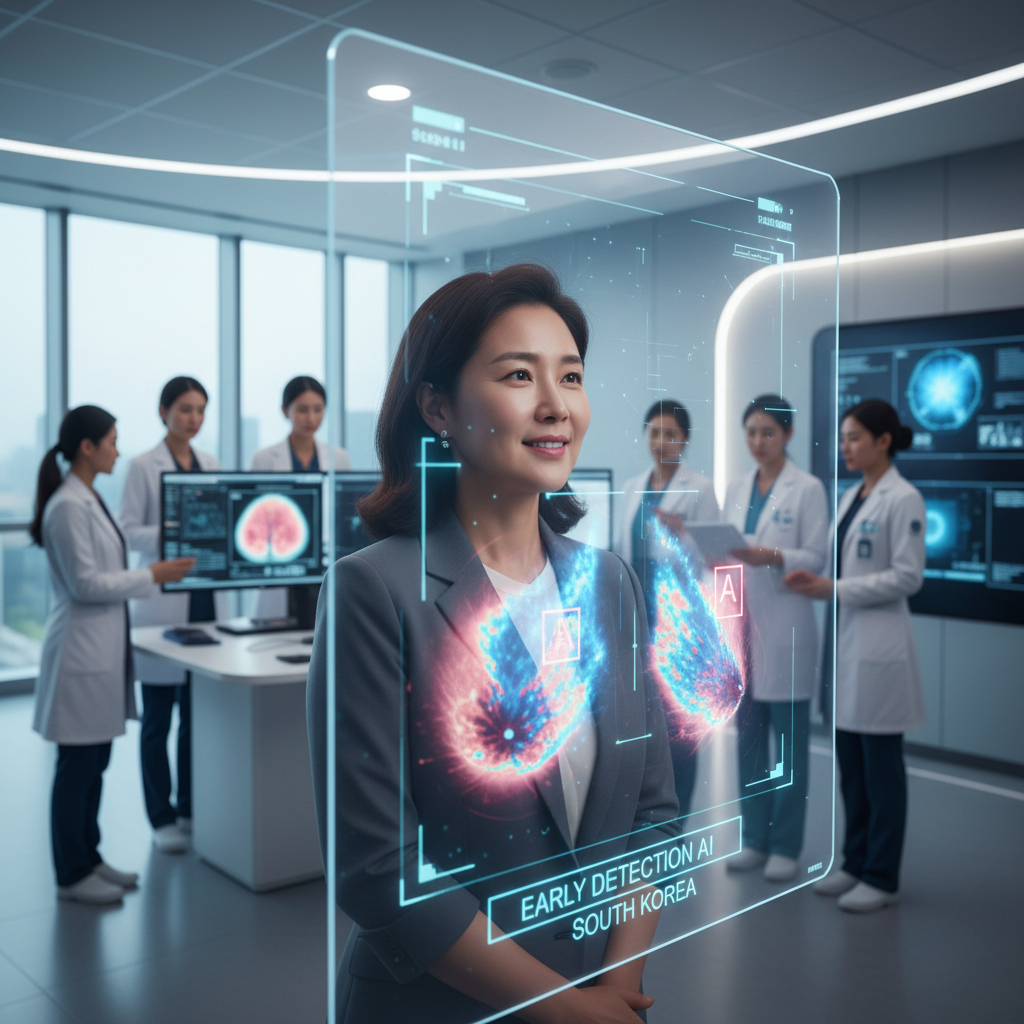

SEOUL, South Korea – In a significant leap forward for women's health in Asia, South Korea is rapidly deploying advanced Artificial Intelligence (AI) systems designed for the early detection of breast cancer. This initiative, spearheaded by institutions like the Asan Medical Center and supported by the Ministry of Health and Welfare (MOHW), aims to revolutionize diagnostic accuracy and accessibility, particularly benefiting Korean women who face unique challenges in healthcare.
Breast cancer remains a leading cause of mortality among women globally, and in South Korea, its incidence has been steadily rising. Traditional mammography, while effective, can sometimes miss subtle indicators, especially in dense breast tissue, which is more common in younger Asian women. AI algorithms, trained on vast datasets of medical images, are proving to be remarkably adept at identifying these minute anomalies.
“Our AI models, developed in collaboration with KAIST and local medical imaging companies like Lunit, are achieving diagnostic accuracies exceeding 95%, often outperforming human radiologists in initial screenings,” stated Dr. Lee Ji-Hye, head of Women's Health Innovation at Asan Medical Center. “This isn't about replacing our skilled medical professionals, but empowering them with an invaluable tool that enhances precision and reduces diagnostic fatigue. For a busy radiologist reviewing hundreds of scans daily, an AI 'second opinion' is a godsend.”
The implications for Korean women are profound. Early detection is paramount for successful treatment, and this technology promises to catch cancers at their most treatable stages. Furthermore, the initiative addresses a critical issue of healthcare disparity. In many rural areas, access to specialized radiologists is limited. AI-powered diagnostic platforms can bridge this gap, allowing local clinics to send scans for AI analysis, ensuring that women across the nation receive high-quality screening regardless of their geographic location.
Ms. Kim Min-Jung, a 48-year-old Seoul resident who recently underwent an AI-assisted mammogram, shared her experience. “The process was seamless. Knowing that an AI was also reviewing my images gave me an extra layer of reassurance. As a working mother, early detection means everything; it's about my family's future.”
The MOHW has earmarked substantial funding for the nationwide rollout of these AI diagnostic solutions, with a particular focus on integrating them into the national health screening program. “Our goal is to ensure that every Korean woman has access to the most advanced diagnostic tools available,” commented Director Park Eun-Kyung from the MOHW’s Public Health Bureau. “This is not just a technological advancement; it's a commitment to improving the quality of life and health equity for all our citizens, reflecting our national dedication to 'K-Healthcare' innovation.”
While the ethical considerations surrounding AI in healthcare, such as data privacy and algorithmic bias, are being carefully addressed through stringent regulatory frameworks, the overwhelming consensus among experts is that this technology represents a transformative moment for public health. As South Korea continues to lead in AI integration, the world watches as the nation sets a new standard for proactive, personalized women's healthcare.
Related Articles

Tajikistan Explores AI for Economic Diversification, Balancing Progress with Tradition
 Ismaìlè Rahimovì
AI Promises Revolution in Argentine Women's Health, But Equity Concerns Linger
 Isabelà Martinèz
Kerala's Digital Public Infrastructure: A Blueprint for AI Governance in Asia?
 Priyà Nairé
AI's Silk Road: Preserving Uzbek Cultural Heritage Through Digital Innovation
 Bintà Yusupovà