
AI's Silk Road: Preserving Uzbek Cultural Heritage Through Digital Innovation
Uzbekistan embraces AI to safeguard its rich cultural tapestry, from ancient manuscripts to traditional crafts, ensuring future generations connect with their heritage in the digital age. This initiative highlights the crucial role of technology in cultural preservation.
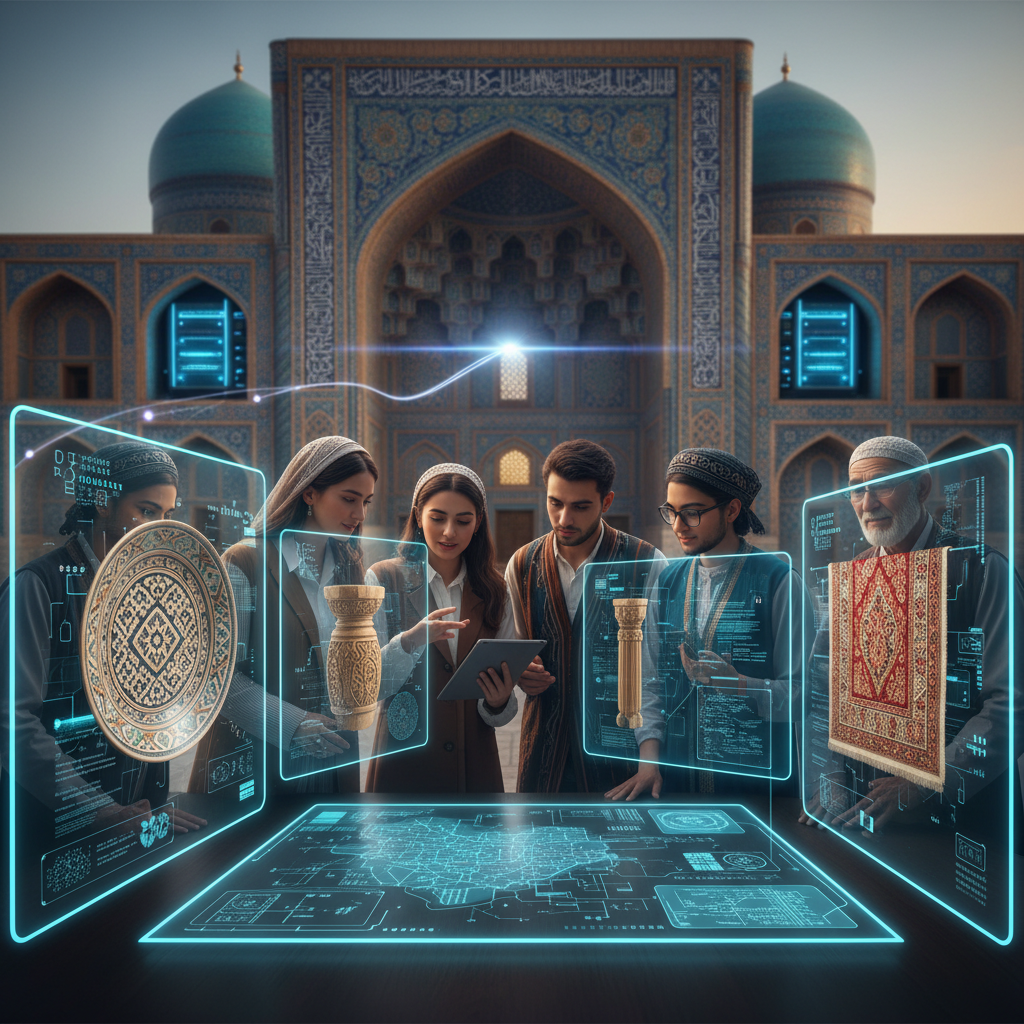

TASHKENT, Uzbekistan – In a nation where the threads of history are woven into every carpet, every architectural marvel, and every melody, the embrace of artificial intelligence might seem a futuristic leap. Yet, for Uzbekistan, AI is becoming an indispensable tool in safeguarding its millennia-old cultural heritage, ensuring that the legacy of our ancestors thrives in the digital era.
As a reporter deeply rooted in the experiences of Uzbek women, I've observed firsthand how traditions are passed down, often from mother to daughter, grandmother to granddaughter. This intergenerational transfer of knowledge, from intricate suzani embroidery patterns to the nuances of maqom music, is the very essence of our cultural continuity. Now, AI is poised to amplify these efforts on an unprecedented scale.
One of the most significant initiatives is the 'Digital Silk Road Heritage Project,' spearheaded by the Ministry of Culture and Tourism in collaboration with the Tashkent University of Information Technologies (TUIT). Dr. Gulnora Karimova, a leading expert in digital humanities at TUIT and a staunch advocate for women in STEM, explains the vision: "We are employing AI-powered image recognition and natural language processing to digitize and catalog millions of historical artifacts, ancient manuscripts, and oral histories. Imagine an AI that can identify the specific regional style of a chapan or translate a 15th-century Chagatai text, making it accessible to a global audience, and crucially, to our own youth."
This project isn't just about archiving; it's about active preservation and engagement. AI algorithms are being developed to analyze the structural integrity of historical sites like the Registan in Samarkand, predicting potential degradation and informing conservation efforts. Furthermore, virtual reality experiences, powered by AI, are being created to allow visitors, both local and international, to 'walk through' ancient Bukhara or experience a navruz celebration from centuries past.
For Uzbek women, who have historically been the custodians of many cultural practices, AI offers new avenues for empowerment. "Consider the art of atlas and adras weaving," says Madina Rustamova, a master weaver from Margilan. "Our patterns are complex, often carrying symbolic meanings passed down orally. AI tools can help document these patterns, create digital archives, and even assist in teaching new generations, ensuring that these intricate skills don't fade away. It's not replacing human artistry; it's augmenting it, preserving the knowledge for our daughters and granddaughters."
The 'Digital Silk Road Heritage Project' also includes a component focused on intangible cultural heritage, such as traditional storytelling (doston), folk dances, and culinary traditions. AI-driven platforms are being designed to record, transcribe, and analyze these practices, identifying common themes and regional variations. This allows for a deeper academic understanding and provides rich content for educational programs.
While the technological advancements are impressive, Dr. Karimova emphasizes the human element. "The success of these projects hinges on the collaboration between technologists and cultural experts, many of whom are women. Their intimate knowledge of our heritage is irreplaceable. AI is a powerful tool, but it's the wisdom and dedication of our people that truly breathe life into these digital archives."
As Uzbekistan continues its journey into the digital future, it does so with a profound respect for its past. AI is not just a technological marvel; it is a bridge connecting the ancient heart of Central Asia with the boundless possibilities of tomorrow, ensuring that the vibrant spirit of Uzbek culture continues to inspire generations to come.
Related Articles

UAE Pioneers AI-Powered Green Hydrogen for a Sustainable Future, Empowering Women in STEM
 Layla Al-Mansourì
AI Coaches Revolutionize Muay Thai Training Across Thailand
 Chaiyapòn Srisomboòn
Kerala's AI Policy: A Blueprint for Inclusive Digital Governance, Says Minister
 Priyà Nairé
AI's 'She-Power' in China's Rural Health: Bridging Gaps for Women
 Mei-Líng Zhāng