
AI Revolutionizes Women's Health Screenings in Japan, Addressing 'Silent Suffering'
Japan is leveraging AI to transform women's health screenings, particularly for gynecological cancers and endometriosis, aiming to reduce diagnostic delays and improve outcomes. This initiative seeks to empower women through earlier detection and personalized care.
Click play to listen to this article read aloud using text-to-speech.
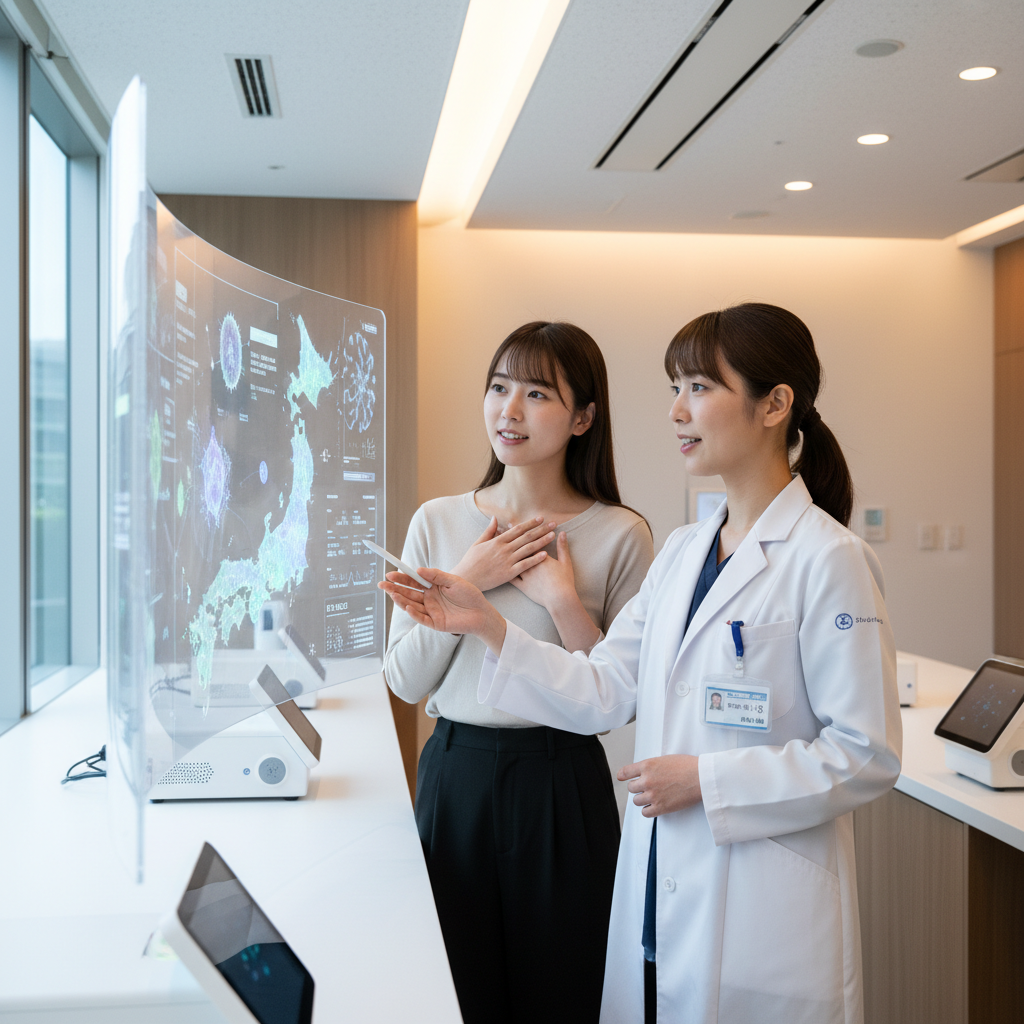
Tokyo, Japan – April 22, 2026 – Japan is at the forefront of integrating Artificial Intelligence into women's healthcare, a move celebrated by medical professionals and patient advocates alike. This digital transformation is particularly focused on early detection of conditions that disproportionately affect women, such as cervical cancer, ovarian cancer, and endometriosis, often dubbed the 'silent suffering' due to late diagnoses and chronic pain.
At the recent 'Women's Health Tech Forum' held in Shibuya, Dr. Akari Sato, a leading gynecologist and researcher at the National Center for Global Health and Medicine (NCGM), highlighted the potential of AI. "For too long, women's health issues have faced diagnostic delays, partly due to the nuanced nature of symptoms and, frankly, a historical under-prioritization," Dr. Sato stated, her voice resonating with conviction. "AI-powered diagnostic tools, utilizing deep learning algorithms trained on vast datasets of medical images and patient histories, are now achieving accuracy rates that often surpass traditional methods, especially in early-stage detection."
One significant development is the deployment of AI-assisted Pap smear analysis systems, such as the 'Sakura Scan' developed by Tokyo-based start-up Mirai MedTech. This system, currently undergoing trials at several university hospitals including Keio University Hospital, promises to reduce false negatives and ease the burden on cytotechnologists. "The Sakura Scan can identify precancerous cells with remarkable precision, flagging suspicious cases for immediate human review," explained Ms. Emi Tanaka, CEO of Mirai MedTech. "This not only speeds up the diagnostic process but also allows our skilled medical professionals to focus on the most complex cases, ensuring no woman's health concern is overlooked."
The initiative also extends to conditions like endometriosis, which affects millions of Japanese women, often leading to years of debilitating pain and fertility issues before diagnosis. Researchers at Tohoku University are piloting an AI model that analyzes patient symptoms, medical history, and even genetic markers to predict the likelihood of endometriosis, potentially reducing the average diagnostic delay from 7-10 years to just a few months. "Early diagnosis of endometriosis is critical for managing symptoms and preserving fertility," commented Dr. Kenji Yoshida, head of the AI in Medicine department at Tohoku University. "Our AI system acts as an intelligent assistant, guiding clinicians towards earlier intervention."
However, the rollout isn't without its considerations. Data privacy and algorithmic bias are paramount concerns. The Ministry of Health, Labour and Welfare (MHLW) has established strict guidelines for AI deployment in healthcare, emphasizing the need for diverse, representative datasets to prevent biases that could disadvantage certain patient groups. "Ensuring equitable access and unbiased outcomes is non-negotiable," affirmed Ms. Hiroko Nakamura, a policy advisor at MHLW. "We are collaborating with medical institutions and tech companies to establish robust ethical frameworks and continuous monitoring protocols."
For many Japanese women, this AI-driven revolution represents a beacon of hope. "Knowing that technology is being developed specifically to understand and address our unique health challenges is incredibly empowering," shared Ms. Ayumi Tanaka, a 34-year-old office worker who has experienced diagnostic delays for a benign gynecological condition. "It feels like our voices are finally being heard, and our health is being prioritized with the best tools available."
As Japan continues to navigate its aging society and evolving healthcare needs, the strategic integration of AI into women's health is poised to not only improve individual patient outcomes but also foster a more proactive and equitable healthcare system for all women across the nation.
Related Articles

AI in the Diwan: Bridging Generations and Preserving Heritage in Jordan
 Hamzà Al-Khalìl
AI's Gentle Touch: Revolutionizing Maternal Healthcare in Vietnam
 Ngo Thi Huừngé
Algeria's AI Health Revolution: A New Dawn for Public Well-being, Says Experts
 Abderrahmàn Bensoussàn
AI's Cultural Canvas: Kerala's Kalamkari Artisans Embrace Digital Weave
 Priyà Nairé