
AI Guardians of the Ixil Biosphere: Indigenous Knowledge Meets Digital Innovation
In Guatemala's Ixil region, a groundbreaking AI initiative is merging ancestral Mayan wisdom with cutting-edge technology to protect the biodiverse cloud forests from illegal logging and climate change.
Click play to listen to this article read aloud using text-to-speech.

AI Guardians of the Ixil Biosphere: Indigenous Knowledge Meets Digital Innovation
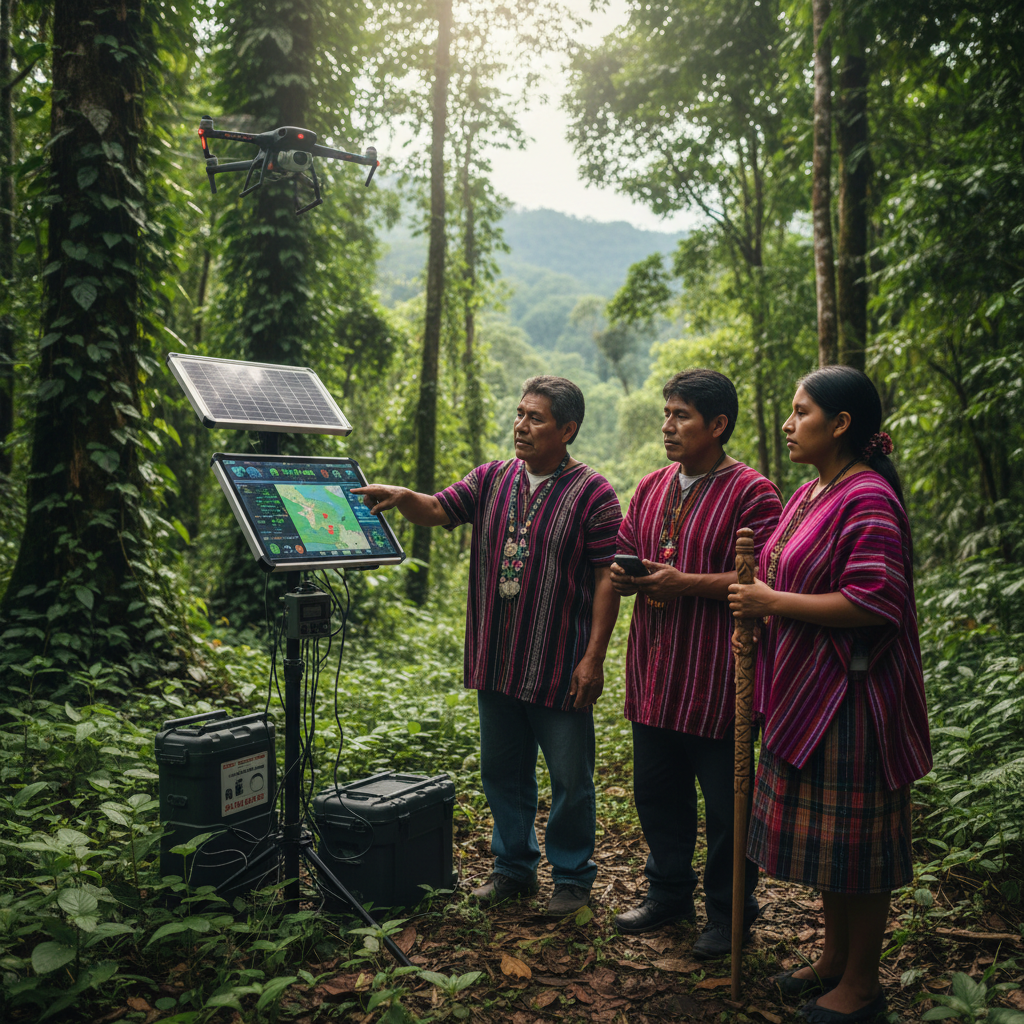
CHAJUL, EL QUICHÉ, GUATEMALA – April 22, 2026 – Deep within the mist-shrouded mountains of Guatemala's Ixil Triangle, where the spirit of our ancestors, the Ajaw, still resonates, a silent revolution is underway. It’s a revolution powered by artificial intelligence, but guided by the profound ecological understanding of the Maya Ixil people. This innovative project, dubbed 'Ixil AI Guardians,' is deploying AI-driven acoustic monitoring systems to safeguard one of Mesoamerica's most vital, yet threatened, cloud forest ecosystems.
For generations, the Q’anjob’al and Ixil communities have been the primary custodians of these forests, understanding the intricate web of life, the k'aslemalil, that sustains them. However, escalating pressures from illegal logging, agricultural expansion, and the undeniable impacts of cambio climático (climate change) have pushed these forests to their brink. Traditional patrols, while vital, often struggle to cover vast, rugged terrain effectively.
“Our grandmothers and grandfathers taught us to listen to the forest, to understand its rhythms. Now, technology is helping us amplify that listening,” explains Comadre Rosalinda B'alam, a respected ajq’ij (spiritual guide and community leader) from Chajul. “The forest speaks, and these machines are learning its language.”
The 'Ixil AI Guardians' project, a collaboration between the local Consejo de Pueblos Indígenas del Ixil (CPII), the Universidad del Valle de Guatemala (UVG), and a Canadian tech firm specializing in environmental AI, has installed a network of solar-powered acoustic sensors across critical sections of the Ixil Biosphere Reserve. These devices continuously record ambient sounds, from the calls of endangered quetzals to the tell-tale hum of chainsaws or the rumble of illegal logging trucks.
Dr. Mateo Xol, an expert in geospatial analysis and indigenous territorial rights at UVG, highlights the project's dual benefit. “The AI algorithms are trained to identify specific sound patterns associated with deforestation activities. When a threat is detected, real-time alerts are sent to community rangers and local authorities. But equally important, the data collected provides invaluable insights into biodiversity, helping us track wildlife populations and forest health through the sounds of the selva itself.”
The project’s success hinges on its community-led approach. Local guardabosques (forest rangers), many of whom are young Ixil men and women, are trained to deploy and maintain the sensors, interpret the data, and respond to alerts. This empowers them with modern tools while reinforcing their ancestral role as protectors of Iximulew, our homeland.
However, challenges remain. Internet connectivity in remote areas is often sporadic, and ensuring the long-term sustainability and funding for such initiatives requires continuous effort. “This technology is a powerful ch’ab’äl (tool), but it’s only as effective as the community behind it,” notes Doña Elena Chay, a CPII representative. “It complements our nawal (spirit/essence) and our traditional knowledge, it does not replace it. It helps us protect our q’anil (sacred maize) and the future of our children.”
The 'Ixil AI Guardians' project serves as a compelling model for how artificial intelligence, when developed and implemented with respect for indigenous sovereignty and traditional ecological knowledge, can become a formidable ally in the global fight against environmental degradation, offering a beacon of hope for other threatened biospheres across North America and beyond. It reminds us that true innovation often lies at the intersection of ancient wisdom and future technology. It is a testament to the enduring resilience of the Mayan people and their unwavering commitment to utz k'aslemalil, the good life, for all beings.```
Related Articles
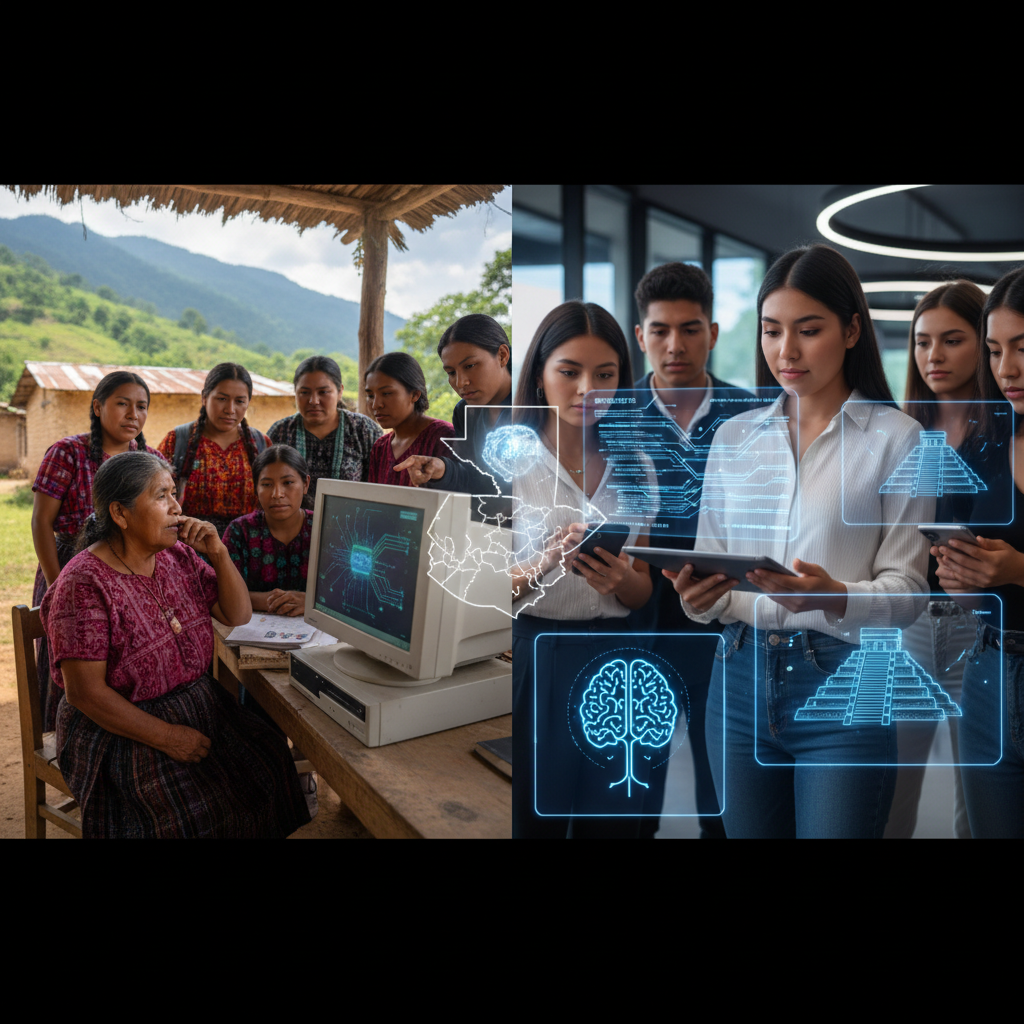
Guatemala's Digital Divide: AI's Promise and Peril for Indigenous Communities
Xiomàra Hernándèz
AI-Powered "Green Silk Road" Initiative Empowers Women in Sustainable Agriculture
 Mei-Líng Zhāng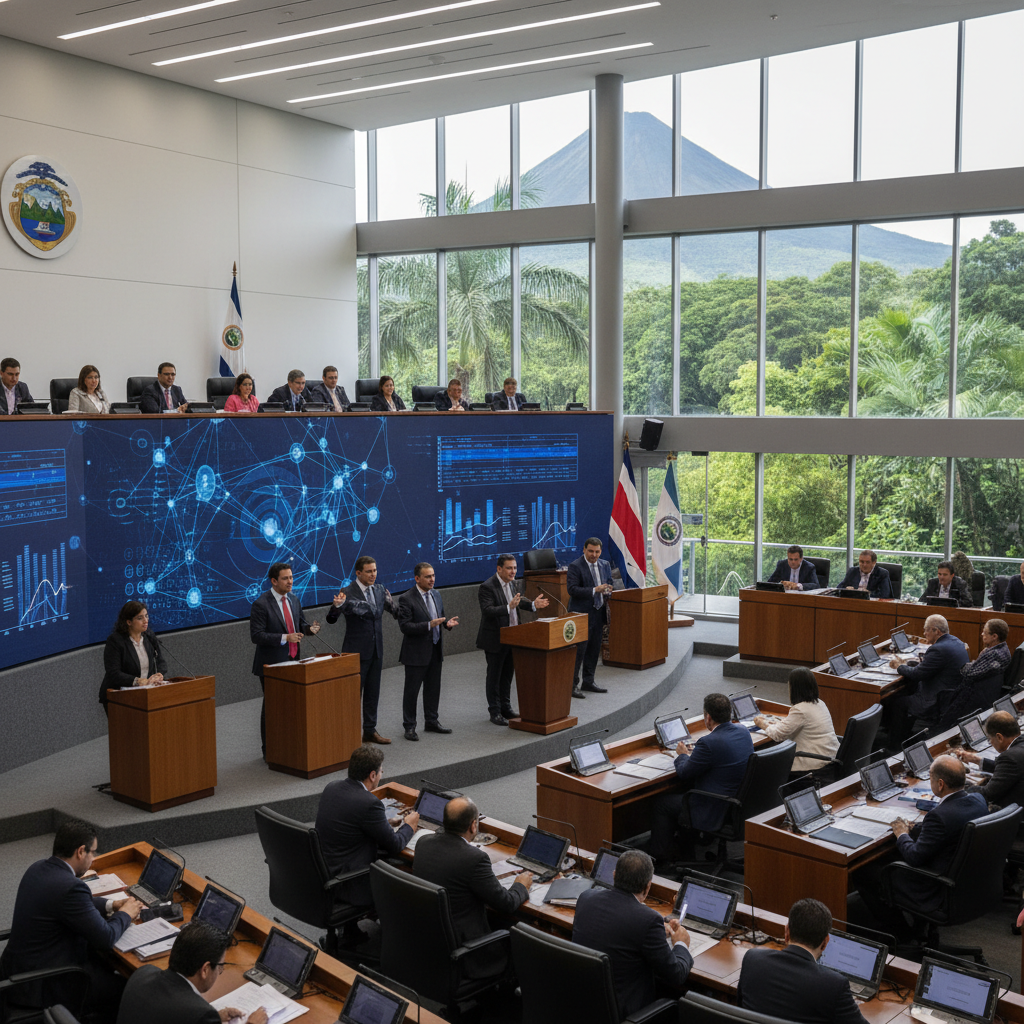
AI in the 'Pura Vida' Republic: Legislative Debate on Digital Ethics Heats Up
 Carlòs Ramirèz
AI's 'Glass Ceiling' for Women: New Study Reveals Persistent Bias in STEM
 Amèlia Whitè