
The sun was just beginning to paint the sky in hues of orange and purple over the Ebrié Lagoon, a typical Abidjan morning, when I first heard the buzz about Koko AI. Not from a press release, mind you, but from a young entrepreneur, Adama, who runs a small artisanal chocolate business in Koumassi. He was beaming, showing me how this new local AI platform was helping him manage his supply chain, from the cocoa farms in Divo to the bustling markets of Treichville.
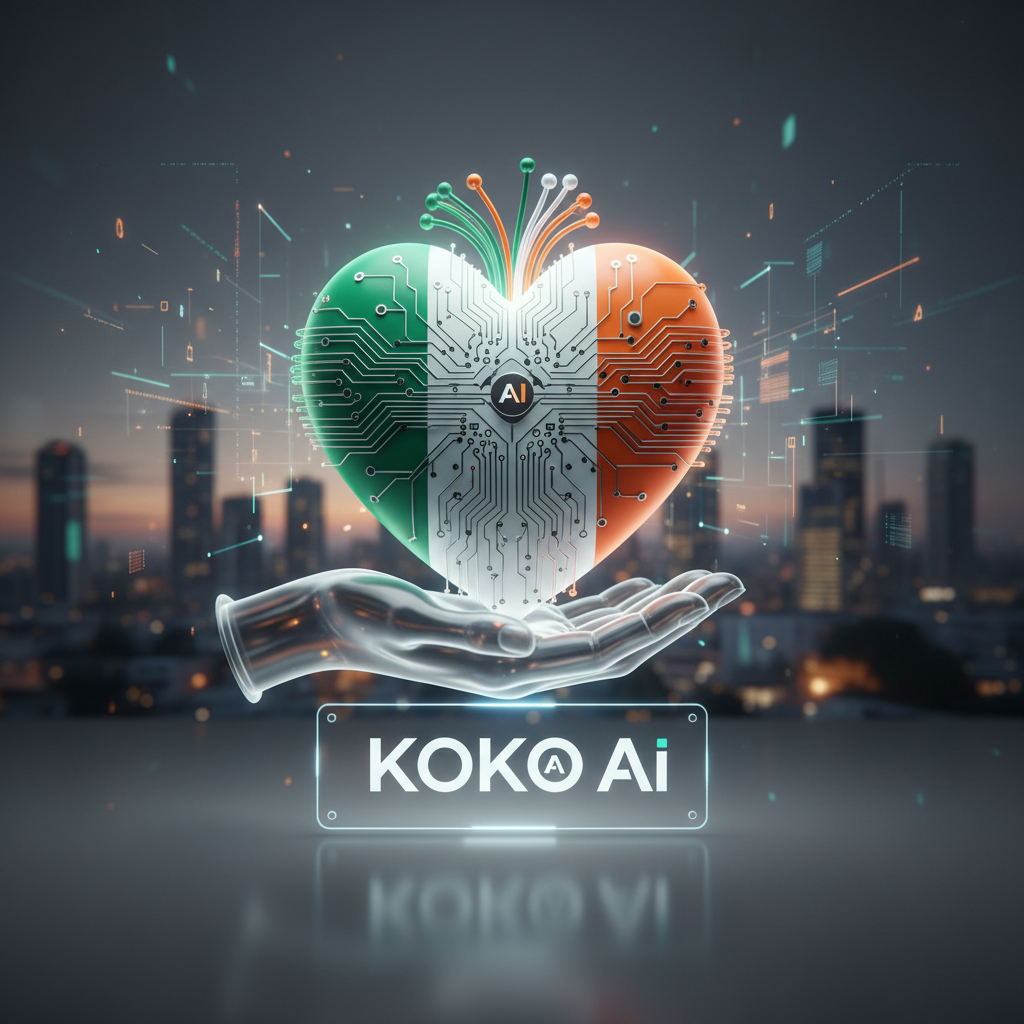
Picture this: a nation, Côte d'Ivoire, known for its vibrant culture, its rich cocoa, and its incredible resilience, now stepping onto the global stage with its own artificial intelligence initiative. This isn't just about technology; it's about identity, about protecting our narratives, and about ensuring that the digital future we build is truly ours. Koko AI, named after the Akan word for 'knowledge' or 'wisdom,' is Côte d'Ivoire's answer to the growing call for sovereign AI. It's a platform developed by a consortium of local tech firms and government agencies, aiming to provide secure, localized AI models and infrastructure for public services and private enterprises.
My journey into Koko AI began with a healthy dose of skepticism, as it often does when grand pronouncements are made about technological breakthroughs. I've seen too many digital dreams wither under the harsh realities of implementation. But Adama's enthusiasm was infectious, and I knew I had to dig deeper. This is the story they don't want you to hear, the quiet revolution happening far from Silicon Valley, in the heart of West Africa.
First Impressions: A Familiar Face in a New Digital Landscape
Accessing Koko AI felt surprisingly intuitive. The user interface, designed with a clean aesthetic that subtly incorporates Ivorian patterns and colors, immediately put me at ease. It wasn't the stark, intimidating black and white of some global platforms; it felt like home. The onboarding process was straightforward, guiding me through setting up a secure profile and explaining the data residency policies, which emphasize that all data processed by Koko AI remains within Côte d'Ivoire's borders. This focus on local data storage and processing is a cornerstone of the sovereign AI movement, aiming to mitigate concerns about foreign surveillance and data exploitation.
I started with its natural language processing module, designed to understand and generate text in local languages like Dioula, Baoulé, and Bété, alongside French. My first test was simple: ask it to summarize a news article from Fraternité Matin about local agricultural policies. The results were remarkably accurate and nuanced, capturing the essence of the policy discussions without losing cultural context. It felt less like a machine regurgitating facts and more like a well-informed local analyst.
Key Features Deep Dive: Beyond the Buzzwords
Koko AI isn't just a single tool; it's an ecosystem. Its core offerings include:
- Localized Large Language Models (LLMs): These models are trained extensively on Ivorian and West African datasets, including local dialects, historical texts, and cultural nuances. This is a significant departure from global models, which often struggle with regional specificities.
- Secure Cloud Infrastructure: The platform runs on data centers located within Côte d'Ivoire, ensuring data sovereignty and reducing latency for local users. This infrastructure is designed to meet stringent national security and privacy standards.
- Sector-Specific AI Solutions: Koko AI offers pre-trained models and APIs tailored for key Ivorian sectors, such as agriculture (crop yield prediction, pest detection), healthcare (diagnostic support, patient record management), and education (personalized learning, language translation for diverse student populations).
- Developer Sandbox and API Access: For local innovators, Koko AI provides a sandbox environment and robust APIs, encouraging the development of bespoke AI applications that leverage its foundational models.
I spent considerable time exploring the agricultural module. I uploaded satellite imagery of a small cocoa farm near Yamoussoukro and asked Koko AI to identify potential disease outbreaks and estimate yield. The platform, leveraging local climate data and historical patterns, provided actionable insights that could genuinely help farmers. It even offered suggestions for sustainable farming practices, drawing from traditional Ivorian agricultural wisdom.
What Works Brilliantly: A Voice of Our Own
The most compelling aspect of Koko AI is its cultural relevance and linguistic accuracy. For too long, our digital tools have been shaped by distant realities, often struggling to grasp the subtleties of our languages, our proverbs, and our social structures. Koko AI changes that. When I asked it to generate a story based on an Akan folktale, it didn't just translate; it understood the narrative arc, the moral lessons, and the stylistic elements unique to our oral traditions. This level of contextual understanding is something I've rarely seen from global AI models, which often produce generic or even culturally inappropriate outputs when faced with non-Western contexts.
Another triumph is the data sovereignty guarantee. In an age where data is the new gold, and concerns about privacy and national security are paramount, Koko AI's commitment to keeping Ivorian data within Ivorian borders is a powerful reassurance. This is particularly vital for sensitive government data and personal information. As Dr. Mariam Kone, Director of Digital Economy at the Ministry of Digital Transition and Digitalization, told me, "Our data is our heritage, and Koko AI ensures it is protected and serves our national interest first. It's about building trust in the digital realm." Her words resonated deeply.
Furthermore, the ease of integration for local businesses is a significant plus. Adama, the chocolate entrepreneur, mentioned that he didn't need a team of AI experts to get started. The platform's user-friendly nature and readily available local support made adoption feasible for small and medium-sized enterprises (SMEs), which are the backbone of our economy.
What Falls Short: The Road Ahead is Long
While Koko AI shines in many areas, it's not without its limitations. The primary challenge, as with any nascent technology, is scale and computational power. While the local data centers are a commendable start, they cannot yet rival the sheer processing might of global tech giants like Google or Microsoft. This means that for extremely complex, large-scale AI tasks, Koko AI might be slower or less efficient than its international counterparts. For instance, running highly intensive simulations or processing petabytes of unstructured data could push its current infrastructure to its limits.
Another area for improvement is model diversity and specialization. While the sector-specific models are good, the breadth of specialized AI applications is still growing. Companies looking for highly niche AI solutions, say for advanced geological surveying or complex financial modeling, might find the offerings less comprehensive than what's available from global providers with decades of research and development behind them. The developer community, while enthusiastic, is still smaller, meaning fewer third-party integrations and specialized tools are available compared to more established ecosystems.
Finally, cost remains a consideration. While Koko AI aims to be affordable for local businesses, the initial investment in building and maintaining sovereign infrastructure is substantial. These costs, though justifiable for national security and strategic independence, might translate into higher operational expenses for some users compared to leveraging highly optimized, globally distributed cloud AI services that benefit from massive economies of scale.
Comparison to Alternatives: A Different Philosophy
When comparing Koko AI to global alternatives like OpenAI's GPT models or Google's Gemini, the fundamental difference lies in philosophy. Global models prioritize scale, generality, and often, a Western-centric view of data and culture. They are powerful, versatile, and have access to immense computational resources. However, they inherently carry the risk of data flowing across borders, potential biases embedded in their training data that don't reflect local realities, and a lack of control over their underlying algorithms.
Koko AI, on the other hand, prioritizes sovereignty, cultural relevance, and localized control. It might not have the raw processing power or the vast array of niche applications that a global behemoth offers, but it provides something arguably more valuable for a nation like Côte d'Ivoire: self-determination in the digital age. It's like comparing a globally distributed, mass-produced product to a locally crafted artisanal good; one boasts efficiency and scale, the other, authenticity and bespoke quality.
For businesses or government entities where data privacy, national security, and cultural specificity are paramount, Koko AI offers a compelling, if not essential, alternative. For instance, a government ministry handling sensitive citizen data would find Koko AI's data residency policies far more reassuring than those of a foreign cloud provider. Similarly, an educational institution developing learning materials in local languages would benefit immensely from Koko AI's culturally attuned LLMs.
This isn't to say one is definitively 'better' than the other. Rather, they serve different purposes and cater to different priorities. For a startup in Abidjan needing to process massive amounts of generic text data quickly and cheaply, a global API might still be the go-to. But for anything touching the heart of Ivorian identity or national interest, Koko AI presents a robust and thoughtful solution.
Verdict: A Step Towards Digital Independence, Rooted in Our Soil
Koko AI is more than just a product; it is a statement. It represents Côte d'Ivoire's commitment to forging its own path in the global AI landscape, to building digital tools that speak our languages, understand our histories, and serve our people. It's a bold and necessary step towards digital independence, ensuring that as the world hurtles into an AI-driven future, we are not merely consumers of foreign technology, but creators of our own destiny.
While it faces challenges in scaling and specialized offerings, its strengths in cultural relevance, data sovereignty, and local integration are undeniable. For Ivorian public institutions and businesses, especially those dealing with sensitive data or requiring deep cultural understanding, Koko AI is not just a recommendation, it's a strategic imperative. It's an investment in our collective future, a digital 'koko' of wisdom that we can cultivate and grow right here at home.
As the sun set, casting long shadows across Adama's chocolate workshop, he told me something I'll never forget. "Before, we were always looking outwards for solutions. Now, with Koko AI, we are building from within. It feels like we are finally telling our own story, in our own voice." And that, for me, is the true measure of its success. The journey for sovereign AI in Africa, and indeed in Côte d'Ivoire, is just beginning, but with platforms like Koko AI, we are laying down strong foundations. You can learn more about the broader implications of sovereign AI initiatives on TechCrunch or read about similar efforts in other African nations like Guinea's Digital Sovereignty Gambit [blocked].