
The sun was just beginning to dip below the horizon, painting the Dar es Salaam sky in hues of orange and purple as I settled into my usual spot at the Kariakoo market cafe. The aroma of freshly brewed kahawa mingled with the distant hum of bajajis, a symphony of urban life. My laptop, however, was tuned to a different frequency, a digital one, connecting me to a conversation that feels increasingly vital for Africa's future: Google's AI Overviews and the fate of the open web.
Google, bless their ever-innovating hearts, decided that typing a question into a search bar and then clicking through ten different links was, well, too much effort. So, they gave us AI Overviews, those shiny, concise summaries that pop up at the top of your search results, promising to deliver answers faster than a cheetah chasing a gazelle. It's a marvel of modern AI, no doubt, powered by their Gemini models. But, as we say in Swahili, haraka haraka haina baraka, hurry hurry has no blessing. And in this rush for instant answers, some are asking: what happens to the websites that Google is summarizing? What happens to the content creators, the small businesses, the independent journalists, and the African voices who rely on search traffic to survive?
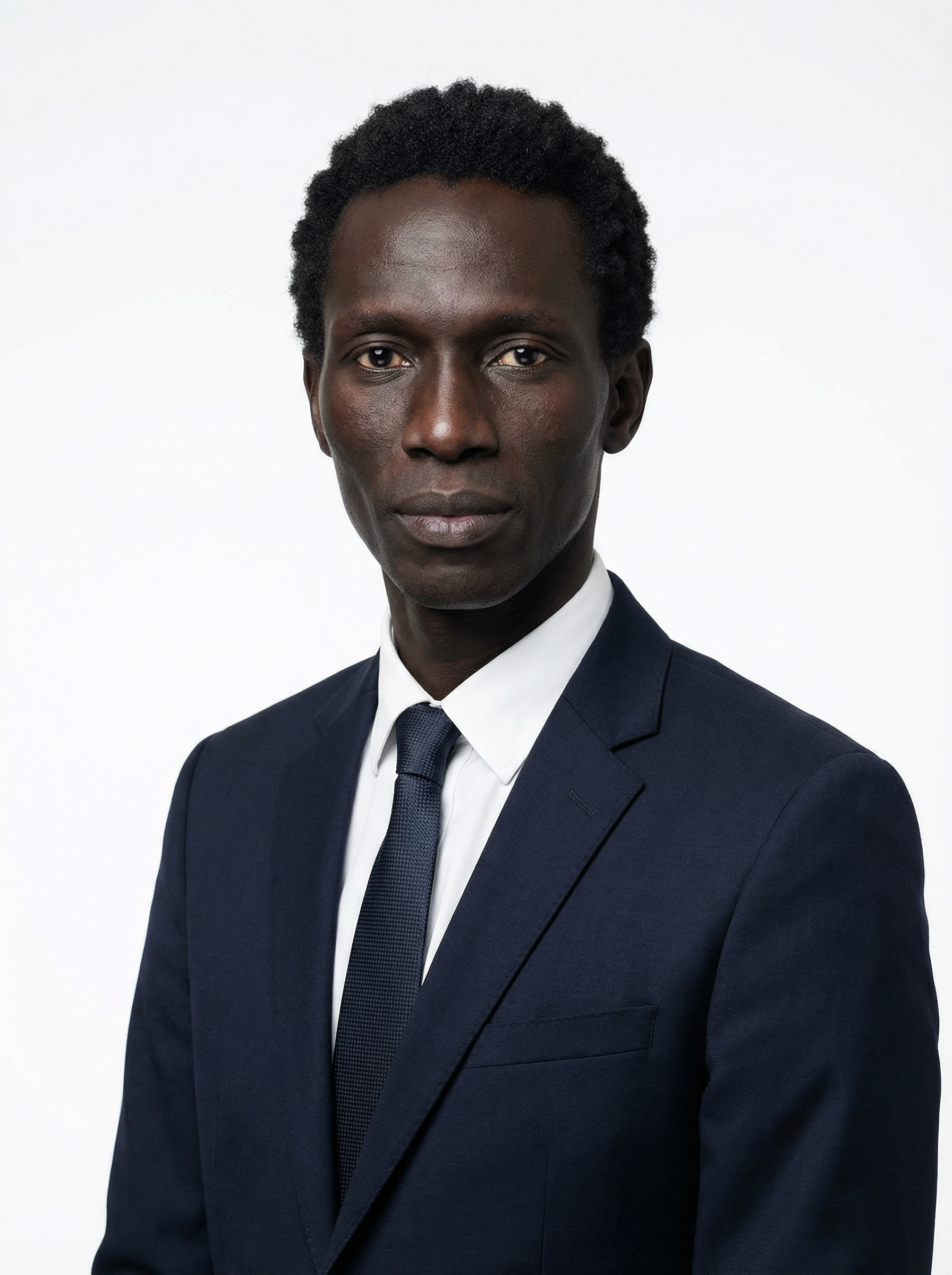
I recently had the opportunity, or perhaps the digital privilege, to connect with Bitange Ndemo, a man whose name resonates deeply within East African tech circles. He's a professor of entrepreneurship at the University of Nairobi, a former Permanent Secretary of Kenya's Ministry of Information and Communication, and a vocal advocate for digital inclusion and innovation across the continent. He's not just an academic; he's been in the trenches, shaping policy and pushing for digital transformation. If anyone understands the delicate balance between global tech giants and local digital ecosystems, it's him.
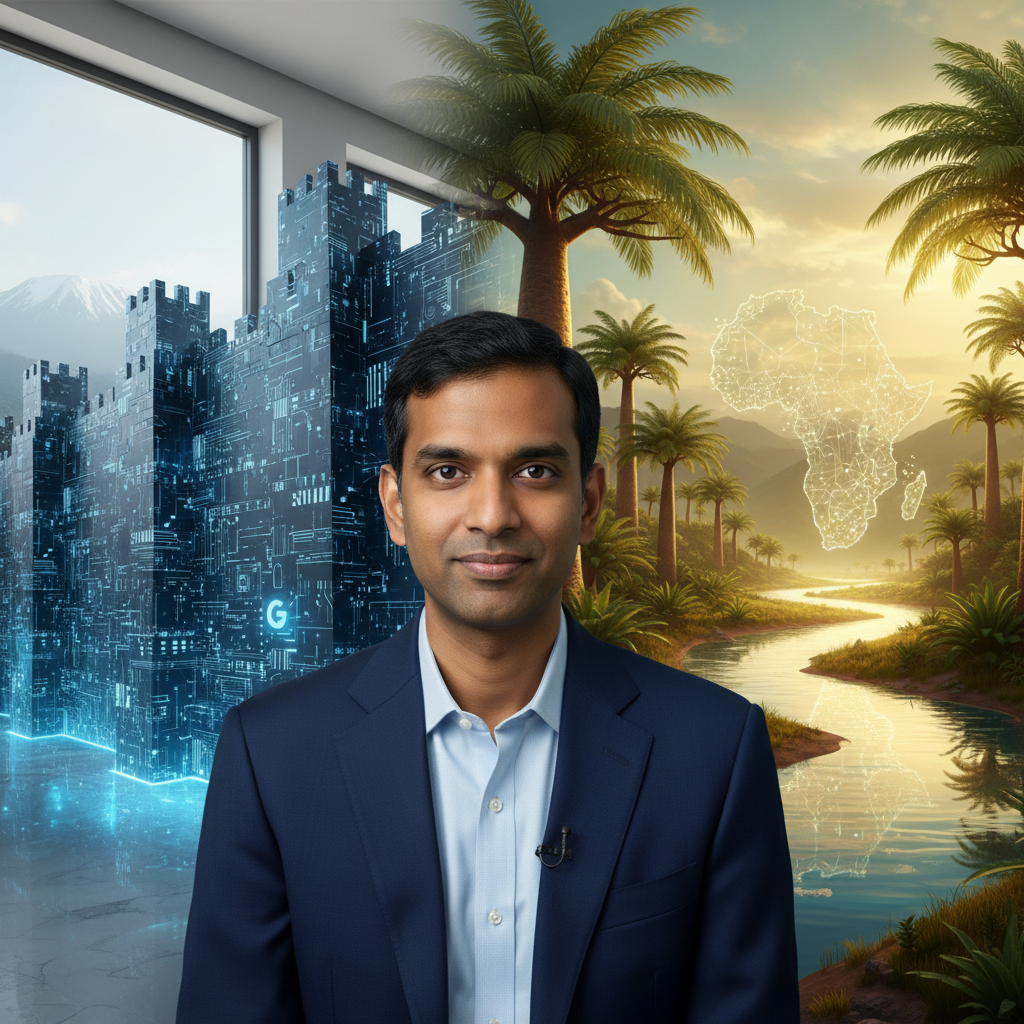
Our conversation, conducted via a rather glitchy video call, because, you know, internet in some parts of Africa still keeps us humble, revolved around this very conundrum. Google, led by its CEO Sundar Pichai, has consistently framed AI Overviews as an enhancement, a way to get users to information more efficiently. Pichai himself has often spoken about Google's mission to organize the world's information and make it universally accessible and useful. He stated in a recent earnings call, for instance, that 'AI is helping us deliver on our mission in profound new ways, transforming how people interact with information and the world around them.' He sees it as a natural evolution, a step towards a more intuitive and helpful search experience. Fair enough, from a global tech giant's perspective.
But Professor Ndemo, with his characteristic measured tone, offered a different lens. He acknowledged the technological prowess, of course. 'There's no denying the power of these AI models,' he told me, his face appearing and disappearing slightly on my screen. 'They can synthesize vast amounts of data in ways we couldn't imagine a decade ago. But the question for us in Africa is not just about efficiency; it's about equity and sustainability.'
He elaborated on the potential pitfalls. 'When Google provides an answer directly, without users needing to click through to the source, it fundamentally alters the traffic flow. Many African news sites, educational platforms, and small e-commerce businesses rely heavily on organic search traffic. If that traffic diminishes significantly, how do they sustain themselves? How do they continue to produce valuable local content?' This is not just a theoretical concern; it's a very real economic threat for countless digital enterprises across the continent. You can't make this stuff up, the impact is tangible.
Ndemo has long been a champion of local content and digital sovereignty. He's argued for policies that encourage the development of African-centric digital solutions and platforms. He once famously said, 'We need to build our own digital infrastructure and create our own content, or we risk becoming mere consumers of content produced elsewhere.' His concern is that AI Overviews, while seemingly benign, could inadvertently accelerate this consumption without adequate compensation or visibility for local creators.
He pointed to the economic model. 'Many of these sites rely on advertising revenue, which is directly tied to page views. If Google becomes the primary destination for answers, effectively bypassing the content creators, then the advertising dollars dry up. This isn't just about a few clicks; it's about the viability of independent media and information sources in emerging markets.' He paused, then added, 'We need to ensure that the AI revolution doesn't inadvertently centralize information access and economic power even further, leaving the periphery struggling to be heard.'
Indeed, the open web, with its promise of democratized information and publishing, has been a cornerstone of digital development in Africa. It allowed small voices to reach global audiences, fostered local entrepreneurship, and provided access to knowledge that was once unimaginable. Now, with AI Overviews, there's a fear that this open field might be turning into a curated garden, beautiful perhaps, but controlled by a single gardener.
I brought up the argument that Google often makes: that AI Overviews still link to sources, providing a path for users to dive deeper. 'Yes, they do,' Professor Ndemo conceded, 'but how many users will actually click through once they have their immediate answer? The convenience factor is powerful. It shifts the default behavior. And for a site that might get only a few thousand visitors a day, even a small drop in click-through rates can be devastating.'
He believes that a more equitable model is needed, one that recognizes the value of the underlying content. 'Perhaps Google needs to consider direct compensation models for content creators whose work is heavily summarized and presented in AI Overviews, especially for original reporting and research,' he suggested. 'Or, at the very least, ensure that the attribution is so prominent and compelling that users are encouraged to explore the source.' This isn't just about Google; it's about setting a precedent for how all large language models interact with the vast ocean of human-created content.
The conversation reminded me of the debates we had years ago about search engine optimization and how Google's algorithms dictated the visibility of websites. This feels like the next frontier, a more profound shift. The stakes are higher now because the AI isn't just indexing; it's interpreting, summarizing, and, in a sense, re-presenting the information. This re-presentation could be a boon for users, but a bane for creators.
As the call ended, and the last sliver of sun disappeared, plunging Dar es Salaam into the soft glow of streetlights, I pondered Ndemo's insights. Google's AI Overviews are here to stay; that much is clear. The technology is too compelling, the user experience too convenient. But the path forward, especially for regions like Africa, must involve a conscious effort to safeguard the open web's principles. It means ensuring that the digital oasis Google is building doesn't become a mirage for those who contribute to its richness.
Professor Ndemo's vision is one where technology serves humanity, not the other way around. He emphasizes that 'digital transformation must be inclusive, empowering, and sustainable for all.' His words echo a sentiment that many across Africa feel: we welcome innovation, but not at the cost of our digital livelihoods and our unique voices. The future is indeed here, and as Ndemo reminds us, it's a future we must actively shape, not merely accept. For more on the evolving landscape of AI and its impact on digital economies, you might find articles on TechCrunch's AI section insightful. Also, for deeper dives into the societal implications of AI, Wired's AI coverage often provides excellent perspectives. Only in East Africa, perhaps, do we debate the existential threat of a search algorithm over a cup of strong coffee, but then again, our digital future depends on it.