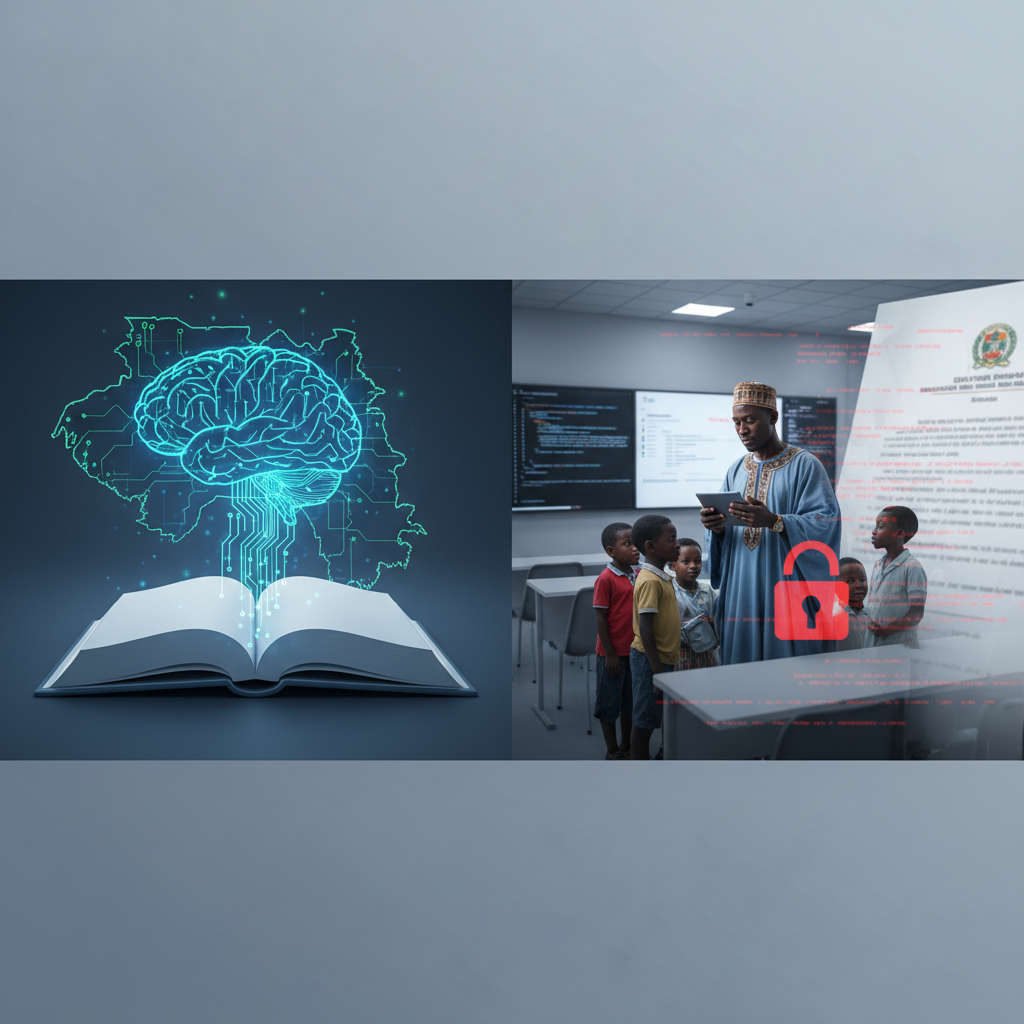
The pronouncements from Conakry have been bold, almost audacious. In April 2026, the Ministry of Higher Education and Scientific Research unveiled its 'Digital Learning Initiative 2030,' a sweeping policy framework designed to integrate artificial intelligence into Guinea's educational fabric. The vision is grand: AI-powered remote learning platforms to bridge geographical divides, intelligent tutoring systems to personalize instruction, and data analytics to optimize university curricula. On paper, it sounds like a panacea for a nation grappling with persistent educational challenges, from teacher shortages to access disparities.
This initiative, spearheaded by Minister Dr. Fanta Kourouma, aims to leverage global AI advancements to leapfrog traditional development hurdles. Dr. Kourouma, a former Dean of Engineering at Gamal Abdel Nasser University, articulated the ministry's rationale with conviction. "Our youth deserve access to the best education, regardless of their location or socioeconomic background," she declared at a recent press conference, her voice echoing through the newly renovated Palais du Peuple. "AI offers us an unprecedented opportunity to democratize knowledge, providing personalized learning experiences that were once unimaginable. We are not just adopting technology, we are shaping our future." The policy outlines a phased rollout, beginning with pilot programs in select universities and vocational training centers, with a projected investment of 2.5 trillion Guinean francs over the next five years, much of it sourced from international development partners and private tech firms.
But here's the catch: the devil is in the details, and in Guinea, those details are often obscured by a haze of optimism and under-resourced implementation. While the rhetoric is compelling, my investigation reveals a significant disconnect between the lofty ambitions and the ground realities. The policy, while forward-looking, appears to gloss over fundamental infrastructural deficits and regulatory complexities that could render even the most sophisticated AI tools impotent.
In practice, what does this mean for the student in Labé or the aspiring engineer in Kankan? Remote learning platforms, no matter how advanced, require reliable internet connectivity. According to the latest figures from the Autorité de Régulation des Postes et Télécommunications, internet penetration in rural Guinea hovers around 15 percent, with frequent outages even in urban centers. How will an AI tutor personalize instruction when the student cannot consistently access the platform? This is not merely a technical glitch, it is a foundational barrier. "We are talking about AI while many schools still lack basic electricity and clean water," observed Mamadou Diallo, a veteran educator and head of the Guinean Teachers' Union. "The digital divide is not just about devices, it is about the very infrastructure of modern life. Without addressing that first, AI becomes a luxury, not a solution."
The industry reaction has been predictably enthusiastic, particularly from foreign tech conglomerates eager to tap into emerging African markets. Companies like Google and Microsoft, alongside smaller AI education startups, have been quick to offer partnerships and pilot programs. A representative from a prominent American AI firm, who requested anonymity due to ongoing negotiations, expressed confidence. "Africa represents the next frontier for AI adoption. We see immense potential in Guinea's commitment to digital transformation in education," he stated, highlighting their proprietary adaptive learning algorithms. These firms often provide initial software licenses and training, but the long-term costs of maintenance, upgrades, and data infrastructure typically fall back on the host nation. This creates a dependency that can be financially crippling for a developing economy.
Civil society, however, voices a more cautious, often critical, perspective. Organizations dedicated to digital rights and educational equity are raising red flags about data privacy, algorithmic bias, and the potential for exacerbating existing inequalities. "Who owns the data generated by these AI tutors? How will student performance data be protected? What safeguards are in place to prevent algorithms from perpetuating biases present in the training data, biases that might disadvantage students from certain regions or linguistic backgrounds?" questioned Aminata Conté, director of the Guinean Digital Rights Collective. "These are not abstract concerns, they are critical questions of sovereignty and justice. We cannot allow our children's educational futures to be shaped by opaque algorithms designed in distant Silicon Valley boardrooms without robust local oversight." Her organization points to the lack of a comprehensive data protection law in Guinea, leaving students vulnerable to potential exploitation.
Furthermore, the policy's impact on the role of educators is largely undefined. While proponents argue AI tutors will free teachers to focus on higher-order tasks, critics fear job displacement and a de-skilling of the teaching profession. The cultural context is also vital. The traditional griot, the storyteller and educator of West African societies, embodies a holistic, community-centric approach to learning. Can an algorithm truly replicate this nuanced human connection, particularly in a society where oral tradition and communal learning are deeply ingrained? This is a question of pedagogical philosophy, not just technological capability.
So, will it work? The ambition is commendable, but the path ahead is fraught with peril. Without a robust national digital infrastructure, a comprehensive legal framework for data governance, and a clear strategy for empowering rather than replacing human educators, Guinea's AI education gambit risks becoming another well-intentioned but ultimately ineffective policy. The government must move beyond the allure of technological novelty and confront the foundational challenges. It must invest in basic infrastructure, develop stringent regulatory standards, and engage civil society in a meaningful dialogue. Only then can AI truly serve as a tool for equitable educational advancement in Guinea, rather than a shiny, expensive distraction. The future of our universities, and indeed our nation, depends on this critical discernment. For more insights into AI's global impact, one might consult MIT Technology Review or Reuters Technology. The conversation is global, but the implementation must be local, nuanced, and deeply considerate of our unique context.