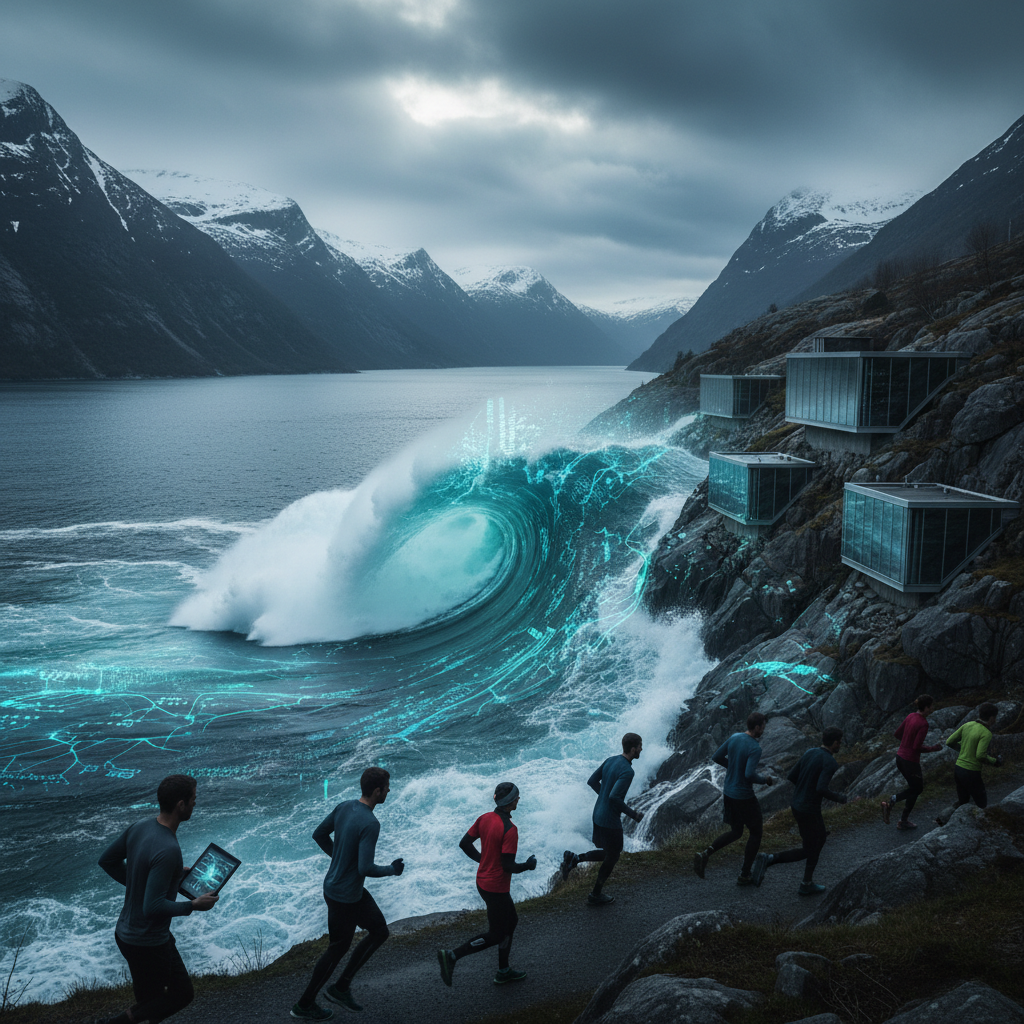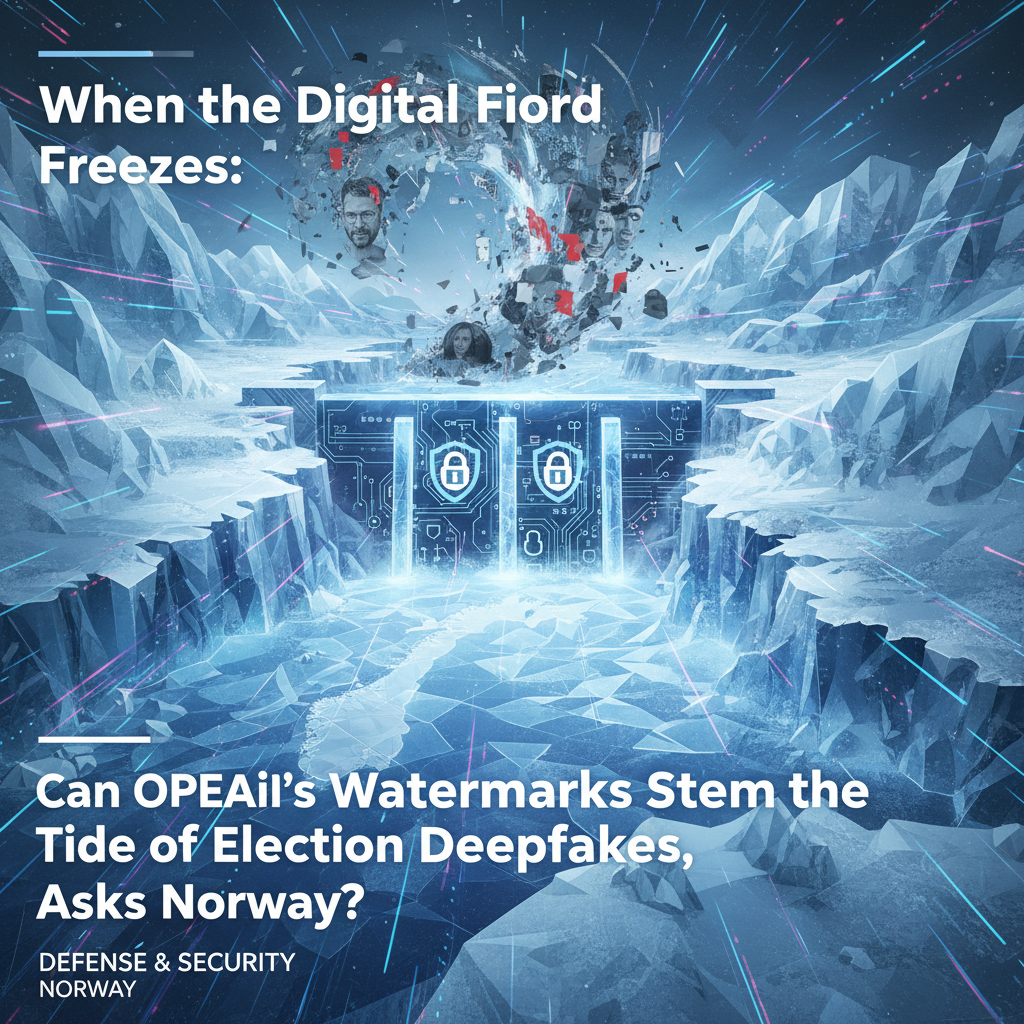

The digital landscape, much like the Norwegian coastline, is breathtakingly beautiful yet fraught with hidden dangers. We navigate its fjords with a sense of wonder, but beneath the surface, currents of disinformation threaten to capsize the very vessels of our democratic process. The question is stark: are AI-generated deepfakes merely a passing storm, or are they the new, treacherous normal for elections worldwide?
For decades, the manipulation of information in political campaigns was a labor-intensive affair. Pamphlets, doctored photographs, and whispered rumors were the tools of the trade. The speed of dissemination was limited by human hands and printing presses. One could trace the origin, however circuitously, back to a source. This historical context is crucial, for it highlights the unprecedented scale and sophistication of today's challenge. The advent of generative AI has not merely accelerated this process; it has fundamentally transformed it, turning every smartphone into a potential propaganda factory.
Consider the recent electoral cycles across the globe. From the United States to India, and even in nascent democracies, the specter of synthetic media has loomed large. A report by the AI Democracy Project in late 2025 indicated a 400% increase in detected AI-generated political content during election periods compared to the previous year. This content ranged from subtly altered audio clips of candidates to entirely fabricated video speeches, designed to sow discord or mislead voters. The sheer volume makes manual detection a Sisyphean task. It is akin to trying to bail out a sinking ship with a thimble when the ocean itself is rising.
Let me explain the engineering of this threat. Large language models, or LLMs, and generative adversarial networks, GANs, are the primary architects of deepfakes. Companies like OpenAI with their GPT series, Google DeepMind with Gemini, and Meta with Llama have developed models capable of generating highly realistic text, audio, and video from minimal prompts. While these technologies hold immense promise for creativity and productivity, their misuse in the political arena is a profound concern. They can clone voices, animate static images, and even create entirely new, convincing narratives that never occurred. The ease of access to these powerful tools, some of which are open source, means that sophisticated disinformation campaigns are no longer the exclusive domain of state actors; they are now within reach of almost anyone with an internet connection and a malicious intent.
“The speed at which these deepfakes can be produced and disseminated is truly alarming,” stated Dr. Håkon Wium Lie, a renowned Norwegian computer scientist and co-creator of CSS, in a recent Oslo symposium. “We are seeing a weaponization of synthetic media that bypasses traditional gatekeepers and erodes public trust at an unprecedented rate. It is not just about identifying a fake; it is about rebuilding the very foundation of shared reality.” His observation resonates deeply with Norway's approach to AI, which is rooted in trust and transparency, principles now under severe duress.
The global response has been a patchwork of technological countermeasures and legislative attempts. Major AI developers, recognizing the dual-use nature of their creations, have begun implementing safeguards. OpenAI, for instance, has publicly committed to integrating watermarking technologies into its image and audio generation tools. These digital signatures, theoretically, would allow for the identification of AI-generated content, much like a hidden serial number on a banknote. Google has also announced similar initiatives, exploring provenance tools and content credentials for its AI products. However, the effectiveness of these measures remains a subject of intense debate. Critics argue that watermarks can be removed or circumvented by determined actors, especially those with access to sophisticated editing tools or alternative open source models that lack such safeguards.
“While watermarking is a necessary step, it is far from a complete solution,” commented Marietje Schaake, International Policy Director at Stanford University's Cyber Policy Center, in a recent interview with Wired. “The cat-and-mouse game between creators and detectors is constant. We need a multi-layered approach that combines technical solutions with media literacy education, robust fact-checking, and strong legal frameworks.” Her perspective underscores the complexity; there is no single silver bullet to this challenge.
In Europe, the Digital Services Act and the forthcoming AI Act represent significant legislative efforts to address online disinformation and the risks posed by AI. These regulations aim to impose greater transparency obligations on platforms and developers, requiring them to identify AI-generated content and mitigate its harmful effects. Yet, the pace of technological advancement often outstrips the speed of legislative processes. By the time a law is enacted, the threat landscape may have already shifted dramatically.
What does this mean for a nation like Norway, a bastion of democratic stability and high public trust? While our elections have historically been less susceptible to the overt, aggressive disinformation campaigns seen elsewhere, the interconnected nature of the digital world means no country is immune. The Nordic model extends to technology, emphasizing ethical development and societal well-being. However, the pervasive nature of deepfakes means that even a small, targeted campaign could erode trust in institutions and the electoral process. Imagine a deepfake video of a prominent Norwegian politician making a controversial statement just days before an election, designed to sway a critical demographic. The damage, even if quickly debunked, could be irreversible in the short timeframe before votes are cast.
Data from the Norwegian Centre for Research on Digitalization (norc) indicates a slight but noticeable decline in public trust in online news sources over the past two years, correlating with the rise of generative AI. While not directly attributable solely to deepfakes, it suggests a growing skepticism that creates fertile ground for misinformation. The Norwegian Directorate for Civil Protection (DSB) has already initiated public awareness campaigns, educating citizens on how to identify synthetic media, a proactive measure that mirrors our national preparedness for natural phenomena. We understand the importance of preparing for the storm, even if it has not yet fully arrived.
My verdict is clear: AI-generated deepfakes in elections are not a fad; they are the new normal, a persistent and evolving threat to the integrity of our democracies. While technological solutions like watermarking from companies such as OpenAI and Google are vital, they are insufficient on their own. They are like building a stronger seawall against a rising tide; necessary, but not a guarantee against inundation. A comprehensive defense requires a concerted effort across technology, legislation, education, and civil society. We need robust international cooperation, as disinformation knows no borders. The challenge is immense, demanding vigilance, innovation, and a steadfast commitment to the democratic principles that define us. The future of our elections, and indeed our societies, hinges on our collective ability to navigate these turbulent digital waters with wisdom and resolve. For further insights into the broader implications of AI on societal structures, one might consider the ethical dilemmas explored in articles such as When Google DeepMind's AI Models Predict the Deluge, Who Holds the Umbrella, and Who Pays for the Damage in Eastern Europe? [blocked].