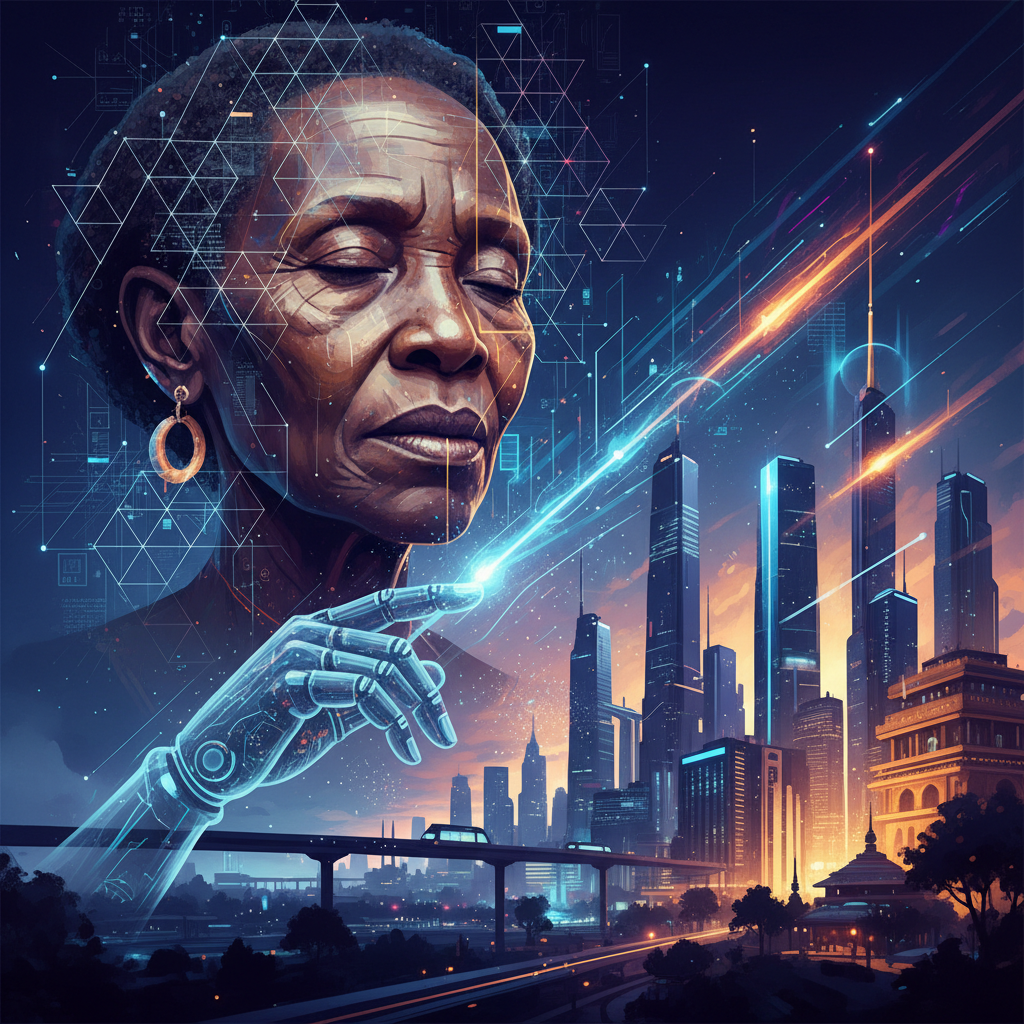
The year is 2030. Imagine this: Mama Ngozi, 85 years young, wakes up in her comfortable home in Lekki, Lagos. Her AI companion, 'Kelechi', a sleek, unobtrusive device with a warm, synthesized voice, greets her. Kelechi reminds her to take her morning medication, dispensed precisely by a small robotic arm. It monitors her vital signs, detects a slight tremor in her hand that wasn't there yesterday, and discreetly alerts her assigned human caregiver, a young nurse named Aisha, who lives just a few blocks away. Later, Kelechi facilitates a video call with Mama Ngozi's son in London, translating his English to Igbo on the fly, and even suggests a traditional Yoruba meal recipe based on her current health data and preferences. This isn't science fiction for a distant land. This is Nigeria, and it's closer than you think.
For too long, the narrative around aging populations has been dominated by the West's demographic crunch. You hear about Japan's super-aged society, Europe's shrinking workforce, and the immense strain on social security systems. But here in Africa, particularly in Nigeria, we are looking at this challenge not as a burden, but as an audacious opportunity. Our population is young, yes, but we are also a continent of deep family values, where elders are revered. The future is already here because it's just not evenly distributed, and we are about to distribute it with a distinctly Nigerian flavor.
Mark my words: Nigeria will lead this revolution in AI-powered eldercare and longevity. Why? Because necessity is the mother of invention, and we have a unique blend of needs and entrepreneurial spirit. We are a nation where healthcare infrastructure is often stretched thin, where families are increasingly dispersed across cities and continents, and where the informal care economy is robust but often unsupported by technology. This creates a perfect storm for innovative AI solutions to flourish.
We are not just talking about basic telemedicine here. We are talking about a holistic ecosystem. Picture ‘AishaCare’, a startup incubated right here in Yaba, developing affordable, culturally sensitive eldercare robots. These aren't just glorified alarm clocks. They are companions, health monitors, and communication hubs. They are designed to understand local languages, recognize traditional attire, and even play highlife music. These robots, powered by advanced machine learning models trained on diverse datasets, will learn the habits and preferences of each elder, providing personalized care that augments, rather than replaces, human interaction.
Consider the impact of longevity research. While the global north grapples with the ethical and economic implications of extending human lifespans, we in Nigeria can leverage these advancements to enhance the quality of life for our aging population. AI will accelerate drug discovery, personalize treatment plans, and predict health risks with unprecedented accuracy. Imagine an AI diagnostic tool, 'NaijaMed', trained on millions of anonymized health records from across the continent, capable of identifying early signs of age-related diseases that might otherwise go unnoticed by an overstretched healthcare system. This isn't just about adding years to life, it's about adding life to years, ensuring our elders remain vibrant contributors to their communities.
How do we get there from today, April 2026? The path is being paved right now. We are seeing a surge in AI startups focusing on healthcare, diagnostics, and even mental wellness. The key milestones will involve a concerted effort from government, private sector, and academia.
First, investment in data infrastructure and AI talent. We need robust, secure data centers and a pipeline of skilled AI engineers, data scientists, and ethicists. Universities like the University of Ibadan and Covenant University are already stepping up, but we need more specialized programs, more bootcamps, and more collaboration with global tech giants. NVIDIA, for instance, could find a fertile ground for its AI hardware and software platforms here, fueling local innovation.
Second, policy and regulatory frameworks that encourage innovation while safeguarding privacy and ethical use of AI. We cannot afford to be reactive. Proactive, forward-thinking legislation will be crucial to build trust and accelerate adoption. We need to learn from the global conversations around AI ethics, but adapt them to our own cultural contexts. Our elders, who often hold significant spiritual and cultural authority, must be part of these conversations.
Third, public-private partnerships. The government can provide incentives, grants, and regulatory sandboxes. Private companies, both local and international, can bring capital, expertise, and market access. Imagine a 'Lagos Longevity Fund', backed by local billionaires and international VCs, specifically investing in startups at the intersection of AI, robotics, and eldercare. This is not just about charity; it's about building a multi-billion dollar industry.
Who wins and who loses in this future? The clear winners will be our elders, who will experience improved health outcomes, greater independence, and enhanced social connection. Their families, often burdened by caregiving responsibilities, will find much-needed support and peace of mind. The Nigerian economy will win, with new industries, job creation, and a boost in tech exports. Our healthcare system, currently under immense pressure, will become more efficient and accessible.
However, there will be losers if we are not careful. Those who resist technological adoption, particularly in traditional healthcare sectors, might find themselves obsolete. There's also the risk of a digital divide, where access to these advanced services is limited to the wealthy. We must ensure that these solutions are affordable and scalable for all, from the bustling markets of Onitsha to the quiet villages in the Niger Delta. This means exploring open-source AI models and community-led initiatives, perhaps drawing inspiration from efforts to make AI accessible in other developing nations, as discussed in Iceland's Cold Calculation: Why Open Source AI Might Be Our Best Medicine [blocked].
What should readers do now? If you are an entrepreneur, start building. The market is ripe for disruption. If you are an investor, look beyond the usual suspects; the next unicorn in eldercare AI might just be brewing in a co-working space in Abuja. If you are a policymaker, engage with experts, listen to the people, and craft policies that foster innovation and inclusion. If you are a young Nigerian, acquire AI skills. The opportunities are immense, from developing sophisticated algorithms to designing user-friendly interfaces for eldercare robots.
This isn't just about technology; it's about humanity. It's about leveraging the incredible power of AI to honor our past, support our present, and build a more compassionate future. As a journalist who thinks in decades, not quarters, I see a future where Nigeria's vibrant spirit and technological prowess converge to create a model for the world: a future where aging is not a decline, but a continued journey of dignity, connection, and well-being, powered by intelligent machines and the warmth of human care. The time to build this future is now. For more insights into the rapidly evolving AI landscape, I highly recommend keeping an eye on TechCrunch's AI section and MIT Technology Review. The stories unfolding there are the blueprints for our tomorrow.