
The drumbeat for Artificial General Intelligence, AGI, grows louder with each passing quarter. Companies like OpenAI, Google DeepMind, and Anthropic trumpet their advancements, promising a future transformed by machines capable of human-level cognition. From the bustling markets of Conakry to the quiet villages nestled in the Fouta Djallon, the echoes of this technological revolution are felt, albeit often indirectly. But here's the catch: while the West celebrates these leaps, the very foundations of this progress, particularly the vast datasets required, often originate from places like Guinea, unacknowledged and uncompensated.
My investigation began not in the gleaming data centers of California, but in the dusty archives of local government offices and through conversations with digital rights advocates in West Africa. The narrative pushed by the tech giants suggests a universal, benevolent march towards AGI, a shared human endeavor. I dug deeper and found something troubling. The training data for these gargantuan models, the very fuel that allows them to learn and reason, is not solely derived from publicly available internet archives or carefully curated licensed datasets. A significant, often opaque, portion comes from the global South, from our stories, our languages, our cultural expressions, and even our biometric data, harvested without explicit consent or fair remuneration.
Consider the sheer scale. Training a foundational model like OpenAI's GPT series or Google's Gemini requires petabytes of text, images, audio, and video. While some of this is undoubtedly from established sources, the hunger for diverse, unfiltered data leads these companies, directly or indirectly, to sweep up everything they can. In Guinea, where digital infrastructure is rapidly expanding, and internet penetration, while still nascent, is growing, our digital footprint is becoming increasingly valuable. Social media posts, local news articles, transcribed oral histories, even government records, once digitized, become potential fodder for algorithms.
Dr. Fatoumata Diallo, a leading Guinean expert in digital ethics and data sovereignty at the Université Gamal Abdel Nasser de Conakry, articulated this concern succinctly. "When these powerful AI models are trained on data from our cultures, our languages, without our explicit consent or a framework for benefit-sharing, it is a new form of digital colonialism," she stated in a recent symposium. "They extract value, build immense wealth, and then sell us back the 'intelligence' derived from our own heritage. This is not partnership, it is exploitation." Her words resonate deeply, reflecting a sentiment I have encountered repeatedly.
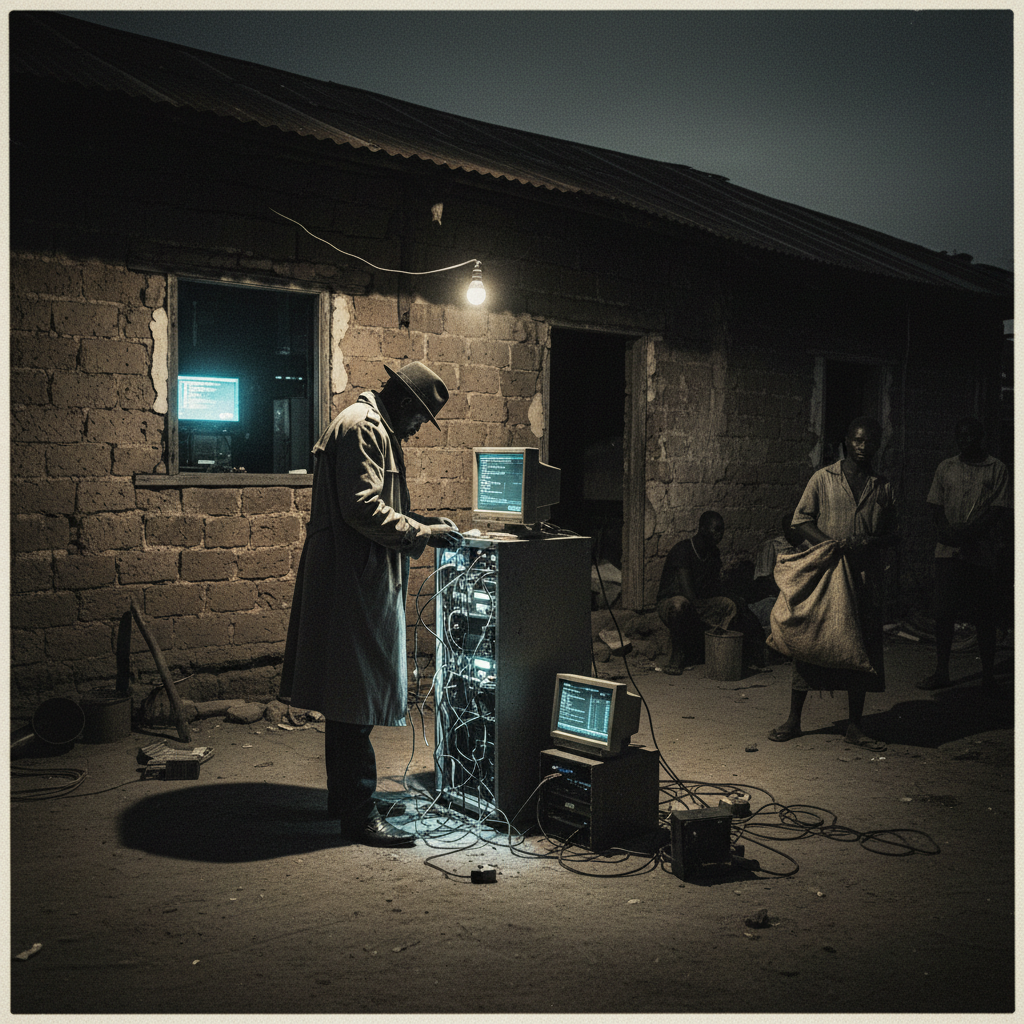
The devil is in the details of how this data is acquired. It is rarely a direct, malicious act by a major AI lab. Instead, it is often through third-party data brokers, web scraping operations, or even ostensibly innocuous research projects that collect vast amounts of localized information. These intermediaries operate in a legal gray area, particularly in jurisdictions with less robust data protection laws than, say, the European Union's GDPR. A source, a former data analyst for a regional tech firm now working independently, who requested anonymity due to non-disclosure agreements, revealed to me the extent of this practice. "We were tasked with collecting and anonymizing vast quantities of local language text and audio, including public speeches, radio broadcasts, and even community forum discussions," he explained. "The end client was always a large, multinational tech company. We were told it was for 'language model development.' The terms of service on many local platforms are so vague, and user awareness so low, that it is effectively a free-for-all." This testimony, while anecdotal, aligns with broader patterns observed by digital rights groups across Africa.
The implications for Guinea, and indeed for the entire continent, are profound. If AGI is to become the dominant technological force of the 21st century, then those who control its development and its underlying data will wield unprecedented power. If our unique cultural nuances, our historical narratives, and our linguistic specificities are merely ingested as raw material, without our agency or equitable participation, then the resulting AGI will inevitably reflect a worldview predominantly shaped by its Western creators and their data sources. This risks embedding biases, perpetuating stereotypes, and ultimately marginalizing our perspectives in the very systems that will govern future information, commerce, and even governance.
Consider the economic disparity. OpenAI, for instance, has reportedly secured billions in funding from Microsoft, valuing the company in the tens of billions of dollars. This immense capital is built, in part, on the back of data that costs fractions of a cent to acquire, if anything at all, from regions like ours. There is no equivalent investment flowing back into Guinean communities or institutions for the provision of this invaluable resource. This imbalance is not sustainable, nor is it just.
Furthermore, the race to AGI is not just about who builds it first, but about who controls its deployment. If an AGI, trained on a global corpus of data, is then used to develop applications for healthcare, education, or infrastructure in Guinea, who ensures it is culturally appropriate, unbiased, and truly beneficial? Who audits its decision-making processes? Without our active participation in its creation and governance, we risk becoming passive recipients of technology that may not serve our best interests. The lack of transparency from these AI behemoths regarding their data acquisition practices is a significant impediment to accountability.
Some might argue that this is simply the nature of technological progress, that data collection is inevitable. But this perspective ignores the ethical imperative for fairness and respect. As Professor Oumar Barry, a legal scholar specializing in intellectual property in West Africa, noted, "Our traditional knowledge, our oral traditions, our artistic expressions, these are intellectual assets. When they are digitized and fed into an AI without proper attribution or compensation, it undermines the very concept of cultural ownership. We need international frameworks that recognize data as a form of cultural heritage, not just a commodity." His call for stronger legal protections echoes similar pleas from indigenous communities globally.
The path forward requires a concerted effort. Guinean policymakers, in collaboration with regional bodies like Ecowas, must develop robust data sovereignty laws that protect our digital assets. We need to invest in local AI research and development, ensuring that our brightest minds are not merely data providers but active architects of the AI future. Furthermore, international pressure must be brought to bear on major AI companies to disclose their data sources, establish transparent compensation mechanisms, and engage in genuine partnerships with data-contributing nations. The current trajectory, where our digital legacy is silently absorbed to fuel distant technological ambitions, is a dangerous one.
The promise of AGI is immense, but its realization must not come at the expense of digital equity and sovereignty for nations like Guinea. As we stand at the precipice of this new era, it is crucial to remember that true progress is not just about technological prowess, but about justice, inclusion, and shared prosperity. The future of AGI must be built on a foundation of respect, not on unacknowledged extraction. For further reading on the broader implications of AI's societal impact, one might consult articles on Wired or MIT Technology Review. The conversation around ethical AI and data governance is evolving rapidly, and it is imperative that voices from all corners of the globe are heard. This is not merely a technical challenge, but a profound moral one, demanding our immediate and unwavering attention.