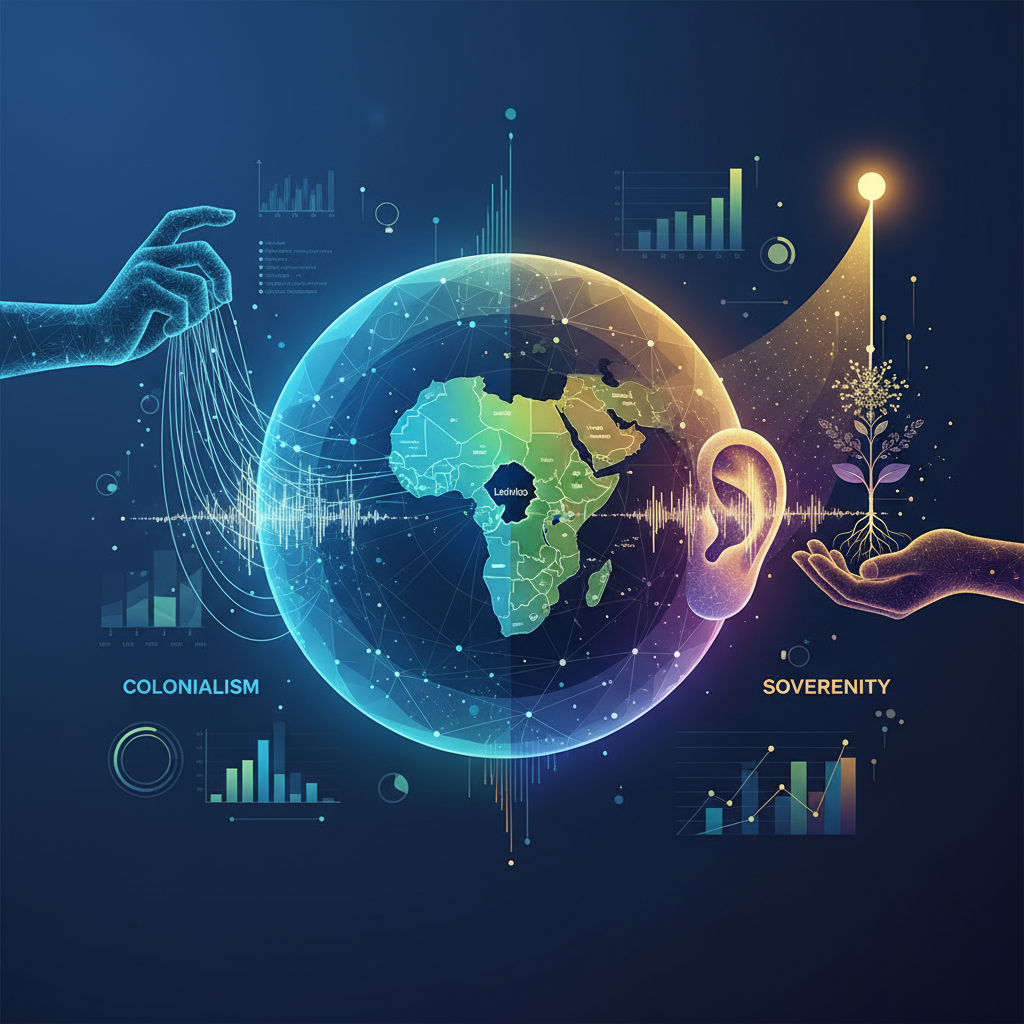
Is the promise of multimodal AI, systems that can see, hear, and reason across all senses simultaneously, a genuine leap forward for humanity, or merely another sophisticated tool for global powers to extend their influence? This question resonates particularly deeply in nations like Lesotho, where technological advancements often arrive bearing the complex baggage of external interests. We are told these models, like Google’s Gemini or OpenAI’s GPT-4o, represent the pinnacle of artificial intelligence, capable of understanding our world with unprecedented fidelity. But what they're not telling you, or perhaps what they are not yet fully understanding themselves, is the profound implications this has for data sovereignty and cultural integrity, especially in a continent often treated as a data mine.
The concept of machines understanding the world beyond mere text input is not new. Decades ago, early computer vision systems struggled to identify a cat, a task now trivial for a smartphone. The journey from rudimentary image recognition to today’s sophisticated multimodal models has been a long one, marked by incremental breakthroughs in neural networks and massive datasets. Think back to the early 2010s, when image recognition began to truly take hold, powered by convolutional neural networks. Then came speech recognition, evolving from clunky voice assistants to near-human conversational interfaces. The fusion of these capabilities, however, remained largely theoretical, a grand vision for artificial general intelligence.
Fast forward to April 2026, and this vision is rapidly materializing. Companies like Google, with its Gemini family of models, and OpenAI, with its latest iterations, are leading the charge. These models are not just processing images and sounds separately; they are integrating these inputs, drawing connections, and generating coherent outputs that span modalities. For instance, a multimodal AI can watch a video of a Basotho traditional dance, identify the specific steps, understand the accompanying music, and then generate a textual description, a new musical piece in a similar style, or even a synthetic video demonstrating the dance. The technical prowess is undeniable. Sources close to the matter confirm that major tech firms are pouring billions into refining these capabilities, with NVIDIA’s advanced GPUs serving as the computational backbone for this multimodal revolution. Industry reports suggest that investment in multimodal AI startups has surged by over 150% in the last two years, reaching an estimated $12 billion globally in 2025 alone, according to data compiled by TechCrunch.
Yet, the enthusiasm is tempered by a healthy dose of skepticism, particularly from those of us who have witnessed how previous technological waves have disproportionately benefited the few. Dr. Nthabiseng Mofokeng, a leading researcher in AI ethics at the National University of Lesotho, voices a common concern. “While the capabilities are astounding, we must ask: whose data is training these models, and whose worldview do they ultimately represent?” she queries. “If the vast majority of training data is drawn from Western contexts, then these models, however intelligent, will inevitably carry inherent biases that may not align with, or even actively misinterpret, our unique cultural nuances and social structures. It is a digital form of cultural imposition.”
This concern is not theoretical. Consider the implications for surveillance. A multimodal AI system deployed in public spaces, capable of identifying individuals by face, voice, and gait, and interpreting their actions in real time, presents a formidable challenge to privacy and civil liberties. In a nation like Lesotho, where the delicate balance between security and individual freedoms is paramount, such technologies demand rigorous oversight. “The potential for misuse, for tracking dissent or reinforcing existing power structures, is immense,” states Advocate Thabo Mohale, a legal expert specializing in digital rights in Maseru. “We need robust legal frameworks and independent auditing, not just the assurances of tech giants, to ensure these tools serve justice, not oppression.”
On the other hand, proponents argue that multimodal AI can be a powerful equalizer. Dr. Lerato Khumalo, a data scientist working with a local agricultural cooperative in the Berea district, offers a more optimistic perspective. “Imagine an AI that can analyze satellite imagery of our fields, listen to farmers describe crop diseases in Sesotho, and then provide tailored advice on pest control or irrigation, all without requiring a high level of digital literacy,” she explains. “This could revolutionize our agricultural sector, improving yields and food security. The key is to ensure we have a say in the development and deployment of these systems, that they are trained on our data, reflecting our realities, and that the benefits accrue to our communities.” Indeed, the potential for multimodal AI in areas like healthcare, education, and disaster response in Africa is vast, offering solutions to long-standing challenges. For instance, an AI that can diagnose illnesses from visual symptoms and patient vocal cues, even in remote areas with limited medical personnel, could be transformative. This is a topic that has been explored in depth by publications like MIT Technology Review.
The question then becomes: how do we ensure that this powerful technology becomes a tool for empowerment rather than another vector for exploitation? The answer lies in active participation and stringent governance. It is not enough for African nations to be passive recipients of technology developed elsewhere. We must invest in local AI talent, foster indigenous research, and demand transparency and accountability from global tech players. This means establishing data governance policies that prioritize national interests and individual privacy, and pushing for open-source models where possible, to allow for local adaptation and scrutiny.
My verdict is clear: multimodal AI is far from a fad; it is the new normal, a fundamental shift in how machines interact with and understand our world. However, its trajectory in Africa, and in Lesotho specifically, is yet to be determined. The potential for profound positive impact is undeniable, from enhancing agricultural productivity to improving healthcare access. But this potential is inextricably linked to the proactive measures we take now. We must follow the money, yes, but also follow the data, its provenance, and its ultimate beneficiaries. Without a concerted effort to localize, contextualize, and govern these powerful systems, the risk remains that multimodal AI will merely replicate existing global inequalities, rather than dismantle them. The future of AI in Africa must be written by Africa, for Africa, ensuring that these intelligent systems truly see, hear, and reason with our best interests at heart.