
Warsaw Debates EU AI Act: A Polish Woman's Perspective on Digital Sovereignty
Poland grapples with the implementation of the EU AI Act, sparking debate on its impact on innovation, data privacy, and the role of women in shaping a responsible digital future. Experts warn against stifling local tech while advocating for ethical AI development.
Click play to listen to this article read aloud using text-to-speech.
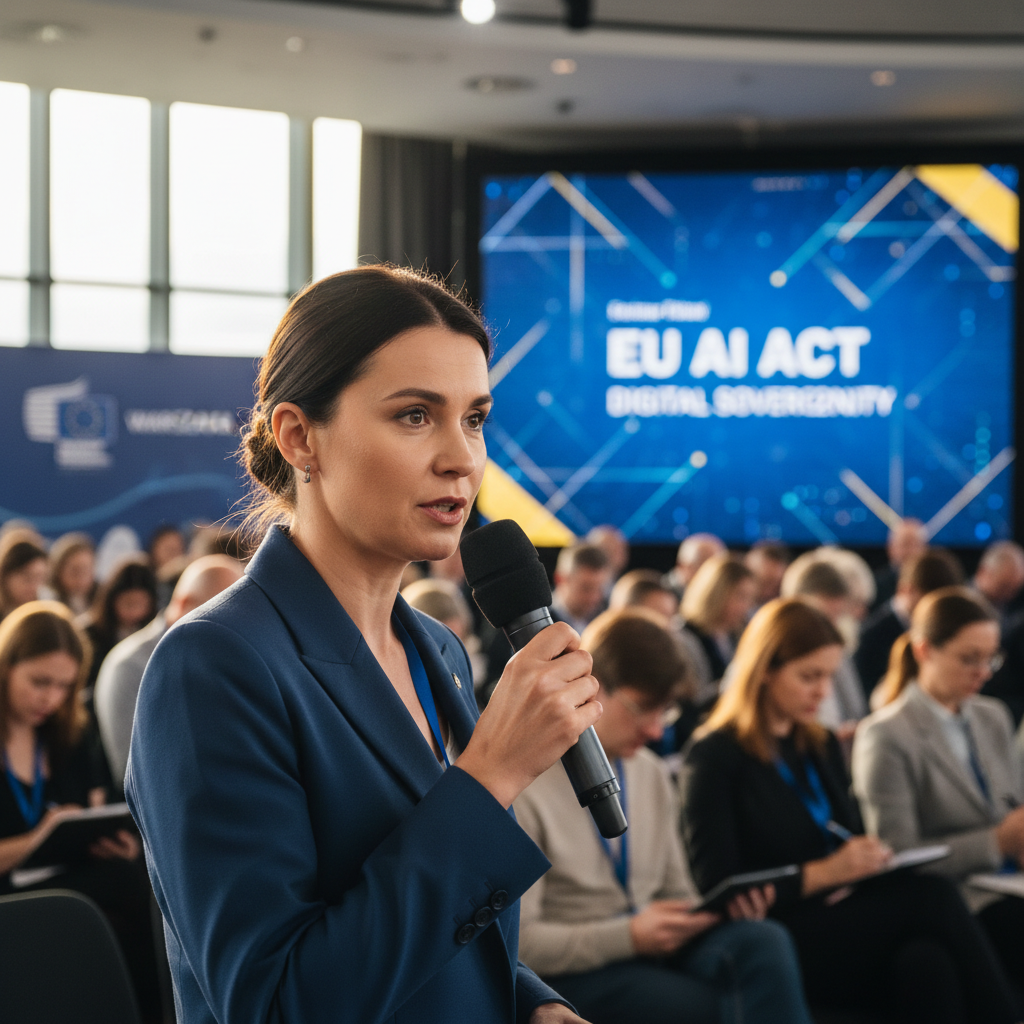

WARSAW, Poland – As the European Union's landmark Artificial Intelligence Act inches closer to full implementation, Poland finds itself at a critical juncture, navigating the complex interplay between fostering technological innovation and ensuring robust ethical oversight. For many, particularly women in tech and policy, this is not merely a regulatory exercise but a defining moment for Poland's digital sovereignty and its place within the broader European digital single market.
The Act, heralded as the world's first comprehensive legal framework for AI, aims to classify AI systems based on their risk level, imposing strict requirements on high-risk applications. While the intent is to protect fundamental rights, concerns are mounting within the Polish innovation ecosystem about potential bureaucratic hurdles that could disproportionately affect smaller, agile startups, many of which are founded or led by women.
"We absolutely need safeguards against discriminatory algorithms and privacy breaches," states Dr. Ewa Nowak, a leading AI ethicist at the Warsaw University of Technology and a vocal advocate for responsible AI. "However, the challenge lies in crafting regulations that don't inadvertently stifle the very innovation we seek to protect. Polish female entrepreneurs, often operating with fewer resources, need clear, accessible guidelines, not an impenetrable wall of compliance."
The Ministry of Digital Affairs, under Minister Anna Kowalska, has been actively engaging with stakeholders, including the Polish Chamber of Information Technology and Telecommunications (PIIT) and various women-in-tech organizations. Their focus is on developing national implementation strategies that align with EU mandates while safeguarding local interests. "Our goal is to ensure that Polish businesses, especially those leveraging AI for social good – from healthcare diagnostics to smart city solutions – can thrive," Minister Kowalska remarked during a recent parliamentary committee hearing. "We must empower our innovators, not burden them with excessive red tape that could see them fall behind their global counterparts."
One particular area of contention is the definition of 'high-risk' AI and the subsequent conformity assessment procedures. Critics argue that the current framework might be too broad, potentially categorizing benign applications as high-risk, thereby increasing development costs and time-to-market. "For a small Polish company developing an AI-powered educational tool, the cost of compliance could be prohibitive," explains Magdalena Zielińska, CEO of EduTech Polska, a startup focusing on personalized learning. "We need a nuanced approach that understands the specific challenges faced by SMEs in a rapidly evolving technological landscape, especially when trying to attract investment in a region that still lags behind Western Europe in venture capital for deep tech."
Furthermore, the Act's emphasis on data governance and transparency resonates deeply with Polish civil society groups, many of which have long championed digital rights. The 'Fundacja Kobiety w Cyberbezpieczeństwie' (Women in Cybersecurity Foundation) has been particularly active, organizing workshops and advocating for greater female representation in the national bodies tasked with overseeing AI Act compliance. "Diversity in oversight is not just an ethical imperative; it's a practical necessity," asserts Joanna Dąbrowska, the Foundation's director. "Ensuring that the perspectives of women, who are often disproportionately affected by biased algorithms, are heard at every level of implementation is crucial for building truly fair and inclusive AI systems."
As Poland prepares to integrate the EU AI Act into its national legal framework, the debate highlights a broader European challenge: how to regulate cutting-edge technology without stifling the very innovation that drives economic growth and societal progress. For Polish women in technology and policy, this is an opportunity to shape a future where AI serves humanity responsibly, reflecting the diverse values and needs of all citizens, while ensuring Poland remains a competitive player on the global digital stage.
Related Articles
AI Coaches Revolutionize Russian Rhythmic Gymnastics: A New Era for 'Zolotaya Sbornaya'
 Élèna Petrovà
AI in Women's Health: Norwegian Experts Call for Ethical Frameworks and Data Equity
 Ingridè Hansèn
AI's Gaelic Game-Changer: How Tech is Leveling the Field for Irish Women in Sport
 Siobhàn O'Briénn
AI's Linguistic Leap: Icelandic Language Model Secures EU Grant, Bolstering Digital Sovereignty
 Björn Sigurdssòn