
You're going to want to sit down for this, especially if you've ever wrestled with building a website that feels more like a static billboard than a living, breathing entity. In the ever-churning world of tech, where new frameworks and buzzwords sprout faster than maize after the first rains, Vercel has been quietly, yet powerfully, reshaping how developers build for the web. And now, with their AI SDK, they are making a rather audacious claim: every website will have an AI layer. Every single one.
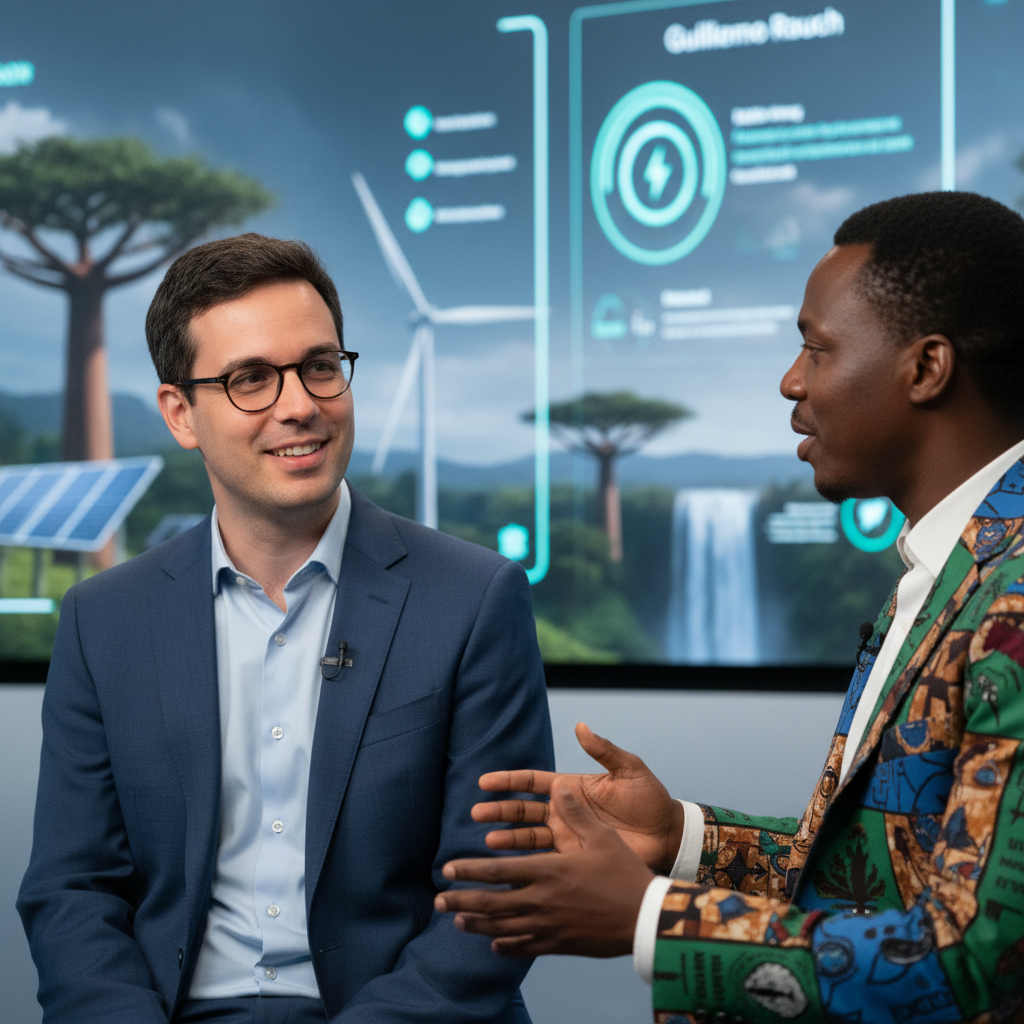
I've been following Guillermo Rauch, Vercel's CEO and co-founder, for a while now. He's one of those rare tech leaders who speaks with a clarity that cuts through the usual Silicon Valley jargon, making complex ideas sound almost obvious. His vision for the future of the web, particularly with the advent of AI, is not just about incremental improvements, it's about a fundamental shift. He believes that AI will be as ubiquitous to web experiences as JavaScript is today.
Picture this: you're browsing a local Zambian e-commerce site selling handcrafted baskets from Mongu. Instead of just static images and descriptions, an AI assistant pops up, not just to answer your questions, but to tell you the story behind the weaver, suggest complementary items based on your home decor, or even negotiate a price if you're buying in bulk. This isn't science fiction, according to Rauch, this is the near future, powered by tools like Vercel's AI SDK.
Rauch, an Argentine-American entrepreneur, has a history of spotting trends before they become trends. He founded Socket.IO, a popular real time engine, and then Zeit, which later rebranded to Vercel. His work has consistently focused on developer experience and performance. He's been quoted numerous times on the importance of 'shipping fast' and making the web a more dynamic place. In a 2023 interview with TechCrunch, he emphasized, "The web is becoming more dynamic, more interactive, and AI is the next logical step to make it truly intelligent." This isn't just about chatbots, he argues, it's about embedding intelligence at every touchpoint of a web application.
Now, let's bring this back home, to the dusty, vibrant streets of Lusaka, to the burgeoning tech hubs in Ndola, and the ambitious young developers across Zambia. The idea of every website having an AI layer might sound like a distant dream when many businesses are still grappling with simply having a functional, mobile-responsive site. But the irony is almost too perfect: the very challenges we face here, like limited access to specialized AI talent or the high cost of custom AI development, are precisely what Vercel's SDK aims to mitigate.
The AI SDK is designed to be framework-agnostic, working seamlessly with React, Vue, Svelte, and other popular JavaScript libraries. It provides utilities and examples to build AI-powered user interfaces, integrating with large language models (LLMs) from providers like OpenAI, Anthropic, and Google. The promise is that developers can add AI capabilities to their applications with minimal boilerplate code, abstracting away the complexities of interacting with these powerful models.
For Zambian developers, this could be a game changer. Instead of needing a team of AI specialists, a front-end developer, perhaps fresh out of a local coding bootcamp, could leverage this SDK to infuse intelligence into a local startup's platform. Imagine a health clinic's website offering a symptom checker powered by an LLM, or an agricultural cooperative's portal providing real time crop advice based on local weather data and global farming trends. The barrier to entry for AI development, which has historically been quite high, is being systematically lowered.
"We want to make AI accessible to every developer, regardless of their background or the size of their project," Rauch reportedly stated in a Vercel blog post announcing the SDK. This democratisation of AI tools is crucial for regions like ours. We don't have the deep pockets of Silicon Valley giants to throw at bespoke AI solutions. We need tools that are efficient, cost-effective, and easy to integrate, much like how mobile money revolutionized financial services for millions who never had bank accounts.
However, the path isn't entirely clear. While the SDK simplifies integration, understanding how to effectively prompt these LLMs, manage their outputs, and ensure ethical use cases remains a significant challenge. The models themselves are trained on vast datasets, predominantly from the Global North, which can lead to biases or a lack of understanding of local contexts, languages, and cultural nuances. A chatbot trained on Western data might struggle to understand the intricacies of Zambian Nyanja or Bemba, or offer culturally inappropriate advice.
This is where local innovation becomes paramount. Our developers, with their intimate knowledge of Zambian society and languages, will be crucial in fine-tuning these AI layers, ensuring they are not just functional, but genuinely useful and culturally relevant. It's not enough to just plug and play; we need to adapt, localize, and innovate on top of these foundational tools. Just as we've seen local startups build incredible solutions on top of mobile money platforms, we need to see similar ingenuity with AI.
The bet that every website will have an AI layer is a bold one. It suggests a future where the web is less about static information retrieval and more about dynamic, personalized, and intelligent interaction. For Zambia, this isn't just about catching up, it's about leapfrogging. If Vercel and similar platforms can truly lower the technical and financial barriers, then the digital 'chitenge' of AI could indeed be woven into the fabric of every Zambian website, creating experiences that are uniquely ours, and globally competitive. The question isn't if, but when, and how we will seize this opportunity. The tools are being laid out, now it's up to us to build. For more on the broader implications of AI in web development, you can always check out insights from Wired.
I believe that the next wave of significant AI innovation won't just come from the established tech giants, but from the edges, from places like Zambia, where necessity truly is the mother of invention. The Vercel AI SDK is just one more piece of the puzzle, a powerful brush for our local digital artists to paint a smarter, more responsive web. The canvas is ready, and the paint is drying fast.