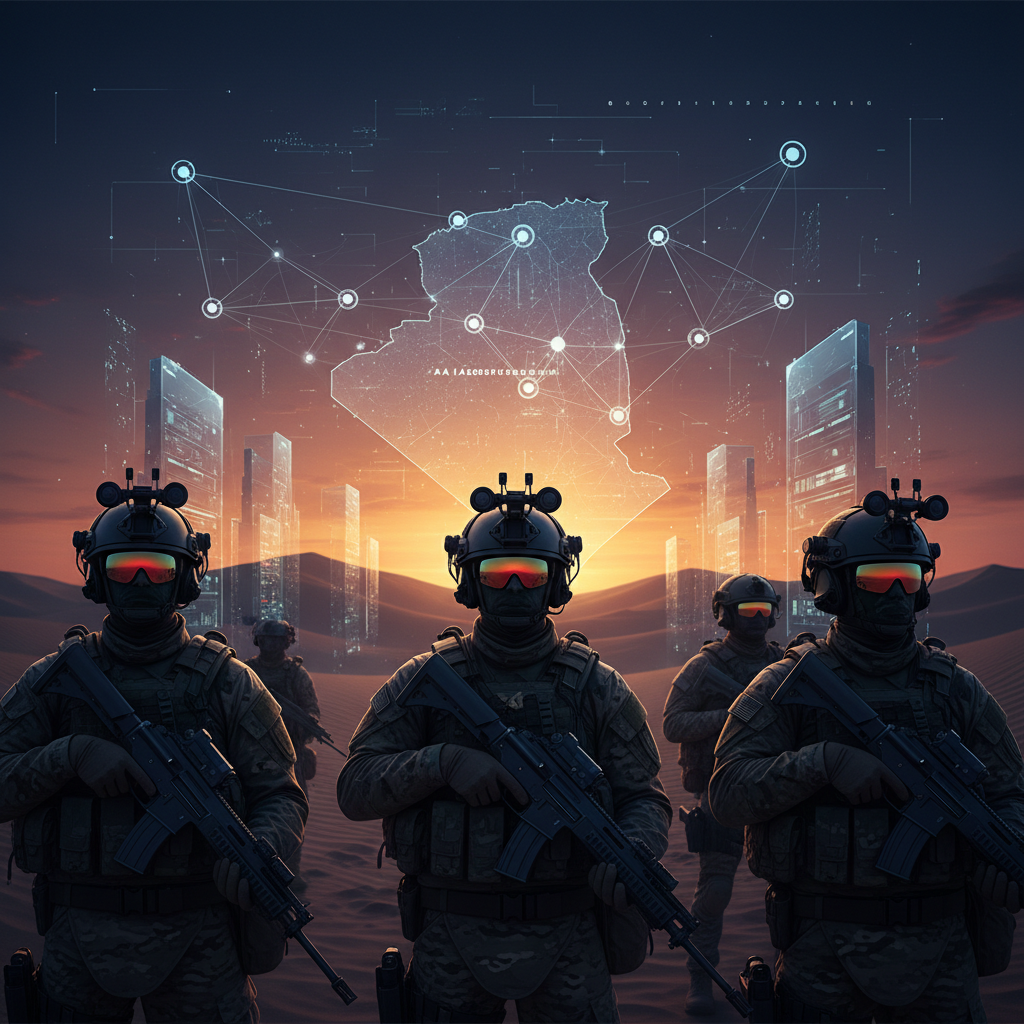
The digital landscape, much like the vast, shifting sands of our Sahara, is constantly reconfiguring itself. Today, a new phenomenon dominates the horizon: the meteoric ascent of Artificial Intelligence unicorns, companies valued at over a billion dollars. These aren't mere startups; they are titans in the making, attracting capital at a pace that defies traditional economic logic. From a technical standpoint, the mathematics behind this is elegant, demonstrating the immense potential locked within sophisticated algorithms and vast datasets. But for many in Algeria, this distant financial spectacle might seem as remote as a star in the night sky, beautiful yet seemingly irrelevant to daily life. This perception, however, is a dangerous illusion.
Why Most People Are Ignoring It: The Attention Gap
The average Algerian, quite rightly, is preoccupied with immediate concerns: the price of essential goods, employment opportunities, access to education, and the stability of our region. Discussions about OpenAI's latest valuation or Anthropic's funding rounds feel abstract, disconnected from the tangible realities of our souks and universities. We are accustomed to measuring progress in infrastructure projects, agricultural yields, or energy production, not in the ephemeral market capitalizations of software companies. This creates a significant attention gap. The narratives dominating our local media rarely delve into the intricate dance between venture capital, advanced algorithms, and global power dynamics. It is a complex tapestry, and without a clear guide, it is easy to dismiss it as 'Silicon Valley noise' or 'Western tech hype.'
Yet, this dismissal comes at a cost. The rapid accumulation of wealth and power within the AI sector is not confined to the digital realm; it translates into real-world influence, shaping everything from national security strategies to the future of work and the very fabric of our societies. As the esteemed Professor Amel Benali, an economic historian at the University of Algiers, often observes, "History teaches us that major technological shifts invariably redistribute power and wealth. To ignore the financial currents of AI is to willfully blind ourselves to the coming tides." Her words resonate with the wisdom of our ancestors, who understood that ignoring the signs of change in the desert could lead to peril.
How It Affects YOU: A Personal Impact
Let me walk you through the architecture of this impact. Consider your job. While AI might seem far removed from the daily grind of a farmer in the Mitidja plain or a petroleum engineer in Hassi Messaoud, its influence is pervasive. The algorithms developed by these billion-dollar companies are optimizing supply chains, automating administrative tasks, and even designing new materials. This means that the skills valued in the job market are shifting. If you are a young Algerian entering the workforce, understanding the rudiments of data science or AI literacy is no longer a niche skill; it is becoming foundational. The future of employment, particularly in sectors like logistics, finance, and even creative industries, will be profoundly shaped by these well-funded AI entities.
Furthermore, these valuations reflect an intense competition for talent and resources. The global race for AI supremacy means that the brightest minds, often from developing nations, are drawn to these well-funded centers of innovation. This exacerbates the 'brain drain' phenomenon, a challenge Algeria has grappled with for decades. We risk losing our most promising engineers and researchers to companies offering unparalleled resources and compensation. This directly impacts our capacity for local innovation and our ability to build our own AI solutions tailored to Algerian needs.
The Bigger Picture: Societal, Economic, and Political Implications
The rise of AI unicorns is not merely an economic story; it is a geopolitical one. Nations that foster and control advanced AI capabilities gain significant advantages in defense, intelligence, and economic competitiveness. The capital flowing into these companies is, in essence, an investment in future power. For a nation like Algeria, situated at a critical crossroads of Africa and the Mediterranean, understanding and engaging with this shift is paramount for our national security and sovereignty. The algorithms powering advanced surveillance systems, autonomous defense platforms, and sophisticated cyber warfare tools are often developed by these very companies. The implications for regional stability are immense.
Economically, these valuations signal a concentration of capital and technological expertise in a few hands, often in a few geographic locations. This could lead to a widening of the global digital divide, where nations without significant AI infrastructure or investment are left behind. The ability to leverage AI for economic growth, resource management, and public services becomes a defining characteristic of national prosperity. If Algeria does not actively participate in this technological revolution, we risk becoming consumers of foreign AI rather than producers, perpetually dependent on external solutions.
What Experts Are Saying
"The current AI valuation bubble, if one can call it that, is fueled by a belief in transformative potential," explains Dr. Karim Haddad, a senior analyst at the Algerian Institute for Strategic Studies. "It is not just about current revenue; it is about the projected impact on every industry imaginable. This makes it a national security imperative for every country to cultivate its own AI ecosystem." His perspective underscores the strategic nature of this financial surge.
Ms. Fatima Zahra Bouzid, a leading expert in digital policy at the Ministry of Post and Telecommunications, adds, "We are witnessing a profound shift in global economic power. The nations that control the next generation of AI will wield unprecedented influence. For Algeria, this means prioritizing digital literacy, investing in our youth, and creating an environment where local innovation can flourish, rather than merely observing from the sidelines." Her emphasis on local capacity building is critical.
Even from a global perspective, the sentiment is similar. "The sheer volume of capital pouring into AI startups, particularly those focused on foundational models, is unprecedented," notes Dr. Eleanor Vance, a venture capitalist specializing in deep tech at a prominent London firm. "Investors are betting on a future where AI is as ubiquitous and impactful as electricity, and they are willing to pay a premium for early access to that future." This highlights the speculative yet deeply conviction-driven nature of these investments. You can read more about these trends on TechCrunch.
What You Can Do About It
For the individual, the first step is awareness. Understand that AI is not a distant concept; it is already interwoven into the fabric of our lives and its influence will only grow. Educate yourself on its fundamentals, its ethical implications, and its potential applications. For students, consider pursuing fields related to data science, machine learning, and computational linguistics. The demand for these skills will only escalate.
For policymakers and institutions in Algeria, the path is clear: invest aggressively in education and research. We must nurture our local talent, provide them with the resources they need, and create incentives for them to build AI solutions here, for Algeria. This means fostering collaboration between our universities, research centers like the Centre de Développement des Technologies Avancées, and emerging local startups. It also entails developing robust data infrastructure and ethical guidelines for AI development, ensuring that our technological advancement is equitable and responsible. The MIT Technology Review frequently publishes insights into national AI strategies that could serve as valuable blueprints.
The Bottom Line: Why This Will Matter in 5 Years
In five years, the impact of today's AI unicorns will be undeniable. They will have reshaped industries, redefined job markets, and fundamentally altered geopolitical dynamics. Nations that embraced this transformation, investing in their human capital and technological infrastructure, will be better positioned for prosperity and security. Those that did not will find themselves navigating a world increasingly dictated by technologies they do not control and economic forces they do not understand. The choice for Algeria, and indeed for every nation, is stark: to be a participant in shaping this future, or to be shaped by it. The mathematics behind this is elegant, a clear equation of investment yielding influence. We must not allow the mirage of distance to obscure the profound reality of this technological revolution. The time to act, to build our own digital future, is now.