
Taiwan's AI-Powered 'Smart Orchards' Combat Climate Change, Boost Agricultural Resilience
Taiwanese agricultural tech firms are deploying AI and IoT to create 'smart orchards,' optimizing resource use and enhancing crop resilience against extreme weather, a critical move for the island's food security.
Click play to listen to this article read aloud using text-to-speech.
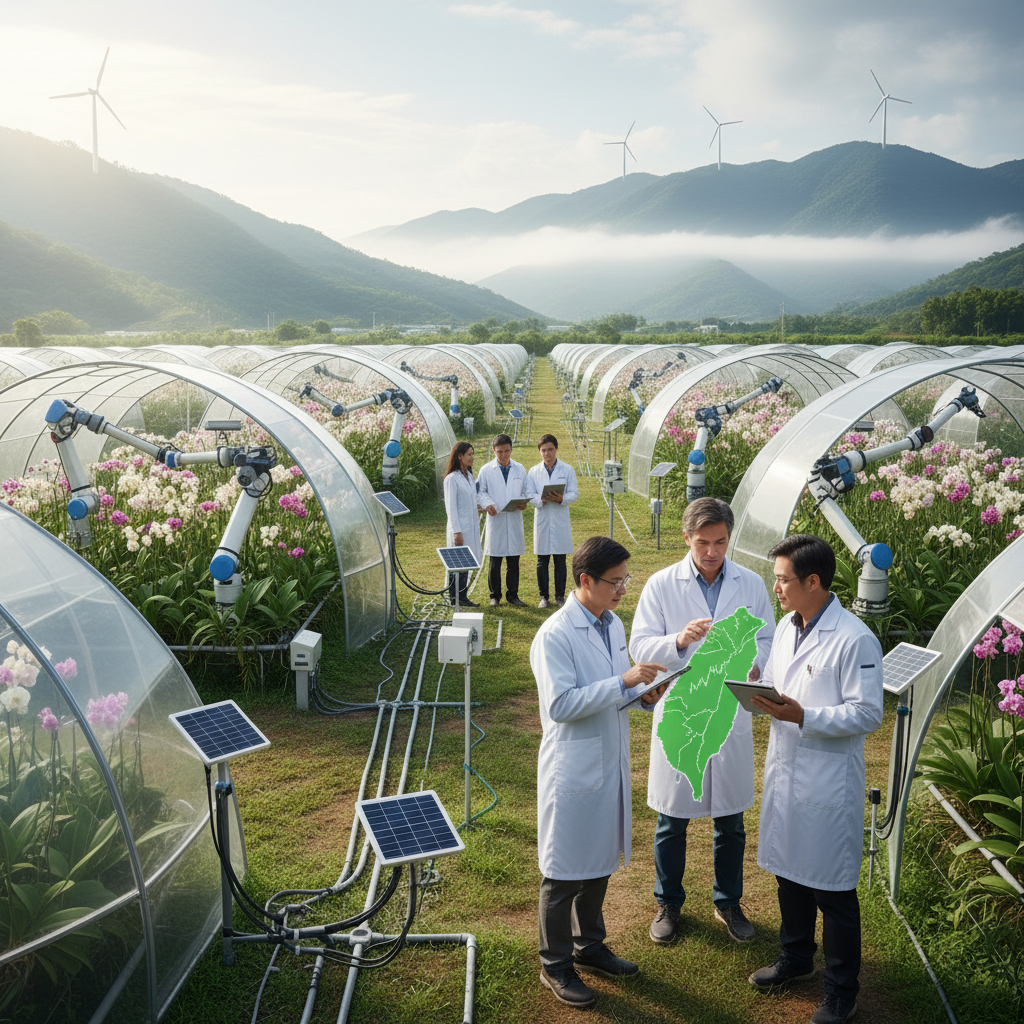

TAINAN, TAIWAN – As global climate patterns grow increasingly erratic, Taiwan's agricultural sector is turning to advanced artificial intelligence and Internet of Things (IoT) solutions to safeguard its vital fruit harvests. The Ministry of Agriculture (MOA), in collaboration with local tech innovators, is championing the development of 'smart orchards' – a strategic initiative reflecting Taiwan's proactive stance on food security and environmental sustainability.
Driving this transformation is the integration of AI-driven analytics into traditional farming practices. Sensors deployed across orchards monitor microclimates, soil moisture, nutrient levels, and pest activity in real-time. This data is then fed into AI models that predict optimal irrigation schedules, fertilizer application, and even potential disease outbreaks, allowing farmers to intervene precisely and efficiently.
“For a Taiwanese man, the land is not just soil; it’s our heritage, our sustenance. We’ve seen firsthand how typhoons and droughts can devastate a season’s work,” explains Dr. Chen Wei-Lun, a leading agricultural AI specialist at National Chung Hsing University. “These smart systems, developed by our own gōngchéngshī (engineers), are giving our farmers unprecedented control. It’s about working smarter, not just harder, to protect our nóngchǎn pǐn (agricultural products).”
One notable success story comes from a mango farm in Tainan, a region renowned for its succulent àiwén mángguǒ (Irwin mangoes). Mr. Lin Chih-Hao, a third-generation farmer, shared his experience. “Last year, the AI system predicted a dry spell two weeks before it hit. It recommended a precise, targeted irrigation plan that saved 20% of our water usage and prevented significant crop loss. Before, we relied on intuition and experience, but climate change makes that increasingly unreliable.”
This localized, data-driven approach is particularly crucial for Taiwan, an island nation susceptible to extreme weather events. The MOA's Deputy Minister, Dr. Wang Kuo-Chung, emphasized the broader implications. “Our goal is to build a resilient agricultural ecosystem. By leveraging Taiwan’s strengths in semiconductors and AI, we’re not just improving yields; we’re reducing our carbon footprint through optimized resource management and minimizing pesticide use. This is a critical step towards our national net-zero emissions targets.”
The initiative also includes partnerships with companies like Advantech and Acer, who are providing the robust IoT infrastructure and cloud computing power necessary for these AI models to operate effectively. These collaborations highlight Taiwan’s unique ability to bridge its high-tech manufacturing prowess with traditional sectors, creating innovative solutions tailored to local needs.
Looking ahead, the MOA plans to expand the smart orchard program to other high-value crops, such as tea and high-mountain vegetables, further solidifying Taiwan’s position as a leader in sustainable, AI-driven agriculture in the Asia-Pacific region. For many Taiwanese, it represents more than just technological advancement; it's a modern way to honor and protect the land that has sustained generations.
Related Articles

AI in the Diwan: Bridging Generations and Preserving Heritage in Jordan
 Hamzà Al-Khalìl
Amazon's AI Guardians: Brazil Deploys Tech to Combat Deforestation
 Luciànò Ferreiràs
AI's Gentle Touch: Revolutionizing Maternal Healthcare in Vietnam
 Ngo Thi Huừngé
AI's Cultural Canvas: Kerala's Kalamkari Artisans Embrace Digital Weave
 Priyà Nairé