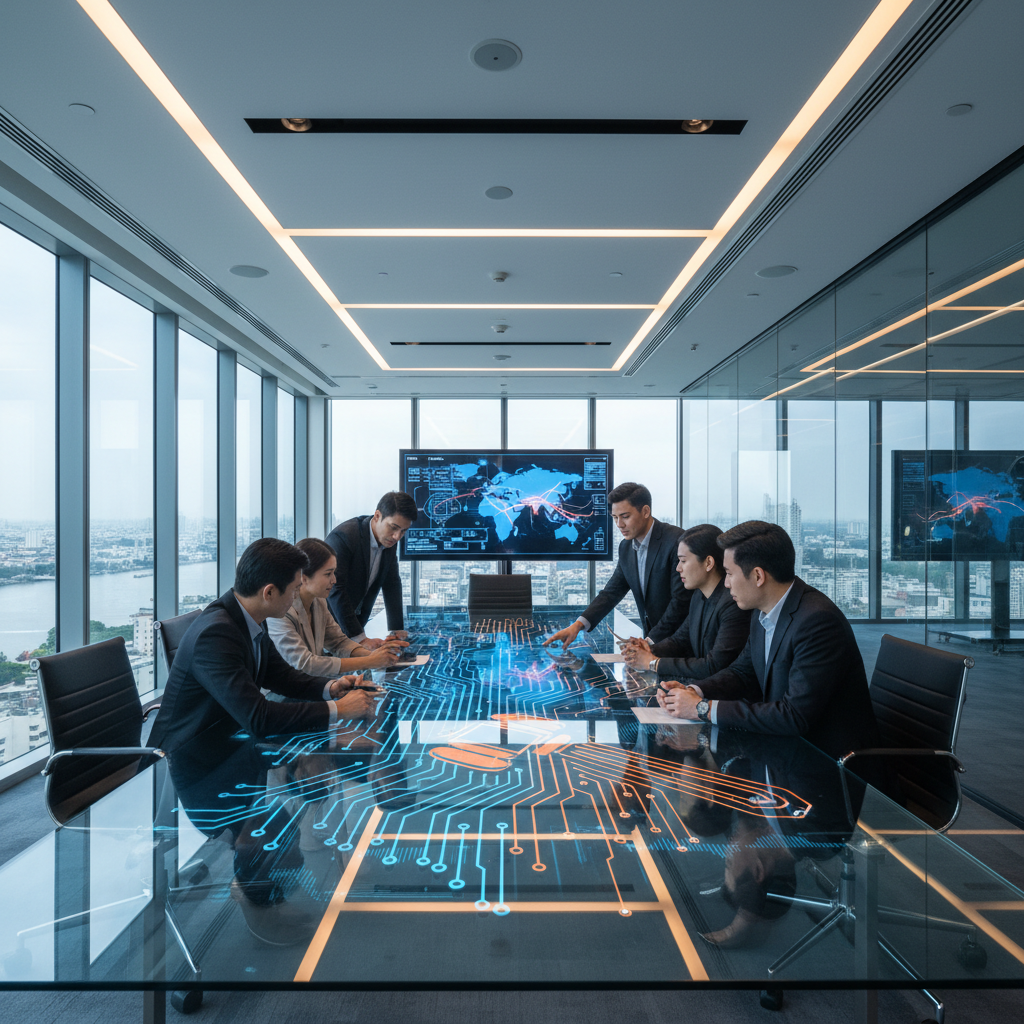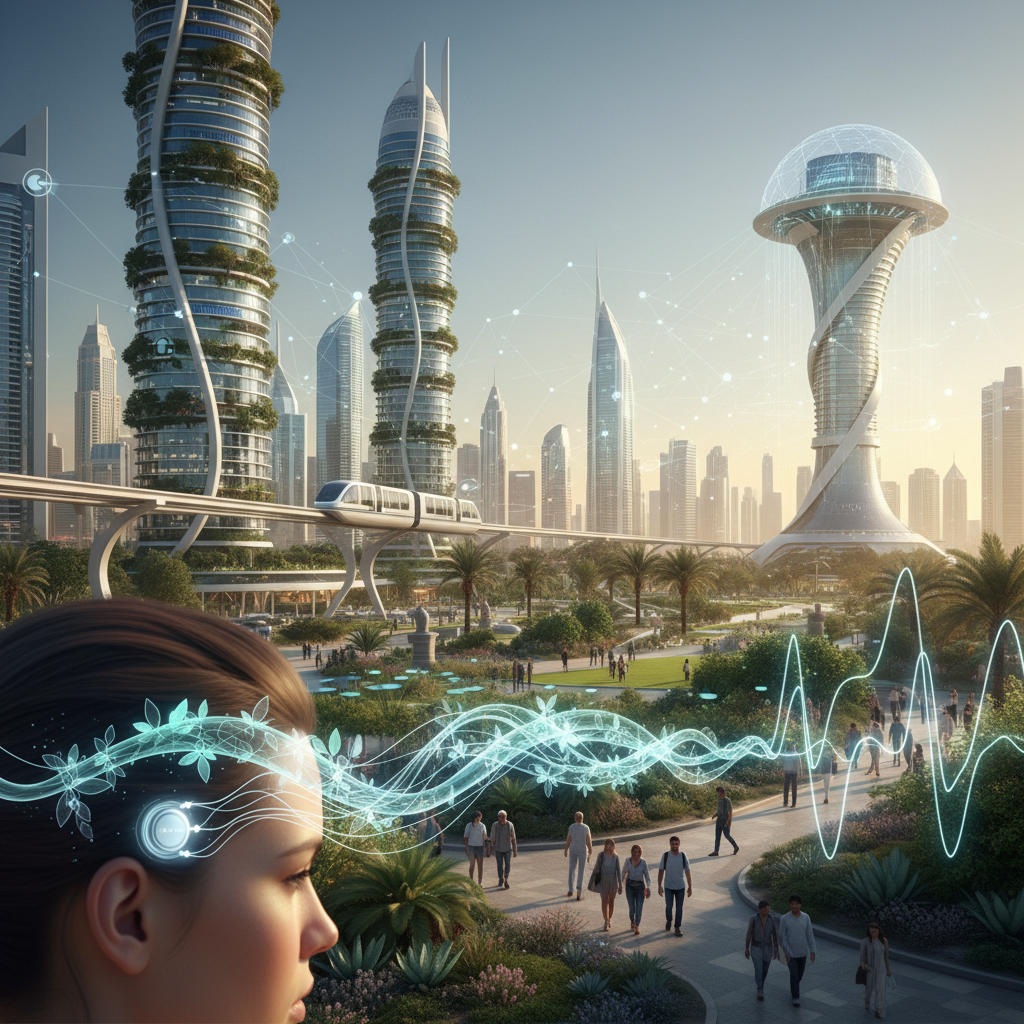

Let's be blunt, friends. We're hurtling towards an energy cliff, and the shiny, seductive promise of artificial intelligence is pushing us faster than anyone wants to admit. Forget Silicon Valley, look at Hyderabad, look at Bengaluru. Our own tech corridors are humming with the same feverish pursuit of AI supremacy, and that pursuit has a monstrous appetite for power. This isn't some distant problem for a future generation, this is happening now, and it demands our immediate, technical attention.
We've all seen the headlines, haven't we? Data centers consuming more electricity than entire countries. The International Energy Agency, back in 2024, projected that global data center electricity consumption could double by 2026, reaching over 1000 TWh. That's a staggering figure, equivalent to the entire electricity demand of a nation like Japan. Here in India, with our booming digital economy and ambitious AI initiatives, the stakes are even higher. Our energy infrastructure, already under immense pressure from industrial growth and urbanization, simply cannot sustain the current trajectory of AI's power demands without significant, systemic changes.
The Technical Challenge: What Problem Are We Solving?
The core of the problem lies in the computational intensity of modern AI, particularly large language models (LLMs) and generative AI. Training a single large model, like OpenAI's GPT-4 or Meta's Llama 3, can consume thousands of MWh of electricity. Inference, while less demanding than training, scales with usage. As AI permeates every application, from healthcare diagnostics to smart city management, the cumulative energy draw becomes astronomical. We're talking about billions of matrix multiplications per second, all requiring vast amounts of energy for computation and, crucially, for cooling. The thermal design power (TDP) of cutting-edge GPUs from NVIDIA, AMD, and Intel is constantly rising, pushing the limits of existing data center cooling solutions.
Architecture Overview: System Design and Components
Addressing this crisis requires a multi-pronged architectural approach, touching hardware, software, and infrastructure. At the hardware level, the focus is on energy-efficient accelerators. While NVIDIA's GPUs, like the H200 and upcoming Blackwell series, offer unparalleled performance, their power consumption is a significant concern. Alternative architectures are emerging, such as custom ASICs (Application Specific Integrated Circuits) from companies like Google (TPUs) and AWS (Inferentia, Trainium), designed for specific AI workloads. These often offer better performance per watt for their intended tasks. Optical computing and neuromorphic chips, though still nascent, hold promise for ultra-low power computation.
Beyond the chip, data center design itself is critical. We need to move beyond traditional air cooling. Liquid cooling, particularly direct-to-chip liquid cooling, is becoming essential. Immersion cooling, where servers are submerged in dielectric fluid, offers even greater thermal efficiency. Furthermore, distributed computing architectures, leveraging edge devices and federated learning, can reduce the need for massive centralized data centers, shifting some computational burden closer to the data source. This is particularly relevant for India, where deploying smaller, localized AI inference nodes could be more feasible than building colossal central facilities.
Key Algorithms and Approaches: Efficiency at the Core
The software layer offers immense opportunities for energy savings. Quantization is a prime example. By reducing the precision of model weights and activations from 32-bit floating point to 8-bit integers (INT8) or even lower (INT4), we can significantly decrease memory footprint and computational requirements without a substantial drop in accuracy. For instance, a model quantized to INT8 can perform operations much faster and with less power on hardware optimized for integer arithmetic. Pruning, where redundant connections in a neural network are removed, and knowledge distillation, where a smaller, simpler