The global technology landscape is undergoing a seismic shift, driven by an insatiable demand for artificial intelligence and the microprocessors that power it. At the heart of this transformation lies NVIDIA, a company whose graphics processing units, or GPUs, have become the de facto standard for AI development. Its market capitalization has soared, reflecting an almost monopolistic grip on the foundational hardware for the AI revolution. But here's the catch: the production of these sophisticated chips, from design to fabrication, relies on a complex, global supply chain, one that begins, often unacknowledged, in the mineral-rich lands of Africa.
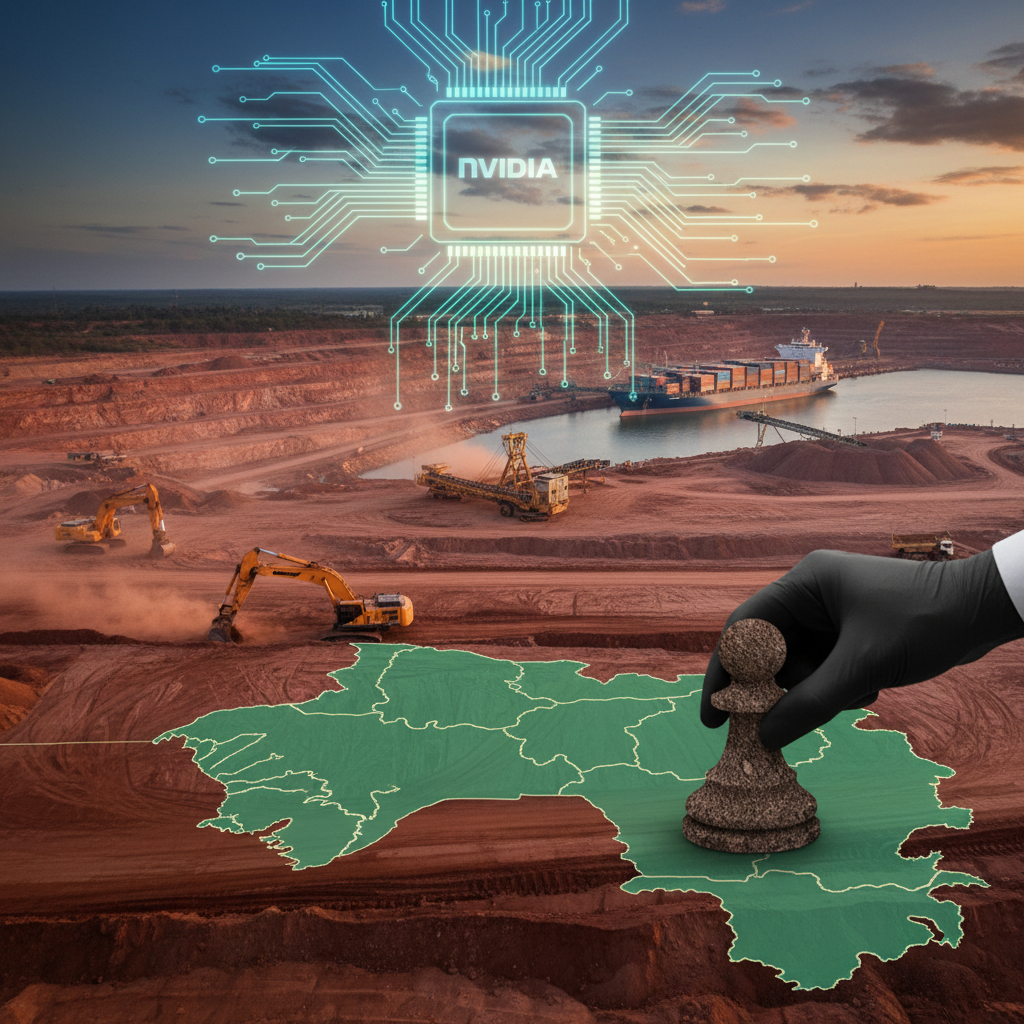
From my vantage point in Conakry, the narrative often feels distant, a grand chess match played out in Silicon Valley, Beijing, and Brussels. Yet, the very ground beneath our feet, the bauxite that Guinea possesses in such abundance, is an indispensable ingredient in this high-stakes game. Bauxite, refined into alumina and then aluminum, is crucial for everything from the cooling systems in data centers housing NVIDIA's GPUs to the very infrastructure supporting global digital networks. It is a stark reminder that while the West and Asia innovate at breakneck speed, the foundational elements often originate from regions like ours, regions that too frequently remain at the periphery of the economic benefits.
The geopolitical implications are profound. The United States, Europe, and China are locked in an increasingly tense competition for technological dominance, a struggle often dubbed the 'chip war.' This is not merely about who designs the fastest processor or develops the most advanced AI model; it is fundamentally about control over the entire supply chain. From rare earth minerals to advanced manufacturing capabilities, every link is scrutinized, every potential vulnerability assessed. Guinea, with the world's largest bauxite reserves, finds itself an unwitting, yet critical, player in this global drama.
"The scramble for critical minerals is intensifying, and Africa is at the epicenter," stated Dr. Ndubuisi Ekekwe, a Nigerian tech entrepreneur and academic, in a recent online forum. "Nations like Guinea must understand their leverage. This is not just about selling raw materials anymore; it's about strategic positioning in a new global order." His words resonate deeply here, echoing a sentiment that has long been present but is now amplified by the sheer scale of the AI boom.
Indeed, the devil is in the details. While Guinea exports millions of tons of bauxite annually, primarily to China, the value addition remains minimal. The raw ore leaves our ports, destined for refineries and smelters abroad, only to return years later as finished goods, often at exorbitant prices. This colonial-era economic model, where Africa supplies raw materials and imports manufactured products, persists even in the age of advanced AI. The question for Guinea is not just if we have the bauxite, but how we can translate that geological fortune into tangible, sustainable economic development and technological autonomy.
The global economic shifts, exacerbated by trade tensions and the Covid-19 pandemic, have exposed the fragility of highly interconnected supply chains. Nations are now prioritizing resilience and self-sufficiency, leading to efforts to 'friend-shore' or 'near-shore' critical manufacturing. For instance, the United States, through initiatives like the Chips and Science Act, has committed billions to bolster domestic semiconductor manufacturing. While this aims to reduce reliance on East Asian foundries, it implicitly increases the strategic importance of secure access to raw materials, including those from Africa.
China, a major investor in Guinea's mining sector, has long understood this dynamic. Companies like Aluminum Corporation of China Limited, or Chalco, have significant stakes in Guinean bauxite mines. Their investments ensure a steady supply for China's vast industrial complex, which in turn fuels its own technological ambitions, including its burgeoning AI sector. This intricate web of dependencies means that any disruption in Guinea, be it political instability or changes in mining policy, sends ripples across the global tech ecosystem.
I dug deeper and found something troubling. Despite the immense value of our mineral wealth, Guinea's digital infrastructure remains nascent. Internet penetration, while improving, lags significantly behind global averages. Access to affordable, reliable electricity, a prerequisite for any meaningful industrialization, is still a challenge for many communities. How can we speak of leveraging our resources for AI development when the basic building blocks of a digital economy are not yet universally established?
Consider the recent reports from Reuters on AI business news. They frequently highlight the colossal investments by companies like Microsoft and Google into AI research and infrastructure. These investments are predicated on an uninterrupted flow of resources, both human and material. When NVIDIA announces record revenues, as it frequently does, a portion of that success, however small and indirect, traces back to the Guinean earth. Yet, the direct benefits to the average Guinean citizen are often elusive.
There is a growing discourse, particularly within African policy circles, about moving beyond resource extraction to value addition. This means investing in local processing facilities, developing indigenous technological capabilities, and fostering a skilled workforce. Imagine if Guinea could not only mine bauxite but also refine it into alumina, or even aluminum, within its borders. This would create jobs, generate higher revenues, and build industrial capacity. Furthermore, consider the potential for local AI applications in mining optimization, agricultural yield prediction, or even public health, all powered by our own resources and ingenuity.
However, achieving this requires substantial investment, political stability, and a clear long-term strategy. It necessitates robust legal frameworks to attract responsible foreign investment while protecting national interests. It also demands a commitment to education and skills development, ensuring that our youth are prepared for the digital economy, not just the extraction economy. As MIT Technology Review often emphasizes, technological sovereignty is not merely about owning the data, but about controlling the means of production and innovation.
The current global economic shifts and trade wars present both a challenge and an opportunity for Guinea. The challenge is the risk of remaining a passive supplier in a geopolitical struggle for technological supremacy. The opportunity lies in leveraging our strategic resources to demand better terms, attract value-adding industries, and build a resilient, digitally empowered future. It requires a fundamental rethinking of our role in the global supply chain, moving from a mere source of raw materials to an active participant in the creation of value. The path is arduous, but the alternative is to watch as the digital revolution bypasses our shores, leaving us with depleted resources and unfulfilled potential. The time for Guinea to assert its strategic importance is now, before the global AI train leaves us behind, carrying our bauxite to distant lands without a backward glance. For more insights into the broader implications of AI's global reach, consider the discussions around AI ethics and bias [blocked].
The conversation must shift from simply exporting bauxite to strategically integrating Guinea into the higher echelons of the technology supply chain. This is a matter of economic justice, national sovereignty, and future prosperity. The world needs our bauxite for its AI ambitions, and we must ensure that this necessity translates into genuine development for our people, not just profits for distant corporations.