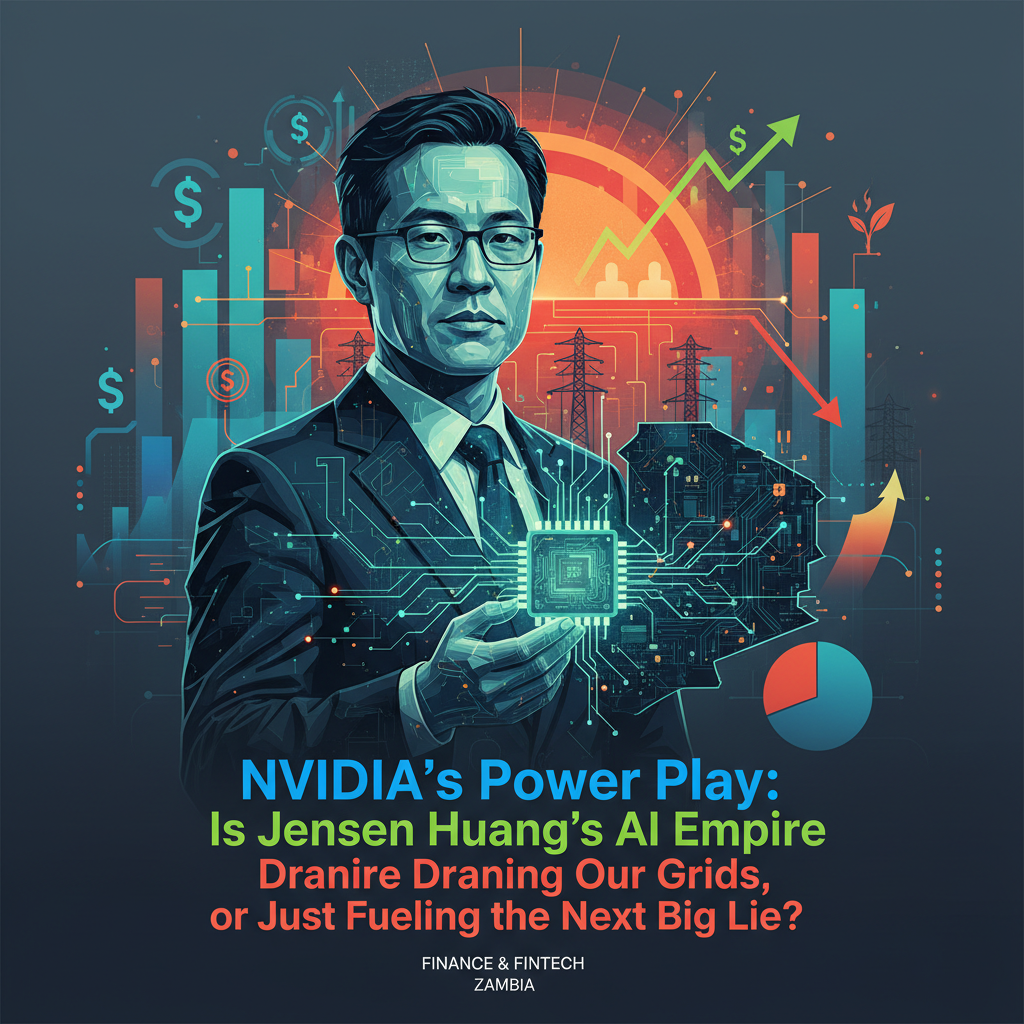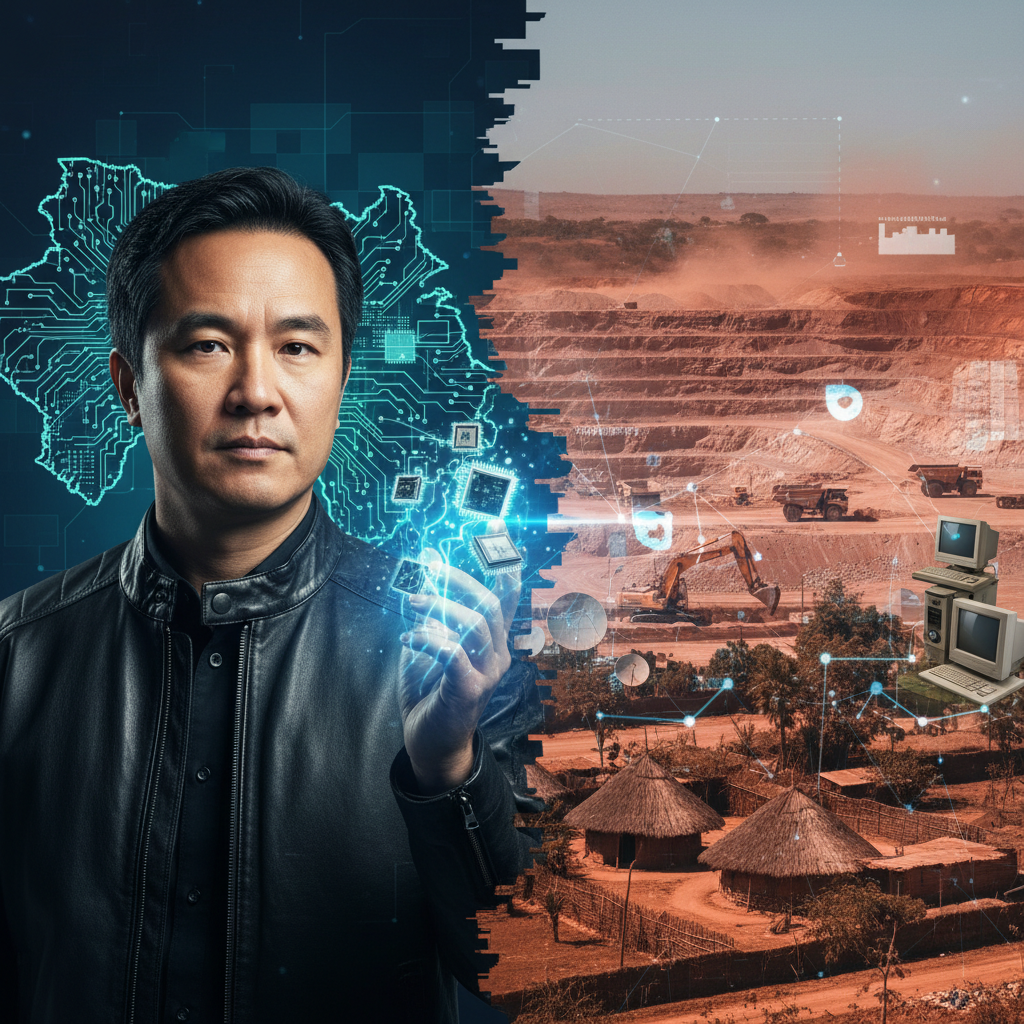
The air in Kamsar, Guinea, often thick with the dust of bauxite mines, now carries a faint, almost imperceptible hum. It is the hum of anticipation, perhaps, or merely the distant thrum of generators struggling to power an ever-growing digital appetite. While Jensen Huang, NVIDIA's charismatic CEO, dazzles audiences with visions of accelerated computing and ubiquitous AI, here in Guinea, the implications are far more granular, more immediate, and frankly, more uncertain. The question I pose today, as a journalist for DataGlobal Hub, is not if AI will transform industries, but how, and for whom, in a nation like ours.
I recently spent time at a mid-sized mining operation near Boké, a company that, like many, is grappling with the dual pressures of global commodity prices and the imperative to modernize. Their operations manager, Madame Fatoumata Diallo, a woman whose pragmatism is as sharp as her gaze, spoke of the constant struggle. "We hear of AI optimizing everything, from predictive maintenance to geological surveys," she told me, her voice cutting through the din of machinery. "But here's the catch: we are still working to ensure consistent power supply, let alone deploy the kind of sophisticated infrastructure NVIDIA champions. The gap between the keynote stage and our reality is vast, a chasm of investment and expertise."
This sentiment, I have found, is not unique to Madame Diallo. It resonates across various sectors in Guinea, from agriculture to emerging tech startups. While global reports from firms like McKinsey and Gartner trumpet impressive AI adoption rates in developed economies, often exceeding 50 percent for at least one function, the figures for sub-Saharan Africa, and specifically Guinea, remain elusive or, more often, negligible. A 2023 report by the African Development Bank, for instance, highlighted that while digital transformation is a priority, investment in AI infrastructure across the continent lags significantly behind other regions, with only a fraction of global AI funding reaching African startups. This is not for lack of talent or ambition, but rather a systemic issue of access, capital, and foundational digital literacy.
NVIDIA's ecosystem, built on powerful GPUs and Cuda software, is undeniably the backbone of much of today's generative AI boom. Companies like Google, Microsoft, and OpenAI are leveraging this hardware to build their colossal models. For a mining company in Guinea, however, the direct application of a new NVIDIA H200 Tensor Core GPU is not immediately apparent. Their needs are more fundamental: robust data collection, reliable connectivity, and skilled personnel to even interpret, let alone implement, AI solutions. This is where the devil is in the details. The promise of AI is often articulated in terms of efficiency gains and cost reductions, but these benefits are contingent upon a pre-existing digital maturity that many Guinean enterprises simply do not possess.
Consider the winners and losers in this unfolding narrative. On one hand, global mining giants with significant capital, such as Rio Tinto or AngloGold Ashanti, which operate in various African nations including Guinea, are already investing heavily in AI for optimizing their vast, complex operations. Rio Tinto, for example, has publicly discussed using AI for everything from autonomous haulage systems to advanced mineral processing, often in partnership with technology providers that leverage NVIDIA's hardware. These companies possess the financial might and technical expertise to integrate such advanced systems, potentially widening the competitive gap with smaller, locally-owned enterprises. Their AI initiatives are often driven by global mandates, not necessarily tailored to local capacity building.
On the other hand, smaller, indigenous Guinean companies, often the primary employers and economic drivers in rural areas, find themselves at a distinct disadvantage. They lack the capital for high-end computing infrastructure, the talent pool trained in AI and data science, and the robust digital networks required for cloud-based AI solutions. This creates a risk of a deepening digital divide, where the benefits of the AI revolution bypass those who could arguably benefit the most from increased efficiency and resource optimization.
What of the workers? I spoke with Mamadou Bah, a young data analyst who recently returned to Conakry after studying abroad. He works for a small Guinean startup attempting to build AI solutions for agricultural yield prediction. "The enthusiasm is here, the ideas are here," Mamadou explained, gesturing towards a whiteboard covered in algorithms. "But the resources, the sheer computing power, it is a constant battle. We rely on cloud services, which are expensive, and the internet here is not always stable. When Jensen Huang speaks of 'AI factories,' I wonder if he envisions them ever reaching places like ours, or if we are merely consumers of models built elsewhere." His perspective highlights a critical point: without local infrastructure and investment, Guinean talent risks being relegated to the periphery of the global AI economy.
This brings us to the crucial role of government and policy. The Guinean government, through initiatives like the National Agency for Digital Economy and Innovation, has expressed commitments to digital transformation. However, concrete, actionable strategies for fostering AI adoption, particularly in critical sectors like mining and agriculture, remain in their nascent stages. We need more than policy statements; we require dedicated investment in digital infrastructure, robust data governance frameworks, and educational programs to cultivate a local AI workforce. Without these foundational elements, the grand visions articulated by tech titans like Jensen Huang will remain just that: visions, disconnected from the daily struggles and immense potential of nations like Guinea.
Dr. Aminata Touré, a respected economist at the University of Conakry, articulated this challenge with precision. "The 'trillion-dollar AI ecosystem' is a powerful narrative, but it is one largely shaped by the priorities and capabilities of the Global North," she observed during a recent panel discussion. "For African nations, the focus must shift from merely consuming AI to actively participating in its development and ensuring its application addresses our specific developmental challenges. This requires strategic partnerships, technology transfer, and a firm commitment to digital sovereignty. Otherwise, we risk becoming perpetual clients in a market where we hold little sway." Her words resonate deeply, echoing a call for self-determination in the digital age.
Looking ahead, the path for Guinea is complex. The global AI arms race, fueled by companies like NVIDIA, will undoubtedly continue to accelerate. The challenge for Guinean businesses and policymakers is to avoid being left behind, not by trying to replicate Silicon Valley, but by strategically identifying niche applications where AI can genuinely add value, even with limited resources. This might involve leveraging open-source AI models, focusing on data localization, and fostering collaborations with international partners willing to invest in local capacity. The recent growth of tech hubs in other African nations, such as Nigeria and Kenya, offers a glimpse of what is possible with concerted effort and strategic investment, even if the scale of NVIDIA's operations remains a distant aspiration. For instance, companies like DataDotOrg are working on data literacy initiatives across Africa, a crucial first step for any AI adoption. Learn more about AI's impact on global business.
I dug deeper and found something troubling: the current approach often prioritizes quick wins for foreign investors over sustainable, long-term development of local capabilities. This leads to a situation where AI solutions are imported, rather than organically grown, creating a dependency that could stifle indigenous innovation. The narrative needs to shift from simply adopting AI to adapting and creating AI that serves Guinea's unique context and challenges. The digital future, much like the bauxite beneath our soil, is a resource that must be managed with foresight and an unwavering commitment to local empowerment. Explore the latest in AI research and analysis.
As the sun sets over the Atlantic, casting long shadows across Conakry, the question remains: will Jensen Huang's AI vision truly uplift all boats, or will it exacerbate existing inequalities, creating a new form of digital colonialism? The answer, I believe, lies not in the technology itself, but in the choices we, as a nation, make today. The potential is immense, but so are the pitfalls. Stay informed on AI industry news.