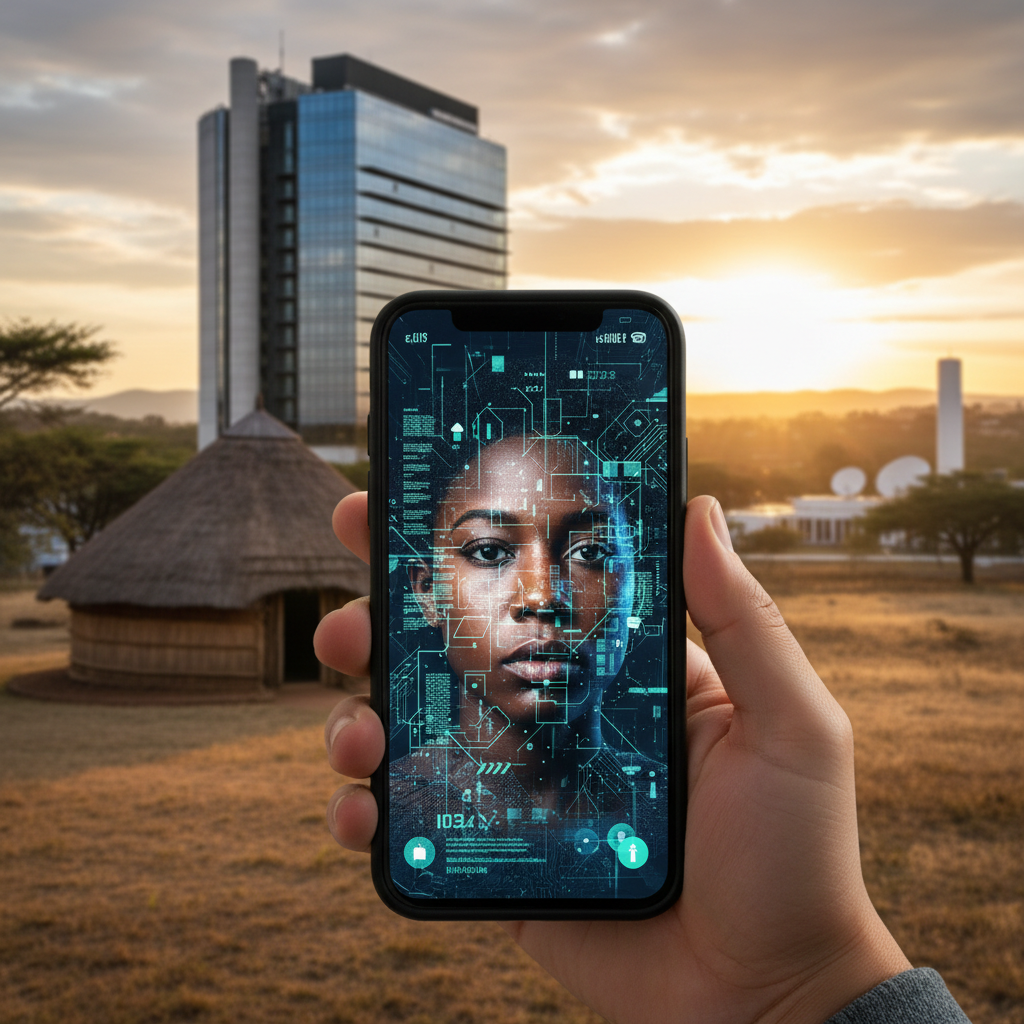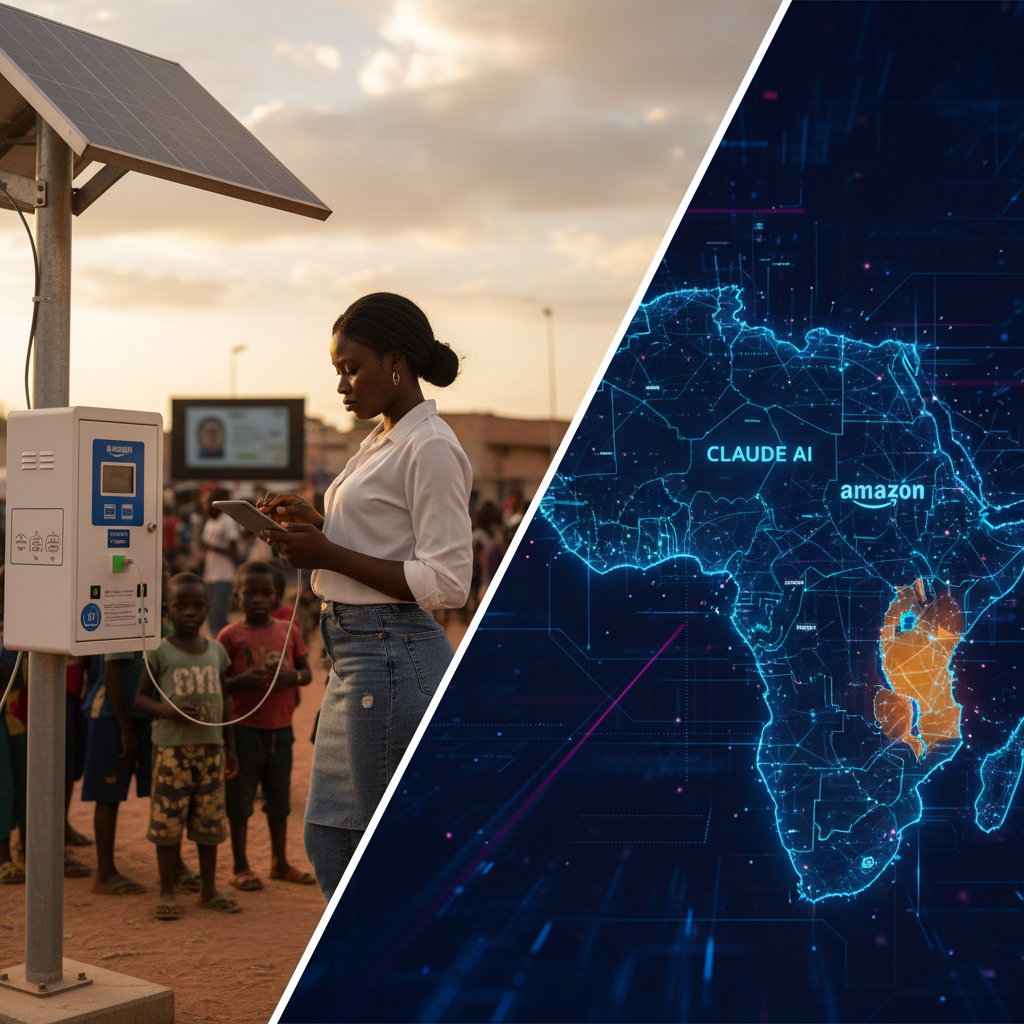

The drumbeat from Silicon Valley often reaches our shores in Guinea as a distant, yet insistent, rhythm. It speaks of innovation, transformation, and a future reshaped by artificial intelligence. The latest crescendo involves Anthropic, its large language model Claude, and the formidable backing of Amazon. The narrative is compelling: Claude, with its focus on safety and constitutional AI, is rapidly gaining enterprise adoption, and Amazon's significant investment and integration via AWS are propelling it into the global spotlight. But here's the catch, as I always say, when promises of digital revolution arrive, especially for a continent like Africa, I find it imperative to question the true beneficiaries and the underlying mechanisms.
Recent reports indicate Anthropic has secured substantial funding rounds, including a reported $4 billion investment from Amazon, solidifying a strategic partnership that sees Claude deeply integrated into Amazon Web Services. This move is designed to make Claude accessible to a vast array of enterprise clients, promising enhanced productivity, sophisticated data analysis, and even customer service automation. The allure is undeniable for businesses seeking an edge in an increasingly competitive global landscape. For companies in Europe and North America, this represents a powerful new tool. But what does this mean for Guinea, for Conakry, for the small and medium enterprises struggling with basic infrastructure, let alone advanced AI deployment?
My investigations, often conducted from the bustling markets of Madina to the quiet academic halls of Gamal Abdel Nasser University, reveal a persistent disconnect. The narrative of global AI adoption frequently overlooks the foundational challenges faced by many African nations. While Anthropic and Amazon tout Claude's capabilities, the practicalities of deploying such sophisticated technology in a context like Guinea are complex. We speak of cloud computing, but reliable, affordable internet access remains a luxury for many. We discuss data privacy, yet regulatory frameworks are often nascent or inadequately enforced. The devil is in the details, and these details are often ignored when the global tech giants paint their grand visions.
Consider the statements from key figures. Dario Amodei, Anthropic's CEO, has consistently emphasized the company's commitment to building safe and beneficial AI. He stated in a recent interview, "Our mission is to ensure that advanced AI systems are developed responsibly and are aligned with human values." This is a laudable goal, certainly. However, the interpretation of "human values" can vary significantly across cultures and economic strata. From a Guinean perspective, "beneficial AI" must first address fundamental needs: improving agricultural yield, optimizing supply chains for local goods, enhancing public health services, or even simply providing accessible education. Is Claude, in its current enterprise-focused iteration, truly designed to tackle these specific, localized challenges?
Furthermore, Amazon's strategic interest is clear. Andy Jassy, CEO of Amazon, has highlighted the importance of AI in the company's future, stating, "We believe generative AI is going to be transformative for our customers, and we're excited to bring Anthropic's cutting-edge models to AWS." This partnership undoubtedly strengthens AWS's position in the fiercely competitive cloud AI market, allowing it to offer a compelling alternative to models from Google and OpenAI. For Amazon, it is a sound business decision. For Guinea, it is another layer of foreign technology whose immediate utility is not always self-evident.
I dug deeper and found something troubling. While the potential for AI in Africa is immense, the current model of deployment often mirrors historical patterns of resource extraction. Data, the new oil, is collected and processed, often by foreign entities, with limited direct benefit or ownership for the communities from which it originates. When Claude is adopted by a multinational corporation operating in Guinea, for instance, the efficiencies gained primarily benefit the corporation, not necessarily the local economy or workforce. The jobs created are often highly specialized, requiring skills that are scarce locally, thus perpetuating a reliance on external expertise.
According to a report by Reuters on AI adoption in emerging markets, the primary barriers are not just technical, but also socio-economic: lack of digital literacy, inadequate infrastructure, and a dearth of local data scientists. While the idea of Claude automating tasks sounds appealing, without a robust digital ecosystem and a trained local workforce, its impact will remain marginal for the majority. We cannot simply import solutions wholesale and expect them to flourish without cultivating the soil first. The Guinean proverb, "A house built on sand will not stand," comes to mind.
Consider the perspective of local leaders. Dr. Aminata Diallo, a prominent Guinean economist and advisor to the Ministry of Digital Economy, recently voiced her concerns at a regional tech summit. She remarked, "We welcome technological advancement, but it must be advancement that serves our people directly. We need AI solutions that are tailored to our unique challenges, developed with our data, and managed by our talent. Otherwise, we risk becoming mere consumers, not creators, in this new digital era." Her words resonate deeply with many who advocate for digital sovereignty and locally-driven innovation.
While the partnership between Anthropic and Amazon represents a significant milestone in the global AI landscape, its implications for countries like Guinea are far from straightforward. The promise of advanced AI is intoxicating, but its practical application must be scrutinized with a critical eye. We must ask: Is this technology genuinely empowering, or is it simply reinforcing existing power structures and digital dependencies? The answer, I suspect, lies not in the grand pronouncements from boardrooms, but in the tangible, measurable improvements it brings to the lives of ordinary Guineans. Until then, the drumbeat from Silicon Valley remains, for many here, a distant echo, its true melody yet to be heard on our own terms. For more on the broader implications of AI in developing nations, one might consider the ongoing discussions at MIT Technology Review. The journey towards equitable AI adoption is long, and the path is fraught with complexities that extend far beyond the algorithms themselves. We must ensure that the digital future is not just for a select few, but for all, including the vibrant, resilient people of Guinea. For more on Anthropic's specific offerings, their official site is a good starting point: Anthropic.