
Myanmar Universities Embrace AI for Enhanced Learning Amidst Digital Push
Universities across Myanmar are cautiously integrating AI tools into their curricula and research, aiming to bridge the digital divide and prepare students for a rapidly evolving global workforce. This move is part of a broader regional push towards digital transformation in education.

YANGON, Myanmar – April 22, 2026 – Myanmar's higher education institutions are embarking on a significant journey to integrate Artificial Intelligence (AI) into their teaching methodologies and research frameworks. This strategic shift is aimed at modernizing the curriculum and equipping students with essential skills for the 21st-century job market, a trend mirrored across the broader Southeast Asian region.
Leading the charge is the University of Computer Studies, Yangon (UCSY), which recently launched a pilot program utilizing AI-powered learning platforms. These platforms offer personalized learning paths, automated grading for certain assignments, and intelligent tutoring systems. "Our goal is not to replace human instructors, but to augment their capabilities and provide students with more tailored support," stated Dr. Aye Thandar, Rector of UCSY, during a recent press briefing. "AI can help us identify learning gaps faster and offer immediate feedback, which is invaluable in a country with diverse educational backgrounds."
The initiative comes as Myanmar, like many of its ASEAN neighbors, grapples with the dual challenge of technological advancement and educational equity. The Ministry of Education has expressed cautious optimism, emphasizing the need for ethical AI deployment and robust digital infrastructure.
"We are keenly aware of the potential for AI to transform education, but also the risks, particularly concerning data privacy and algorithmic bias," commented U Myint Zaw, Director-General of the Department of Higher Education. "Our current focus is on developing national guidelines for AI in education, ensuring that these tools serve to uplift, not marginalize, our students. We are learning from the experiences of countries like Singapore and Vietnam, who are further along in their AI integration journeys."
Beyond personalized learning, AI is also being explored for administrative efficiencies, such as student enrollment prediction and resource allocation. Mandalay Technological University (MTU) is experimenting with AI-driven analytics to optimize course offerings based on industry demand, a crucial step in aligning academic output with economic needs.
However, challenges remain. Internet connectivity, especially in rural areas, and the availability of trained faculty to effectively utilize and teach with AI tools are significant hurdles. "The digital divide is a real concern," acknowledged Daw Khin Marlar, a lecturer at Yangon University's Computer Science Department. "We need substantial investment in infrastructure and continuous professional development for our educators to truly harness AI's potential. It's not just about buying software; it's about a fundamental shift in pedagogical approach."
Regional collaborations are proving vital. Myanmar universities are actively participating in ASEAN-wide forums on AI in education, sharing best practices and seeking partnerships. This collaborative spirit is expected to accelerate the adoption of responsible and effective AI solutions, ensuring that Myanmar's next generation is well-prepared for a future increasingly shaped by artificial intelligence.
Related Articles

AI 'Guru' for Indian Kabaddi: Punjab's Tech Prowess Meets Ancient Sport
 Arjùn Sharmà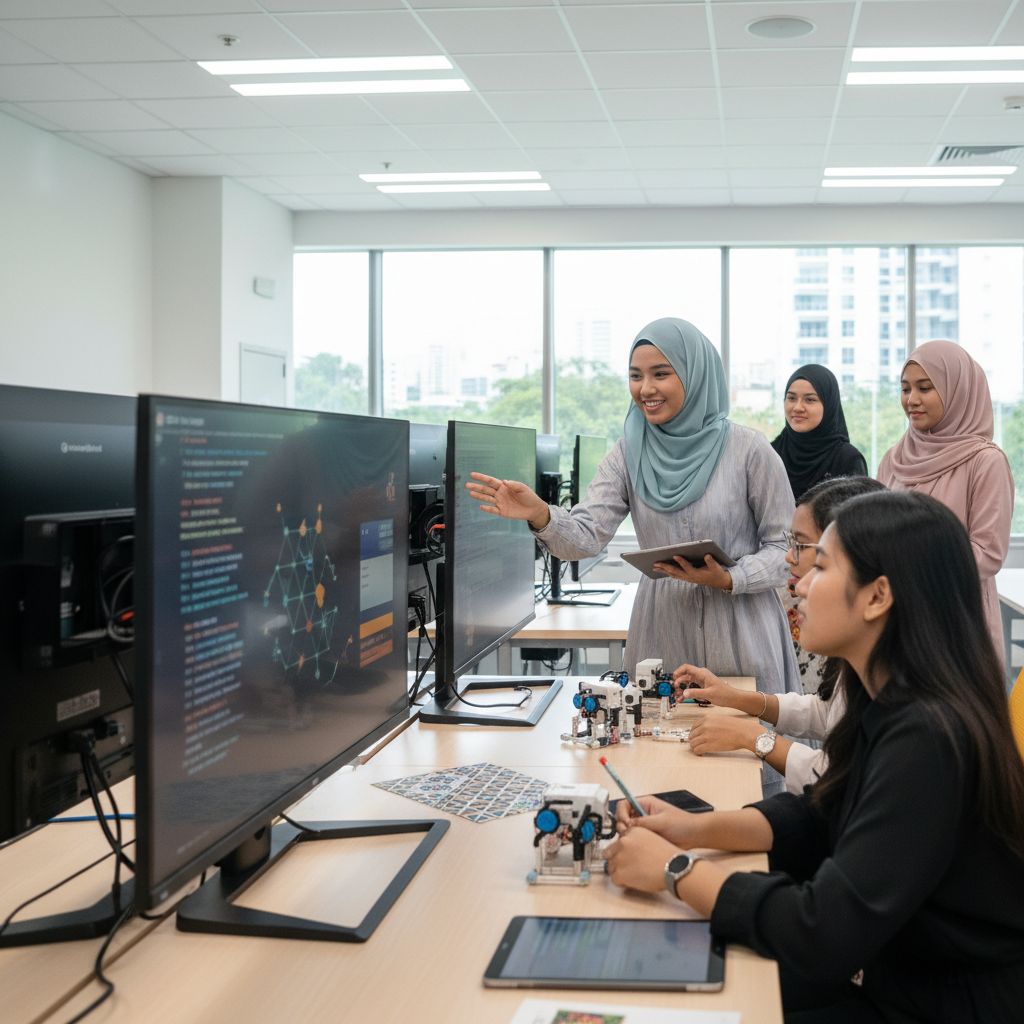
Empowering Future Generations: AI Literacy for Malay Women in Education
 Siti Nurhalizah Rahimàn
Zambian Women Lead AI Literacy Drive in Education Sector
 Lindiwe Sibandà
Japan's 'AI Shokunin' Drive Economic Revival Amidst Global Tech Race
 Hiroshì Yamadà