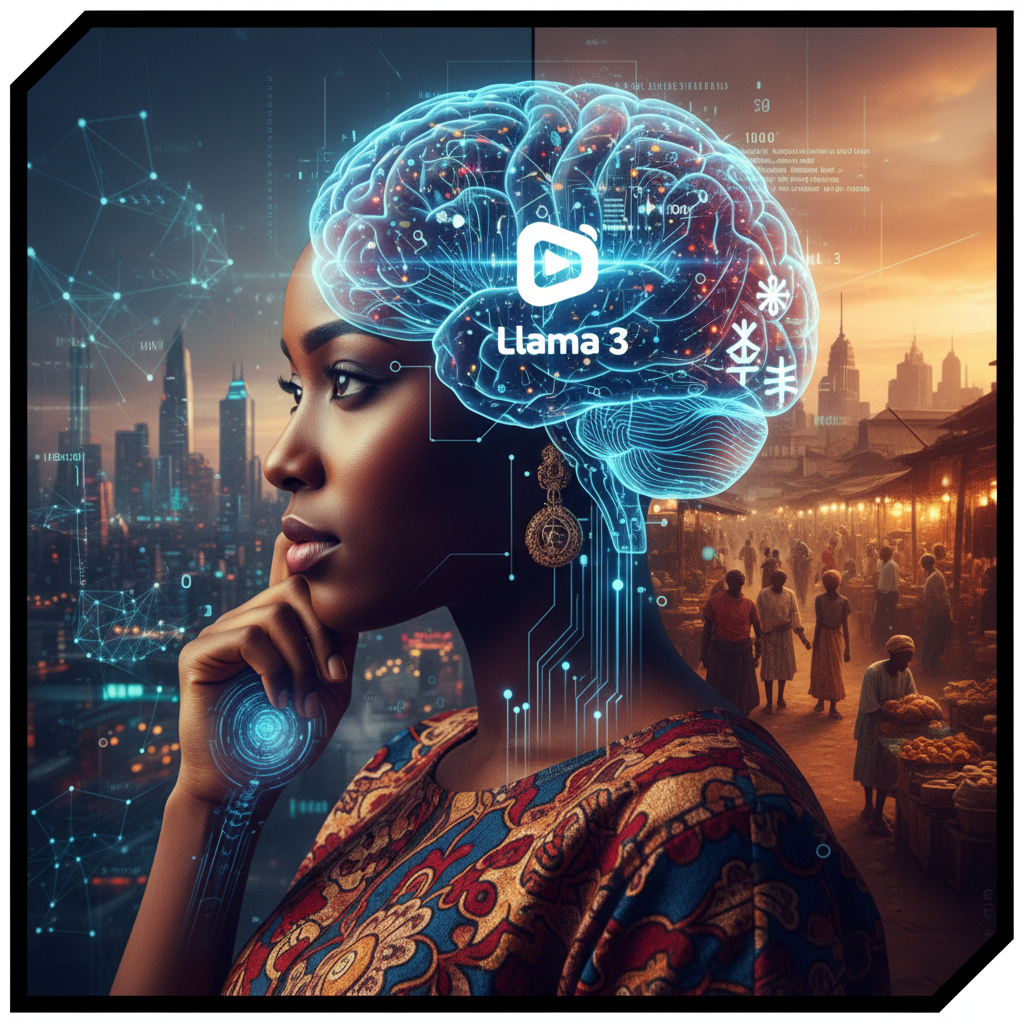

Let me tell you a story, one that plays out every day in the bustling markets of Lagos, in the quiet coding hubs of Yaba, and even in the family compounds up north. Imagine a young entrepreneur, Chinedu, who used to spend hours poring over market data, trying to predict consumer trends for his small fashion business. He’d talk to aunties in Balogun Market, observe patterns, and rely on his gut, honed by years of living and breathing Nigerian commerce. Now, Chinedu taps into a fine-tuned version of Meta's Llama 3, running on a local server, trained on Nigerian social media trends and economic reports. In minutes, it spits out insights that would have taken him weeks, if not months, to gather. He’s faster, more efficient, and perhaps, a little less reliant on that human intuition. This isn't science fiction, my people, this is April 2026, and the future is already here because it's just not evenly distributed.
Meta's AI research lab, Fair, has been a colossal force in the open science movement, pushing the boundaries of what's publicly accessible in artificial intelligence. Their philosophy, championed by leaders like Mark Zuckerberg, is that open source accelerates innovation, democratizes access, and ultimately benefits everyone. Models like Llama, and its latest iteration, Llama 3, are not just code; they are blueprints for new ways of thinking, creating, and interacting. For us in Nigeria, this open access isn't merely a convenience, it's a lifeline, bypassing the exorbitant costs often associated with proprietary AI. But as these powerful, openly available models become interwoven into the fabric of our daily lives, particularly through local adaptations, we must critically examine their psychological footprint.
Consider the cognitive effects. When Chinedu relies on Llama 3 for market analysis, he offloads a significant cognitive burden. On the one hand, this frees up mental bandwidth for higher-order tasks, for creativity, for strategic thinking. He can focus on designing new collections, building partnerships, or expanding his brand. On the other hand, what happens to that intuitive muscle, that deep contextual understanding of the Nigerian market that he once cultivated through painstaking human interaction? Does it atrophy? Are we trading deep, experiential knowledge for efficient, algorithmically-derived insights? This is not a simple trade-off, it is a profound shift in our cognitive landscape.
Dr. Ngozi Okonjo-Iweala, Director-General of the World Trade Organization, has often spoken about the need for developing nations to embrace technology while preserving local knowledge and capacities. While not directly addressing Meta's AI, her sentiment resonates deeply here.