
The digital landscape of Guinea, much like the rest of Africa, is increasingly shaped by the technological ambitions of global giants. For billions, communication now flows through the conduits of Meta's Instagram and WhatsApp. The recent, aggressive integration of advanced AI features, powered primarily by Meta's Llama 3 large language model, into these ubiquitous platforms is not merely an upgrade; it is a fundamental re-engineering of how we interact, search, and consume information. But here's the catch: are these innovations truly serving the user, or are they merely sophisticated mechanisms for data aggregation and algorithmic influence, particularly in regions with nascent digital rights frameworks?
My investigation into Meta's latest AI push reveals a technical architecture designed for pervasive integration, promising everything from enhanced search capabilities to generative image creation and real-time content summarization within chat threads. The technical challenge Meta addresses is formidable: how to deploy a computationally intensive large language model, such as Llama 3, across a global user base of billions, often on devices with varying specifications and in regions with inconsistent network infrastructure. This requires a delicate balance of on-device processing, edge computing, and cloud-based inference, all while maintaining low latency and high relevance.
Architecture Overview: A Hybrid Approach to Global Scale
Meta's strategy for Llama 3 deployment within Instagram and WhatsApp is a hybrid architecture, meticulously engineered for scale and efficiency. At its core, the system leverages a federated learning paradigm combined with a multi-tier inference pipeline. On the client side, lightweight, quantized versions of Llama 3, or specialized task-specific models derived from it, are deployed directly onto user devices. These models handle immediate, low-complexity tasks such as predictive text, basic content moderation, and initial query parsing. This 'on-device' processing minimizes latency and reduces reliance on constant network connectivity, a critical consideration in many parts of Guinea where internet access can be sporadic. For instance, the predictive text feature in WhatsApp, while seemingly simple, relies on a highly optimized, compact transformer model fine-tuned for local language nuances, often updated via federated learning cycles.
More complex requests, such as generating elaborate images from text prompts or summarizing long chat histories, are offloaded to Meta's vast cloud infrastructure. This cloud component houses the full-scale Llama 3 model, likely running on custom silicon accelerators, such as Meta's own Mtia chips, or NVIDIA's H100 GPUs. An intermediate layer, often referred to as 'edge inference', sits between the client and the main cloud. This layer, strategically located closer to user populations in regional data centers, handles requests that require more computational power than on-device models can provide but are not so complex as to necessitate the full cloud infrastructure. This reduces bandwidth consumption and further cuts down on perceived latency, a crucial factor for user experience in high-latency environments.
“The deployment strategy is a masterclass in distributed systems engineering,” observes Dr. Aminata Diallo, a Senior AI Architect at the Guinean Ministry of Digital Economy and Telecommunications. “They are effectively partitioning the AI workload to optimize for diverse network conditions and device capabilities, a necessity for truly global adoption. However, the centralization of the most powerful models in the cloud raises questions about data sovereignty and access control for local regulators.”
Key Algorithms and Approaches: From Transformers to Quantization
At the heart of Llama 3, and by extension, these new features, are transformer architectures. These neural networks, characterized by their self-attention mechanisms, have revolutionized natural language processing. For Instagram's AI features, such as image generation or advanced content tagging, Llama 3 is likely integrated with multimodal models. These models fuse visual and textual understanding, allowing the AI to interpret an image and a text prompt to create new visual content. The training process involves vast datasets of image-text pairs, enabling the model to learn the intricate relationships between language and visual concepts.
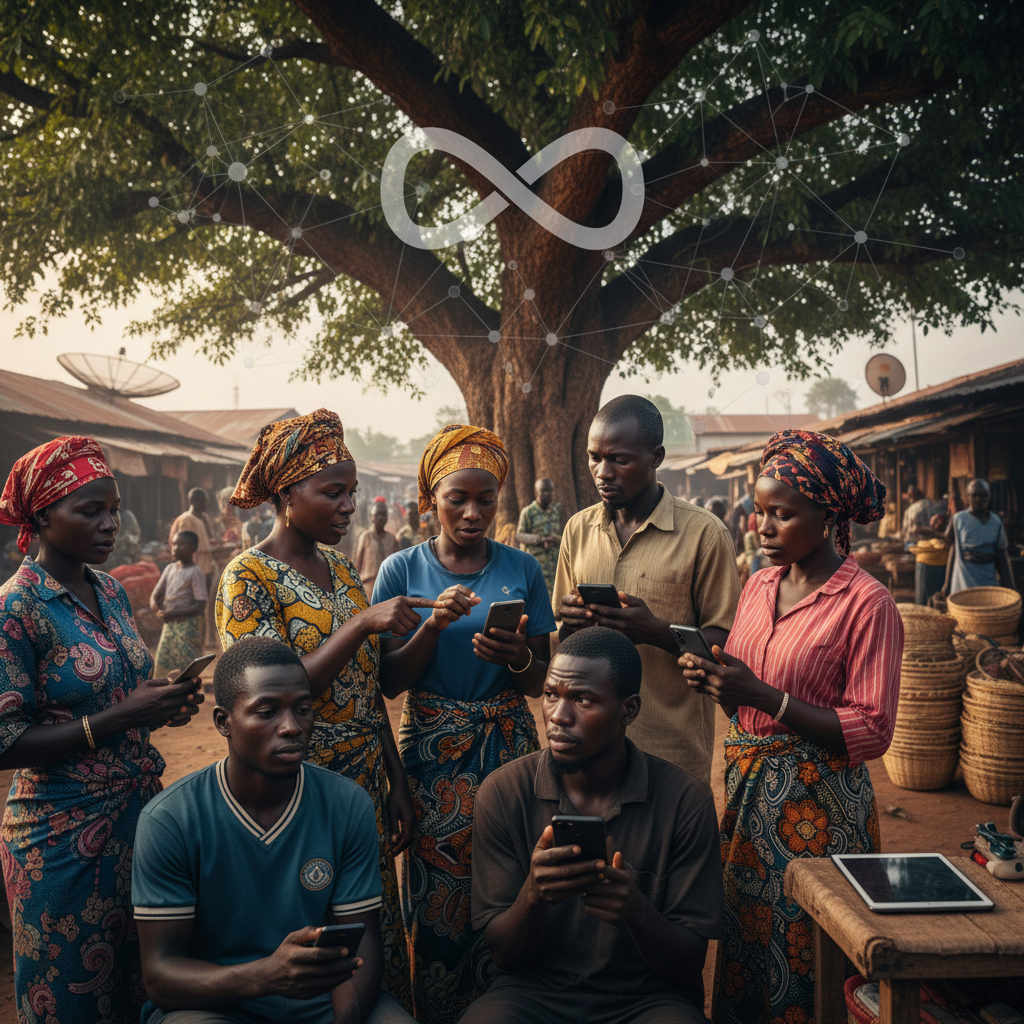
Consider a user in Conakry asking Instagram's AI to “create an image of a bustling market scene with vibrant African fabrics and fresh produce.” The prompt is first processed by an on-device or edge-based encoder, which converts the text into a numerical representation. This representation is then sent to the cloud, where the full multimodal Llama 3 model, possibly a diffusion model conditioned on the text embedding, generates the image. The image is then compressed and sent back to the user's device. This entire process, from prompt to pixel, demands incredible efficiency.
To achieve the necessary performance on diverse hardware, Meta employs aggressive model quantization and pruning techniques. Quantization reduces the precision of the numerical representations within the neural network, for example, from 32-bit floating-point numbers to 8-bit integers. This significantly shrinks model size and speeds up inference, albeit with a slight trade-off in accuracy. Pruning involves removing less important connections or neurons from the network, further reducing its computational footprint without a catastrophic loss of performance. These optimizations are critical for deploying models on mobile devices, where memory and processing power are constrained.
Implementation Considerations and Trade-offs
Implementing these features at Meta's scale involves navigating significant trade-offs. Performance versus accuracy is a constant battle. A highly quantized model might be fast but could occasionally produce less coherent or accurate results. The choice between on-device, edge, and cloud inference is also a balancing act involving privacy, latency, and cost. On-device processing offers maximum privacy and lowest latency but is limited by device capabilities. Cloud processing offers maximum power and flexibility but introduces latency and raises data privacy concerns, particularly when sensitive user data is involved. Edge computing attempts to strike a middle ground.
Another critical consideration is model drift and continuous learning. User interactions provide a constant stream of new data. Meta likely employs continuous learning pipelines, where anonymized and aggregated user interactions are used to fine-tune and update the Llama 3 models. This ensures the AI remains relevant and adapts to evolving linguistic patterns and cultural contexts, including the diverse languages and dialects spoken across Guinea.
Benchmarks and Comparisons: A Race for Dominance
Meta's Llama 3, in its full cloud-based iteration, competes directly with models like OpenAI's GPT-4, Google's Gemini, and Anthropic's Claude. Benchmarks across various tasks, from natural language understanding to code generation, show Llama 3 performing competitively, often surpassing its predecessors and even some rival models in specific metrics. However, these benchmarks are typically conducted in controlled environments and do not always reflect real-world performance on diverse hardware and network conditions. The true benchmark for Meta is user adoption and satisfaction, particularly in emerging markets like Guinea, where the utility and accessibility of these features are paramount.
“While the raw performance metrics of Llama 3 are impressive,” states Mr. Mamadou Sow, CEO of a local Guinean tech startup focused on AI-driven education, “the true measure of its success will be its ability to understand and respond to the unique cultural nuances and linguistic diversity of our region. A model trained predominantly on Western data might struggle with local idioms or historical context, rendering its advanced capabilities less useful.”
Code-Level Insights: Frameworks and Patterns
Developers integrating Llama 3 or similar large models typically rely on frameworks like PyTorch, which Meta itself developed. For on-device deployment, tools such as PyTorch Mobile or TensorFlow Lite are indispensable. These frameworks provide optimized runtimes for mobile and edge devices, allowing for efficient inference of quantized models. The use of Onnx, an open neural network exchange format, facilitates interoperability between different frameworks and hardware accelerators. For managing the sheer volume of data and model updates, Meta likely employs sophisticated MLOps platforms, orchestrating everything from data ingestion and model training to deployment, monitoring, and continuous integration/continuous deployment (ci/cd) pipelines.
Real-World Use Cases: Beyond the Hype
- Enhanced Search and Discovery on Instagram: Users can now describe content they are looking for in natural language, and the AI will surface relevant posts, reels, or even profiles. This moves beyond simple hashtag searches, understanding intent and context. For a small business in Conakry selling traditional Guinean textiles, this means potential customers can find them by describing the patterns or colors they desire, rather than relying on precise keyword matches.
- AI-Powered Assistance in WhatsApp: Llama 3 acts as a conversational assistant within chat, capable of answering questions, summarizing long conversations, or even drafting messages. Imagine a farmer in Kindia using WhatsApp to ask the AI about optimal planting times for a specific crop, receiving information synthesized from various online sources.
- Generative AI for Content Creation: Instagram's AI allows users to generate images, stickers, or even short video clips from text prompts, democratizing content creation. A young Guinean artist, perhaps lacking sophisticated design software, can rapidly prototype visual concepts for their work using simple text commands.
- Real-time Language Translation and Transliteration: While not new, the integration of Llama 3 significantly enhances the accuracy and fluency of real-time translation within WhatsApp, particularly for less common language pairs. This facilitates cross-cultural communication, breaking down language barriers between communities and with the diaspora.
Gotchas and Pitfalls: The Unseen Costs
Despite the impressive technical feats, the integration of such powerful AI into everyday communication tools carries significant risks. The devil is in the details, and for Meta, these details often revolve around data privacy and algorithmic bias. The sheer volume of user data processed by Llama 3 raises profound questions about surveillance and data exploitation. While Meta asserts data is anonymized, the potential for re-identification or misuse remains a concern. Furthermore, models trained on globally diverse datasets can still exhibit biases, leading to misinterpretations or even discriminatory outputs, particularly when dealing with specific cultural contexts or minority languages not adequately represented in training data. This could manifest as AI-generated content that misrepresents Guinean culture or fails to understand local slang, leading to frustration or offense. I dug deeper and found something troubling: the lack of transparent auditing mechanisms for these models, especially concerning their performance and fairness in non-Western contexts, leaves much to be desired.
“The promise of AI is immense, but so are the ethical responsibilities,” cautions Madame Fatoumata Camara, a digital rights advocate based in Boké. “We must demand transparency in how these models are trained, what data they consume, and how their outputs are governed. Our digital future cannot be built on opaque algorithms that operate beyond public scrutiny.”
Resources for Going Deeper
For those interested in the technical specifics of large language models and their deployment, I recommend exploring research papers on transformer architectures and model quantization. ArXiv is an excellent resource for the latest academic publications. For industry perspectives on MLOps and large-scale AI deployment, TechCrunch's AI section often provides valuable insights. Meta AI's own research blog, accessible via ai.meta.com, offers detailed technical explanations of their models and infrastructure.
Ultimately, Meta's Llama 3 integration into Instagram and WhatsApp represents a significant leap in making advanced AI accessible to billions. The engineering prowess is undeniable. However, as users in Guinea and across the continent embrace these new capabilities, we must remain vigilant. The convenience of AI should not come at the cost of privacy, cultural integrity, or algorithmic fairness. The true measure of these innovations will not be their technical sophistication alone, but their equitable and ethical application in shaping our global digital future.