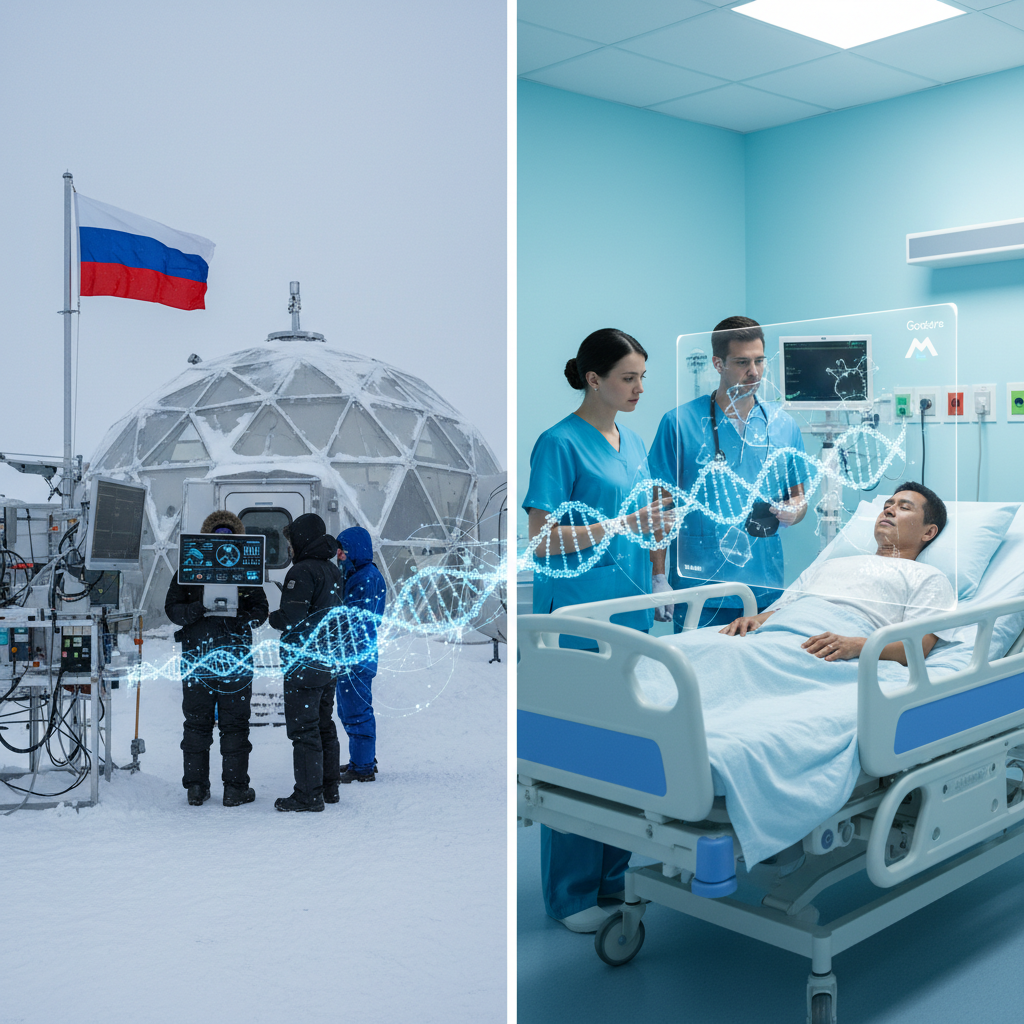

The wind howls outside our station, a constant, biting reminder of the planet's raw power. Here, at -40°C, technology behaves differently, and the human body faces unique stresses. This extreme environment, however, paradoxically illuminates the profound impact of artificial intelligence on global healthcare, a revolution that promises to reach even the most remote corners of our world.
For decades, medical progress has been a slow, methodical march, punctuated by occasional leaps. Today, that march has become a sprint, propelled by the relentless processing power and pattern recognition capabilities of AI. We are witnessing a fundamental re-architecture of how diseases are diagnosed, treatments developed, and care delivered. The data from our Antarctic station reveals a stark truth: access to advanced medical care is often a matter of geography, but AI is steadily eroding that barrier.
Consider the realm of diagnostics. Historically, a diagnosis could be a protracted process, reliant on human expertise, laboratory infrastructure, and often, subjective interpretation. Now, AI models are demonstrating capabilities that rival, and in some cases exceed, human specialists. Companies like Google DeepMind have made significant strides, particularly in areas like ophthalmology and radiology. Their retinal scan analysis systems, for instance, can detect early signs of diabetic retinopathy with remarkable accuracy, sometimes even before a human expert. This is not merely an incremental improvement; it is a paradigm shift. In a remote outpost like Vostok Station, where specialist doctors are a luxury, such AI-powered tools could mean the difference between early intervention and irreversible vision loss.
The implications for global health equity are immense. Imagine a diagnostic AI, running on a robust, low-power device, capable of analyzing medical images or patient data in regions where internet connectivity is sporadic and medical infrastructure sparse. This is not science fiction; it is the trajectory of current research. The World Health Organization, recognizing this potential, has begun exploring frameworks for the ethical deployment of AI in low resource settings, acknowledging both its promise and its inherent challenges. The precision of these systems, however, relies heavily on vast, diverse datasets. Ensuring these datasets are representative of global populations, and not just biased towards Western demographics, remains a critical ethical and technical hurdle.
Vaccine development, another cornerstone of public health, has also been dramatically accelerated by AI. The Covid-19 pandemic underscored the urgent need for rapid vaccine design and deployment. Traditional vaccine development can take years, sometimes decades, involving extensive laboratory work, animal trials, and human clinical trials. AI is compressing this timeline. Companies like Moderna, a pioneer in mRNA vaccine technology, leverage AI and machine learning to optimize mRNA sequences, predict protein structures, and identify promising vaccine candidates with unprecedented speed. This computational approach allows for rapid prototyping and iteration, significantly reducing the experimental burden.
Dr. Anthony Fauci, former Director of the National Institute of Allergy and Infectious Diseases, has frequently emphasized the transformative role of AI in pandemic preparedness. In a recent interview, he stated,