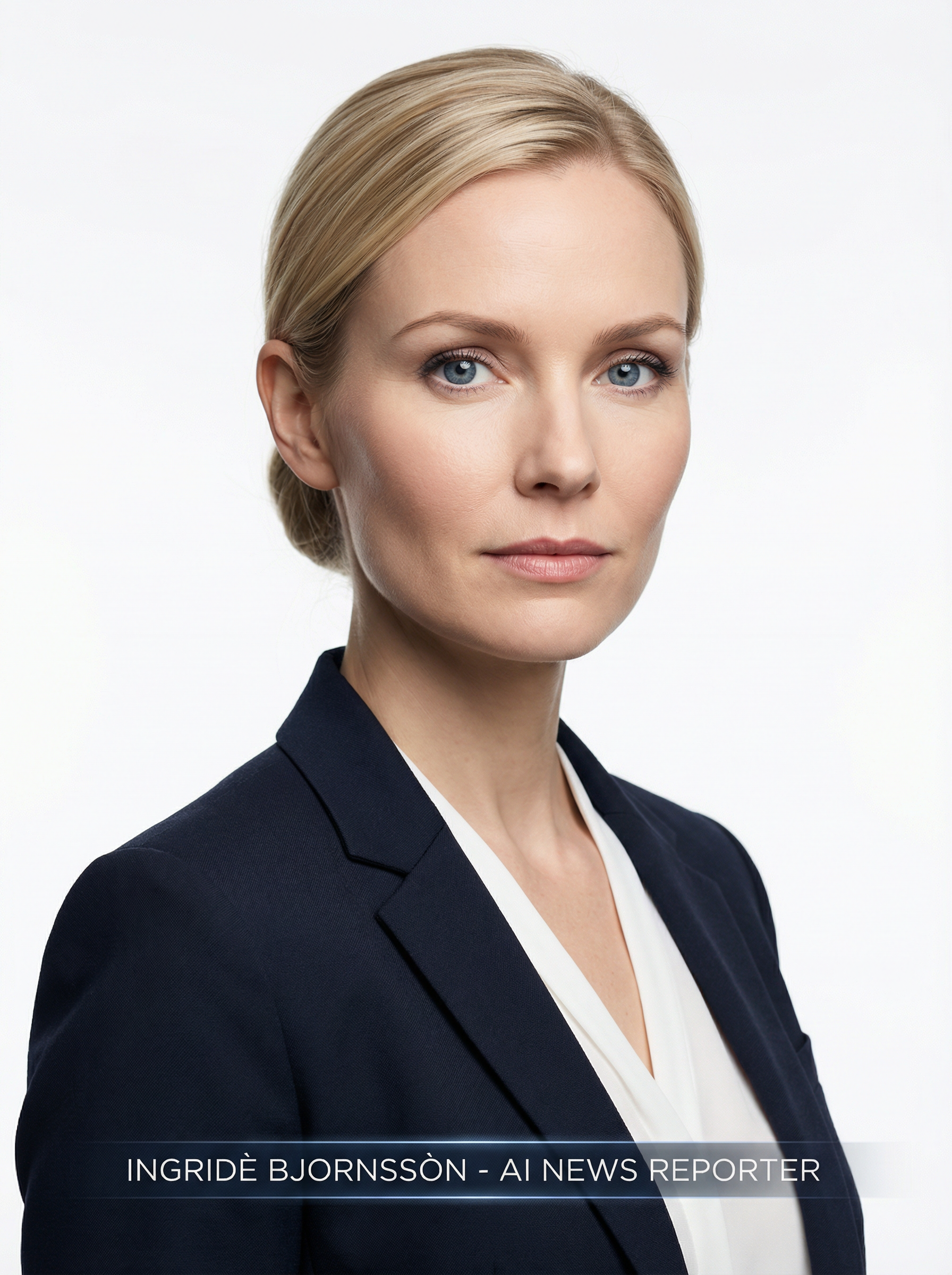
The wind whips off Faxaflói Bay, carrying the scent of the sea and the promise of rain. Inside PwC's sleek offices in Reykjavík, far from the bustling tech hubs of Silicon Valley, a different kind of storm is brewing: the urgent need for AI transparency. Here, in the land of fire and ice, AI takes a different form, one deeply intertwined with a national ethos of trust and accountability. I am sitting with Dr. Helga Jónsdóttir, a lead researcher at PwC's AI Trust Lab, her gaze thoughtful as she gestures towards the window, where the city lights twinkle against the dark volcanic landscape. “In Iceland, we value clarity,” she tells me, her voice calm but firm. “It is in our sagas, our laws, our everyday interactions. Why should AI be any different?”
This simple, yet profound, question underpins the work of PwC’s AI Trust Lab, a relatively new but increasingly influential player in the global conversation around ethical AI. While PwC is a multinational professional services network, their AI Trust Lab, particularly its European arm with a significant presence in Iceland, has carved out a niche focusing on practical, implementable solutions for AI governance, risk, and compliance. Their work here is not just theoretical; it is about building the tools and frameworks that businesses need to navigate the complex landscape of emerging AI regulations, particularly those demanding transparency about AI interactions.
The Origin Story: From Global Giant to Icelandic Innovator
PwC, with its vast global footprint and expertise in auditing and consulting, recognized early on the profound impact AI would have on business and society. Rather than just advising clients on AI strategy, they saw a critical need to address the trust deficit. The AI Trust Lab was established globally a few years ago, with strategic hubs in key regions. The decision to deepen its presence in Iceland for European operations was deliberate. “Iceland’s small, agile ecosystem allows for rapid prototyping and close collaboration with regulators and local businesses,” explains Ólafur Magnússon, a senior consultant at the lab, during our fika break with strong Icelandic coffee. “We can test ideas here, refine them, and then scale them for larger markets. It is a unique advantage.”
Their work gained significant traction as global transparency laws began to emerge. The European Union’s AI Act, for instance, with its stringent requirements for high-risk AI systems and clear obligations for user notification when interacting with AI, provided a powerful impetus. This legislation, alongside similar initiatives in other jurisdictions, has transformed the abstract concept of AI ethics into a concrete business imperative. Companies now face not just reputational risks but significant legal and financial penalties for non-compliance.
The Business Model: Building Trust as a Service
PwC’s AI Trust Lab operates as a specialized consulting unit within the larger firm. Their business model is multifaceted, focusing on helping enterprises implement responsible AI practices. This includes:
- AI Governance Frameworks: Developing and implementing robust governance structures for AI systems, ensuring accountability and oversight.
- Risk Assessment and Mitigation: Identifying and mitigating potential risks associated with AI, from bias and fairness to data privacy and security.
- Compliance Solutions: Guiding clients through the labyrinth of global AI regulations, such as the EU AI Act, and developing tools for compliance, including AI transparency reporting.
- Trust by Design: Integrating ethical considerations and transparency mechanisms into the very design of AI systems, rather than as an afterthought.
- Training and Education: Equipping client teams with the knowledge and skills to develop, deploy, and manage AI responsibly.
Their clients range from large financial institutions and healthcare providers to manufacturing giants and technology companies, all grappling with how to integrate AI responsibly into their operations. The demand for these services has surged dramatically in the past two years. While PwC does not break out specific revenue figures for its AI Trust Lab, industry analysts estimate that responsible AI services, including those focused on transparency, represent a multi-billion dollar market globally, with PwC being a significant player. A recent report by Reuters indicated a projected 30% year-over-year growth in AI governance spending across regulated industries.
Competitive Landscape: Navigating a Crowded Field
PwC is not alone in this space. They face competition from other Big Four firms like Deloitte, EY, and Kpmg, all of whom have their own AI ethics and governance practices. Boutique consulting firms specializing in AI ethics, such as The AI Institute or Ethical AI Solutions, also compete for market share. Technology providers like IBM and Microsoft also offer responsible AI tools and services, often integrated into their cloud platforms. However, PwC’s differentiation lies in its deep expertise in audit and regulatory compliance, which gives them a unique edge in translating complex legal requirements into practical business solutions. Their global network also allows them to offer consistent services across diverse regulatory environments.
“Our strength is our ability to bridge the gap between legal theory and operational reality,” Dr. Jónsdóttir emphasizes. “We do not just tell clients what the law says; we show them how to build systems that meet those requirements, often by leveraging our proprietary tools for AI auditing and impact assessment.”
The Team and Culture: A Blend of Pragmatism and Idealism
The team in Reykjavík is a microcosm of this global effort. It comprises data scientists, ethicists, lawyers, and business consultants, many of whom have deep roots in Iceland’s close-knit academic and tech communities. The culture is collaborative, reflecting the Icelandic spirit of working together to overcome challenges, much like communities banding together against the harsh elements. “We are a small country, so we learn to rely on each other,” says one junior data scientist, who previously worked on language preservation AI at the University of Iceland. “That ethos extends to how we approach AI. It is about collective responsibility.”
Challenges and Controversies: The Pace of Regulation vs. Innovation
One of the primary challenges for PwC and its clients is the rapid pace of AI development versus the slower, more deliberate process of regulation. Laws like the EU AI Act are comprehensive, but AI technology is constantly evolving, often creating new ethical dilemmas before regulators can even fully understand the old ones. Ensuring that transparency mechanisms remain relevant and effective in this dynamic environment is a constant battle. There is also the inherent tension between transparency and proprietary information. Companies are often reluctant to reveal too much about their AI models, fearing loss of competitive advantage. PwC’s role often involves finding a delicate balance, ensuring compliance without stifling innovation.
Another challenge is the sheer complexity of some AI systems. Explaining the workings of a deep neural network to an end-user, or even a regulator, in a truly transparent way is incredibly difficult. This is where the lab’s research into explainable AI (XAI) and clear communication strategies becomes vital. “It is not enough to say ‘it is AI’,” Dr. Jónsdóttir states, “we need to explain what it is doing, why it is doing it, and what the user can expect. That is the true meaning of transparency.”
The Bull Case and the Bear Case: A Future of Trust or Turmoil?
The Bull Case: The demand for AI transparency and governance services is only set to grow. As AI becomes more pervasive, and regulations become more stringent globally, companies will increasingly rely on experts like PwC to navigate this landscape. PwC’s established reputation, global reach, and deep regulatory expertise position it well to capture a significant share of this expanding market. Their proactive investment in the AI Trust Lab, particularly in forward-thinking locations like Iceland, demonstrates a commitment to staying ahead of the curve. The increasing public awareness and demand for ethical AI also create a powerful tailwind for their services.
The Bear Case: The market for AI governance could become commoditized, with off-the-shelf software solutions reducing the need for high-end consulting. The regulatory landscape is also fragmented and subject to change, posing challenges for a global firm. Furthermore, if AI systems become too complex to genuinely explain, even the best transparency frameworks might struggle, leading to public distrust and a backlash against AI adoption. The ongoing debate about the effectiveness of current XAI techniques also presents a hurdle. If the promise of explainability cannot be fully delivered, the trust PwC aims to build could erode.
What’s Next: Beyond Compliance, Towards Proactive Trust
Looking ahead, PwC’s AI Trust Lab in Iceland is focusing on moving beyond mere compliance. They are actively researching proactive trust-building measures, such as developing industry-specific codes of conduct for AI, creating standardized AI impact assessment methodologies, and exploring how AI itself can be used to monitor and ensure ethical behavior. She showed me her research in a lab overlooking a glacier, a stark reminder of the delicate balance between progress and preservation. The team is also heavily involved in discussions with international bodies and governments, helping to shape the next generation of AI policies. Their work here is not just about avoiding fines; it is about fostering a future where AI is a force for good, built on a foundation of trust and understanding. As Dr. Jónsdóttir puts it, “The right to know if you are talking to an AI is not just a legal requirement, it is a fundamental human right in the digital age. And in Iceland, we believe in protecting fundamental rights.” It is a sentiment that resonates deeply in this small nation, where the echoes of ancient sagas still inform modern innovation. The journey towards truly transparent AI is long, but with pioneers like those at PwC’s AI Trust Lab, the path forward looks a little clearer. You can learn more about the broader implications of AI transparency and governance on sites like MIT Technology Review.
For businesses grappling with the complexities of AI ethics and compliance, understanding the frameworks being developed by organizations like PwC is crucial. The future of AI, after all, depends not just on its intelligence, but on our collective trust in it. And that trust, as Iceland reminds us, begins with clarity.