The human brain, that intricate tapestry of neurons, remains one of the universe's most profound mysteries. For centuries, our understanding has been akin to observing a bustling souk from a distant mountain peak: we see the activity, hear the murmurs, but grasp little of the individual transactions. Now, with the accelerating synergy of brain-computer interfaces (BCI) and artificial intelligence, we are beginning to descend into that marketplace, not merely to observe, but to interact. This profound shift, from passive observation to active engagement with neural networks, is not merely a scientific curiosity; it is a frontier with immense implications for healthcare, communication, and even the very definition of human experience. And Algeria, often seen through the lens of its rich history and vibrant culture, is quietly positioning itself to contribute to this global dialogue.
The concept of directly interfacing with the brain, once the stuff of science fiction, is rapidly becoming a tangible reality. Companies like Neuralink, Synchron, and Blackrock Neurotech are pushing the boundaries, developing implants and external devices that can read, and in some cases, write, neural signals. The mathematics behind this is elegant, relying on sophisticated signal processing and machine learning algorithms to decipher the brain's electrical language. Consider it akin to translating the intricate patterns of Arabic calligraphy, where each stroke and ligature carries profound meaning, into a digital script that a machine can understand and act upon.
From a technical standpoint, the integration of AI is what truly elevates BCIs beyond mere data acquisition. Raw neural data, a cacophony of electrical spikes, is largely unintelligible without the interpretive power of artificial intelligence. Deep learning models, particularly recurrent neural networks and transformers, are being trained on vast datasets of neural activity to identify patterns, predict intentions, and even reconstruct thoughts or movements. This is not a trivial task; it demands computational horsepower and algorithmic sophistication that would have seemed impossible a decade ago. According to a recent analysis by MIT Technology Review, investments in BCI startups integrating advanced AI have surged by 45% in the last two years, signaling a clear market confidence in this synergistic approach.
In Algeria, the conversation around BCI and AI is still nascent, yet it is gaining momentum within academic and research circles. Institutions like the Houari Boumediene University of Science and Technology (usthb) in Algiers and the University of Oran 1 Ahmed Ben Bella are establishing specialized labs focusing on neuroinformatics and computational neuroscience. "We recognize the transformative potential of BCI, particularly for our citizens living with disabilities," stated Dr. Fatima Zohra Boussouf, Head of the AI and Robotics Department at Usthb. "Our focus is currently on non-invasive BCI methods, leveraging EEG signals and advanced AI to develop communication aids and assistive technologies. We are building the foundational expertise, brick by brick, much like our ancestors built the enduring kasbahs of our cities."
The challenges, however, are considerable. Developing cutting-edge BCI technology requires substantial investment in research infrastructure, access to specialized components, and a highly skilled workforce. Algeria, like many developing nations, faces a 'brain drain' phenomenon, where talented engineers and scientists are often lured by opportunities abroad. "Retaining our brightest minds is paramount," commented Mr. Karim Mansouri, Director of the Algerian National Agency for the Promotion of Research (anpr). "We are actively exploring partnerships with international research institutions and offering competitive grants to foster local innovation. Our goal is not just to consume technology, but to contribute to its creation, to write our own chapter in this global story."
One particularly promising area for Algeria lies in the application of BCI for rehabilitation. With a significant population affected by neurological conditions and injuries, the potential for AI-powered BCIs to restore mobility or communication is immense. Imagine a patient, rendered speechless by a stroke, learning to communicate again through a BCI that translates their neural intentions into spoken words or text. This is not distant fantasy; it is the immediate goal of several research teams. Let me walk you through the architecture of such a system: it typically involves an EEG cap capturing brain waves, a signal processing unit to clean and amplify these signals, and then an AI model, often a deep neural network, trained to map specific neural patterns to desired outputs, such as selecting letters on a screen or controlling a robotic arm.
Beyond healthcare, the ethical implications of BCI are a subject of intense debate globally. Questions of privacy, data security, and cognitive liberty loom large. Who owns your thoughts if they can be read by a machine? How do we ensure equitable access to these life-changing technologies? These are not questions that can be answered by engineers alone; they require a multidisciplinary approach involving ethicists, policymakers, and the public. Algeria, with its strong communal values and rich philosophical traditions, could offer a unique perspective on these complex issues. "The ethical framework must evolve alongside the technology," asserted Professor Omar Benali, a specialist in Islamic ethics and technology at the University of Algiers. "Our tradition emphasizes the sanctity of the individual and the importance of justice. These principles must guide our approach to BCI, ensuring that these powerful tools serve humanity, not subjugate it."
The global landscape of BCI development is dominated by a few well-funded players. Neuralink, for instance, recently demonstrated its Telepathy device, allowing a paralyzed individual to control a computer cursor with their thoughts. Such advancements, while inspiring, also highlight the widening technological gap. For Algeria to truly make its mark, strategic investments and international collaborations are crucial. The government's 'Algeria Digital 2030' initiative, which prioritizes AI development, offers a framework, but specific, targeted funding for BCI research is still needed.
In a recent virtual conference on AI in Africa, Dr. Aisha Diallo, a leading neuroscientist from Senegal, underscored the importance of continental collaboration. "Africa cannot afford to be a mere consumer of BCI technology; we must be co-creators. Our diverse genetic and cultural landscapes offer unique datasets and perspectives that can enrich global research. Imagine developing BCIs tailored to the nuances of different languages and cognitive styles, not just those prevalent in Western societies." This sentiment resonates deeply within Algeria, where the preservation of linguistic and cultural heritage is a national priority.
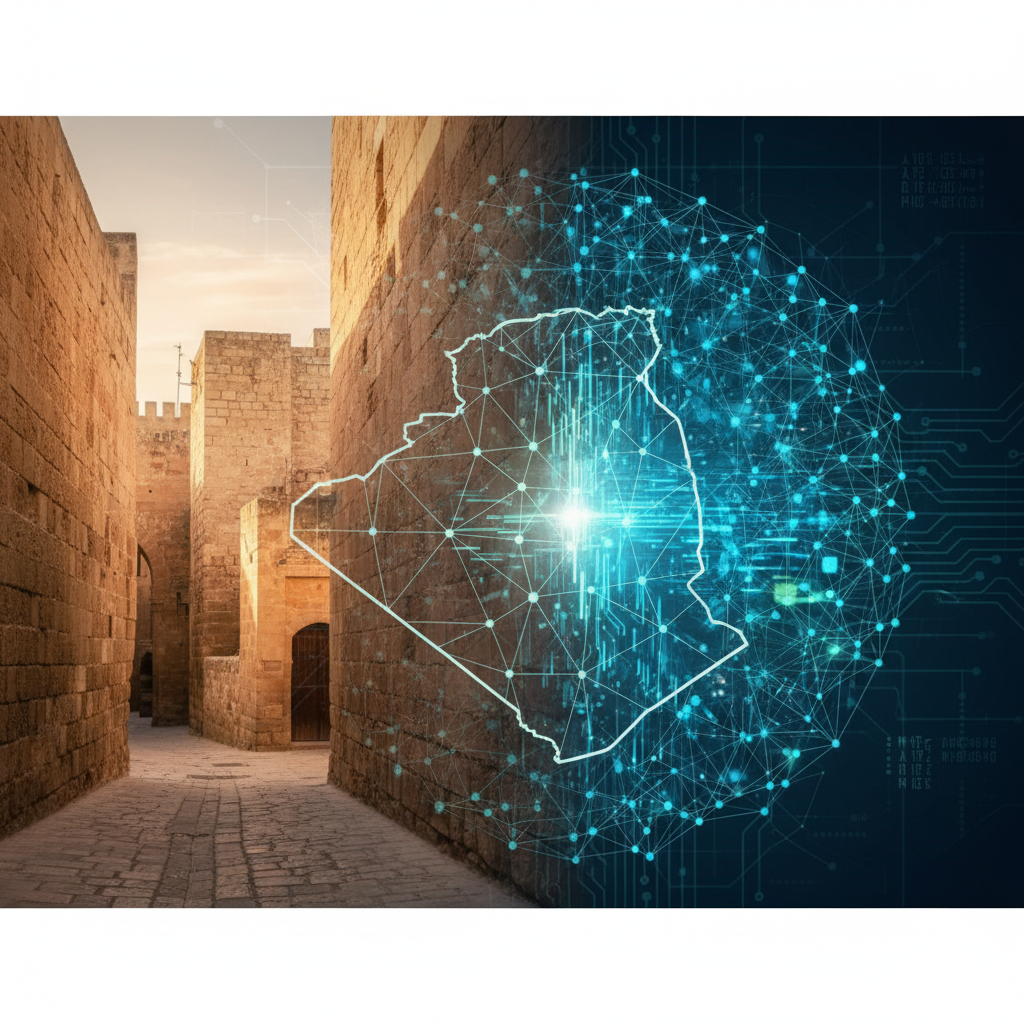
Looking ahead, the path for Algeria in the BCI and AI domain is one of cautious optimism and determined effort. The initial steps are being taken, the seeds of innovation are being sown in university labs and research centers. The challenge now is to nurture these nascent efforts, to provide the resources and the environment for them to flourish. Just as the ancient astronomers of the Maghreb meticulously charted the stars, laying the groundwork for future scientific inquiry, so too must Algeria lay the groundwork for its future in neurotechnology. The journey from the intricate patterns of the Casbah's architecture to the even more intricate architecture of the human cortex is long, but it is a journey that Algeria is increasingly prepared to embark upon. The potential rewards, for its citizens and for humanity, are simply too great to ignore. The next few years will be critical in determining if Algeria can indeed transform its AI ambition into tangible breakthroughs in this most fascinating of fields. For more insights into the broader AI landscape, readers can explore TechCrunch's AI section.