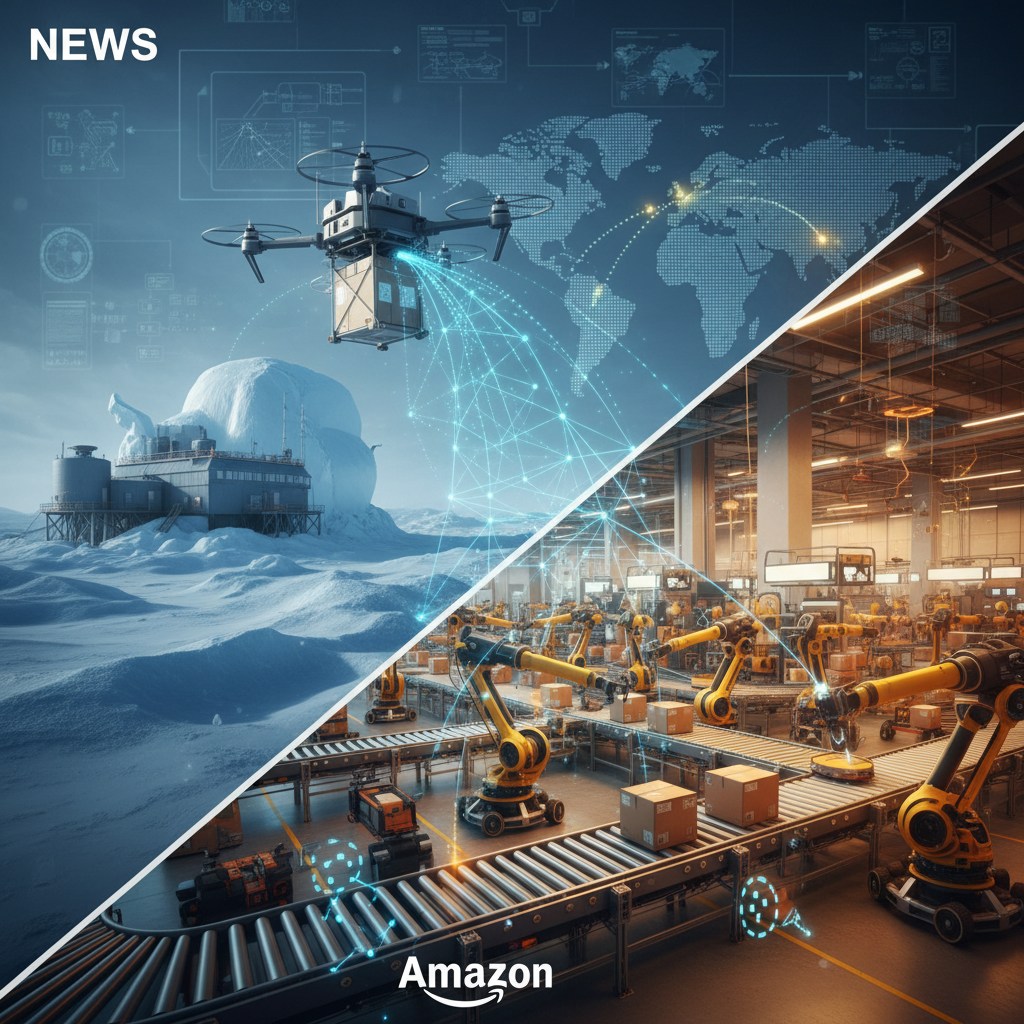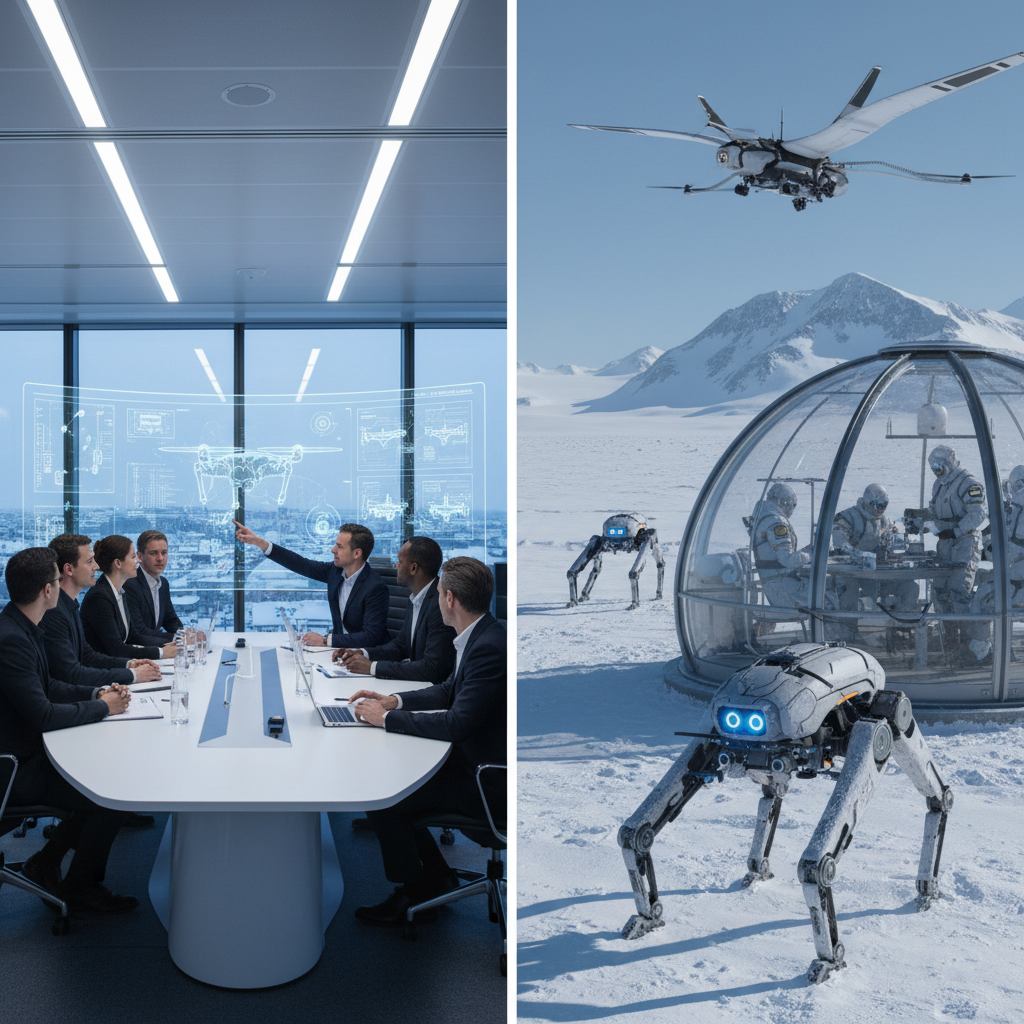

The wind howls outside, a constant companion here at the Antarctic Station. It whispers tales of ice and isolation, but also of connection, of how the world, even its most remote corners, is intertwined. Just last night, the aurora lit up our research station, a breathtaking display that reminded me of the vast, silent beauty we are working to understand and protect. In this silence, you hear things differently, and sometimes, you hear the distant hum of innovation, even when it comes from a defense technology company like Anduril Industries, founded by the very same Palmer Luckey who once dreamed of virtual reality for the masses.
It feels a long way from the sun-drenched beaches of California where Anduril was born, but the principles of observation, data, and rapid response that drive their AI systems have a surprising resonance in our polar research. Anduril, named after Aragorn's sword in Tolkien's sagas, aims to equip military forces with cutting-edge artificial intelligence and autonomous systems, moving beyond the traditional, slow procurement cycles of defense contractors. Their vision is to bring Silicon Valley speed and innovation to national security, a concept that has both excited and concerned many.
The Genesis of a Defense Disruptor
Palmer Luckey, a name many associate with the early days of virtual reality through Oculus VR, which he sold to Meta for a reported $2 billion, embarked on a new mission in 2017. Frustrated by what he perceived as the technological stagnation of the defense industry, Luckey founded Anduril with a clear objective: to build advanced, AI-powered defense solutions at a pace unheard of in the sector. He brought together a team of engineers and visionaries, many with backgrounds in consumer tech, to tackle problems that had long been the domain of aerospace giants. It was a bold move, a pivot from immersive entertainment to national security, but one rooted in a belief that software and AI could fundamentally change how defense operates.
Their approach is distinct. Instead of custom-building every piece of hardware for a specific contract, Anduril focuses on a modular, software-defined architecture. Their flagship product, Lattice, is an AI-powered operating system that integrates data from various sensors, such as drones, ground sensors, and cameras, to create a comprehensive, real-time picture of an operational area. This allows for rapid detection, classification, and tracking of threats, from unauthorized border crossings to adversary movements. The idea is to automate the tedious, repetitive tasks of surveillance and analysis, freeing up human operators to make critical decisions.
The Business of AI-Powered Defense
Anduril's business model revolves around selling this integrated hardware and software stack, often through subscription-like services. They don't just sell a drone; they sell a system that includes the drone, the ground sensors, and the Lattice AI platform that makes sense of all the data. This allows for continuous updates and improvements, much like consumer software, which is a stark contrast to the traditional defense model of buying a system and using it for decades without significant upgrades. Their revenue comes from these contracts with government agencies, primarily the U.S. Department of Defense, but also increasingly with allies.
In 2022, Anduril was reportedly valued at over $8 billion after a Series E funding round that raised $1.5 billion, attracting investors like Andreessen Horowitz and Founders Fund. Their growth has been rapid, fueled by significant Pentagon contracts. For instance, they secured a $1 billion contract with the U.S. Special Operations Command (socom) for counter-UAS capabilities and a multi-year contract with the U.S. Marine Corps for their Lattice platform. These figures, while impressive, underscore the immense trust placed in a relatively young company to deliver critical national security infrastructure. This is what AI looks like at the end of the world, not just in the data centers, but in the systems that safeguard borders and monitor vast, remote territories.
Navigating a Competitive Landscape
Anduril operates in a fiercely competitive space, contending with established defense contractors like Lockheed Martin, Raytheon, and Northrop Grumman, as well as other emerging tech-first defense companies like Palantir. The traditional players have decades of experience, vast manufacturing capabilities, and deep relationships with government agencies. However, Anduril's differentiation lies in its agility, its software-first approach, and its willingness to iterate quickly. While a Lockheed Martin might build a new fighter jet over a decade, Anduril aims to deploy and update AI systems in months.
Their competitive edge also comes from their focus on autonomous systems. While others are integrating AI into existing platforms, Anduril is building systems from the ground up with autonomy as a core principle. This allows for capabilities like persistent surveillance with minimal human intervention, a crucial factor in environments like the Arctic or Antarctic, where human presence is limited and conditions are extreme. MIT Technology Review has often highlighted the growing importance of such agile defense tech firms.
The Human Element: Culture and Leadership
Palmer Luckey's management style is often described as hands-on and visionary, reflecting his entrepreneurial roots. He is known for pushing boundaries and challenging conventional wisdom, which has attracted a diverse talent pool to Anduril. The company culture, as reported by former employees, is fast-paced, demanding, and mission-driven, akin to a Silicon Valley startup but with the added weight of national security implications. This blend of tech innovation and defense rigor creates a unique environment.
However, scaling such a company presents its own challenges. Integrating consumer tech methodologies into a highly regulated and often bureaucratic defense sector requires constant navigation. Ensuring ethical AI development, particularly in autonomous weapons systems, is another critical concern. As Dr. Stuart Russell, a leading AI researcher at UC Berkeley, has often stated,