The digital tide, like the ocean currents that connect our islands, brings both bounty and challenge. For too long, the AI wave has crashed predominantly on the shores of Silicon Valley, creating fortunes for a few while leaving many communities, especially here in the Pacific, struggling to catch up. We see the headlines, the multi-billion dollar valuations of OpenAI, Google DeepMind, and Anthropic, and we wonder, where is our place in this future? Who is building AI for us, not just about us?
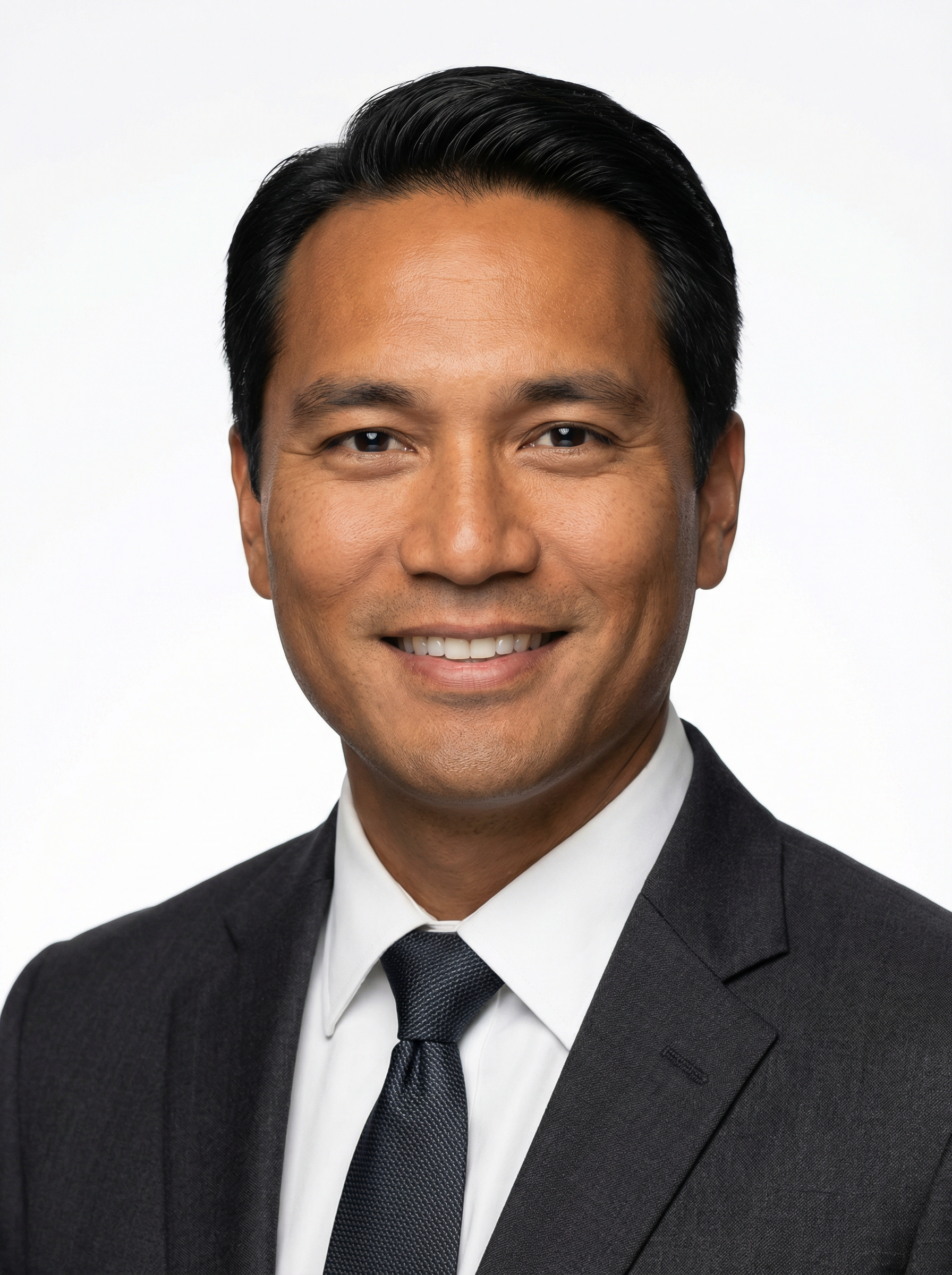
That question, a quiet hum in the background of many conversations across Oceania, found its answer in a small, determined team led by Dr. Leilani Mauga. Born in American Samoa, raised between Pago Pago and Honolulu, Dr. Mauga embodies the spirit of resilience and innovation that defines our home. Her startup, Kuaʻana AI, is not just another tech company; it is a declaration of digital sovereignty for the Pacific, a powerful counter-narrative to the prevailing AI wealth gap.
Dr. Mauga's 'aha moment' came not in a brightly lit lab, but during a visit to her grandmother in a remote village in Savaiʻi. Her grandmother, a fount of traditional knowledge, struggled with government forms and health information that were only available in English, or in a Samoan translation that felt stilted and unnatural, clearly machine-generated without cultural nuance. The vast chasm between the advanced AI systems being developed globally and the practical, everyday needs of her own people became glaringly obvious. "It hit me then," Dr. Mauga recounted in a recent interview with TechCrunch, "that if AI is truly meant to serve humanity, it must speak to all of humanity, in their own voices, with their own wisdom woven into its very fabric. The current models, trained predominantly on Western data, were simply not equipped for the linguistic and cultural richness of the Pacific."
This realization sparked the genesis of Kuaʻana AI. The name itself, 'Kuaʻana,' means 'older sibling' or 'mentor' in Hawaiian and Samoan, reflecting the company's mission to guide and uplift Pacific communities through technology. Their core offering is a suite of large language models (LLMs) and speech-to-text, text-to-speech technologies specifically trained on indigenous Pacific languages and cultural contexts. This is not merely about translation; it is about cultural preservation, accessibility, and economic empowerment.
Imagine an AI assistant that understands the subtleties of Samoan proverbs, the nuances of Fijian greetings, or the specific protocols of a Hawaiian oli. Kuaʻana AI is building that. They are painstakingly curating datasets from oral histories, traditional texts, local media, and community dialogues, working closely with linguists and cultural practitioners across the region. This approach stands in stark contrast to the 'move fast and break things' mentality often seen in larger tech firms, prioritizing respect and deep engagement over speed.
The technology itself is formidable. Kuaʻana AI has developed proprietary techniques for low-resource language modeling, a significant challenge given the limited digital footprint of many Pacific languages. They employ transfer learning strategies, fine-tuning larger, generalist models like Meta's Llama on their specialized Pacific datasets, but with an emphasis on architectural modifications that allow for deeper cultural embedding. Their speech recognition systems are designed to handle the diverse accents and speech patterns found across our islands, a capability often overlooked by mainstream AI. "Our models aren't just learning words," explains Dr. Mauga, "they are learning mana, the spiritual power and prestige embedded in our language."
The market opportunity for Kuaʻana AI is far larger than many mainland investors initially grasp. The Pacific region, home to millions across dozens of island nations, represents a significant underserved market. Government services, education, healthcare, disaster preparedness, and tourism all stand to benefit immensely from culturally and linguistically appropriate AI. For instance, in times of natural disaster, which are increasingly frequent here, an AI that can disseminate critical information in local dialects, understand distress calls with regional specificities, and even help coordinate aid in real-time, is not a luxury; it is a lifeline. The tourism sector, a cornerstone of many Pacific economies, could leverage Kuaʻana AI's models for hyper-personalized experiences, connecting visitors with local culture in authentic ways.
Early funding for Kuaʻana AI came from a mix of impact investors and venture capital firms with a specific interest in emerging markets and indigenous technology. While specific figures are not always public, reports suggest an initial seed round of approximately $5 million, followed by a Series A round reportedly in the range of $20-30 million, with participation from firms known for backing mission-driven tech, including some based in Australia and New Zealand. This capital injection has allowed them to expand their team, which now includes linguists from Hawaiʻi, Fiji, Tonga, and other islands, alongside AI engineers from both local universities and returning diaspora talent.
In the competitive landscape, Kuaʻana AI occupies a unique niche. While giants like Google and Microsoft have made strides in multilingual AI, their focus remains largely on high-resource languages and global markets. Their models often struggle with the depth and breadth required for truly culturally sensitive applications in the Pacific. Smaller, specialized AI companies exist, but few possess Kuaʻana AI's deep cultural roots and community-first development approach. Their competitive advantage lies not just in their technology, but in their trust within the communities they serve, a trust earned through genuine collaboration and respect. As Dr. Noa Kekuewa Lincoln, a Hawaiian Studies scholar at the University of Hawaiʻi at Mānoa, recently observed, "Kuaʻana AI understands that aloha means more than hello because it's a framework for ethical AI. They are building relationships, not just algorithms." This philosophy is their strongest moat against larger, less culturally attuned competitors.
What's next for Kuaʻana AI? The roadmap includes expanding their language coverage to more of the over 1,200 languages spoken across the Pacific, developing specialized AI agents for specific sectors like healthcare and education, and exploring partnerships with local governments and NGOs. They are also keenly focused on data sovereignty, ensuring that the data collected and used for training their models remains under the control of the communities it represents. This commitment to kūʻokoʻa, or independence, is paramount.
The future is being built on volcanic rock, here in the Pacific, and Kuaʻana AI is laying some of the most important foundations. They are proving that the AI wealth gap does not have to be an inevitable outcome. By centering indigenous knowledge, language, and values, they are not just creating advanced technology; they are fostering self-determination and ensuring that the benefits of the AI revolution uplift everyone, from the smallest atoll to the largest island. It is a powerful vision, one that reminds us that true progress is measured not just in profits, but in the well-being of all people. Their journey is a testament to the fact that Hawaii sits at the crossroads of Pacific and Silicon Valley, a place where ancient wisdom can inform cutting-edge innovation, creating a more equitable digital future for us all. For more insights into how AI is shaping global economies, you can explore reports from Bloomberg Technology.
Kuaʻana AI's story is a beacon of hope, showing that the next wave of AI innovation can indeed emerge from unexpected places, driven by purpose as much as by profit. It is a reminder that the best technology often comes from those who understand the deepest human needs, and in our islands, those needs are deeply intertwined with culture and community. The world needs more Kuaʻanas.