
The rumble you hear on America's highways may soon be less human and more algorithmic. While much of the public discourse around artificial intelligence focuses on chatbots and creative tools, a far more tangible and immediate transformation is underway in the logistics industry. Self-driving trucks and autonomous delivery systems are not a distant futuristic concept; they are on our roads, in our warehouses, and rapidly reshaping an $800 billion sector crucial to the nation's economy.
The Headline Development
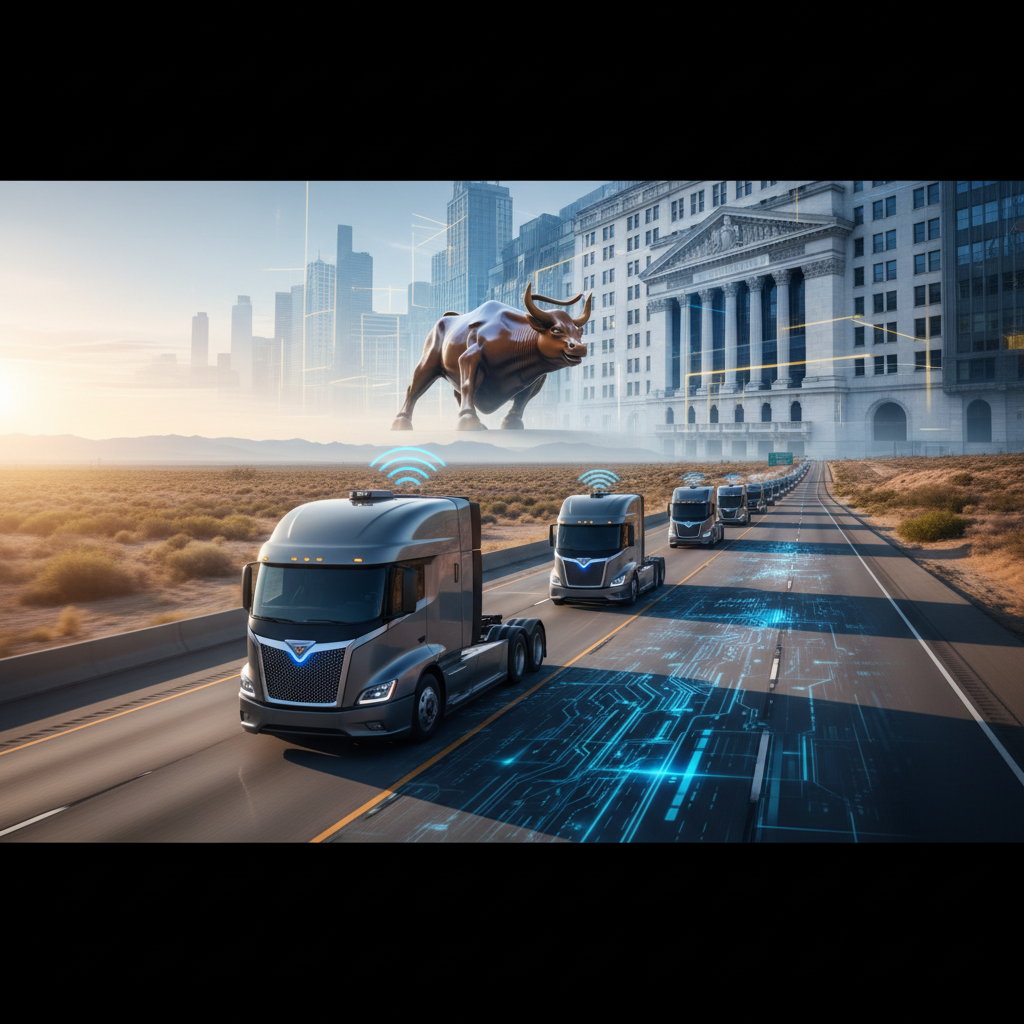
Companies like TuSimple, Aurora Innovation, and Waymo Via are no longer just testing prototypes; they are running commercial pilots and even fully autonomous routes, albeit with safety drivers in many cases. These vehicles, equipped with an array of sensors, high definition maps, and sophisticated AI, are designed to operate for extended periods without human intervention, promising to cut costs, improve safety, and optimize supply chains. From the sun baked stretches of Interstate 10 in Arizona to the bustling ports of Los Angeles, these robotic haulers are clocking millions of miles. Walmart, for instance, has partnered with Gatik to deploy autonomous box trucks for middle mile logistics, moving goods between distribution centers and stores. This isn't science fiction, it is the present reality of freight transport in the United States.
Why Most People Are Ignoring It
Despite the scale of this impending shift, the public remains largely disengaged. The average American is more likely to be concerned with their smartphone's latest AI feature or the ethical implications of deepfakes than with the technological overhaul of the trucking industry. This attention gap is understandable; autonomous trucks operate mostly out of sight on long haul routes, far from urban centers where most people live and work. The narrative is often framed as a technical marvel, a testament to human ingenuity, rather than a profound economic disruption. The lobbying records tell a different story, however. Behind the scenes, a fierce battle is being waged in state legislatures and in Washington, DC, over regulations, safety standards, and the future of labor.
How It Affects YOU
This technological shift will touch every American, whether they realize it or not. For consumers, the promise is lower shipping costs and faster delivery times, potentially reducing the price of everything from groceries to electronics. For businesses, especially those reliant on intricate supply chains, it means greater efficiency, reduced labor costs, and the ability to operate 24/7 without human hour limitations. However, the most significant impact will be felt by the nearly 3.5 million truck drivers in the United States. Their livelihoods, their communities, and an entire way of life are at stake. Entire towns built around truck stops and logistics hubs could face economic upheaval. The ripple effect extends to mechanics, roadside service providers, and even small businesses catering to the trucking community. This is not merely about replacing a driver; it is about reconfiguring a vast economic ecosystem.
The Bigger Picture
Washington's AI policy is shaped by these players, and the stakes are enormous. The logistics industry is the circulatory system of the American economy. Disruptions here have cascading effects. My investigation reveals that while companies tout safety and efficiency, the underlying motivation is often a desire to mitigate labor shortages and reduce operational expenses. This shift could exacerbate economic inequality, creating a new class of highly skilled AI technicians while displacing a large segment of the working class. The geopolitical implications are also significant. A nation with a highly automated logistics network gains a strategic advantage in terms of economic resilience and military readiness. The race to deploy autonomous freight is not just a commercial endeavor; it is a national imperative for some, and a potential social crisis for others.
What Experts Are Saying
Experts from various fields are grappling with the multifaceted implications of this transition. Dr. Missy Cummings, a professor at George Mason University and a former Navy pilot, has consistently raised concerns about the safety and reliability of autonomous systems, stating, “The complexity of real world driving conditions, especially in varied weather and unexpected scenarios, means that human oversight will be critical for a very long time. We cannot rush this technology.” Her perspective underscores the need for rigorous testing and robust regulatory frameworks.
Conversely, Chris Urmson, CEO of Aurora Innovation, emphasizes the economic benefits. “Autonomous trucking is not just about replacing drivers; it is about solving a chronic labor shortage and making our supply chains more resilient and predictable,” Urmson recently told attendees at a logistics conference. “The efficiency gains will benefit everyone, from manufacturers to consumers.”
On the labor front, Sean O'Brien, General President of the International Brotherhood of Teamsters, has been vocal about protecting workers. “We are not anti technology, but we demand that automation be implemented responsibly, with protections for workers and a commitment to creating good paying jobs in this new economy,” O'Brien stated in a press release. “We cannot allow corporations to prioritize profits over people.”
Policy makers are also weighing in. Senator Maria Cantwell, Chair of the Senate Committee on Commerce, Science, and Transportation, has called for a comprehensive federal framework for autonomous vehicles. “We need a unified national approach that ensures safety, promotes innovation, and addresses the workforce implications,” Cantwell remarked in a committee hearing. Her call highlights the fragmented regulatory landscape, with states currently setting their own rules, creating a patchwork of regulations that hinders nationwide deployment.
What You Can Do About It
For those in the trucking industry, understanding the trajectory of this technology is paramount. Investigate retraining programs for new roles in logistics management, data analysis, or maintenance of autonomous fleets. For policymakers, the urgency lies in developing robust federal regulations that prioritize safety and establish clear guidelines for deployment, while simultaneously investing in workforce development and social safety nets. For the general public, it means demanding transparency from corporations and advocating for policies that ensure a just transition for affected workers. Engage with local and national representatives to ensure that the human element is not lost in the pursuit of technological advancement. Stay informed by following reputable tech and labor news sources, such as Reuters' AI coverage or TechCrunch for startup news.
The Bottom Line
In five years, the sight of a driverless truck on an interstate will be commonplace, not a novelty. The $800 billion logistics industry will have undergone a significant metamorphosis, driven by the relentless march of AI. This will mean cheaper goods for consumers, but also a profound reevaluation of labor, skills, and economic security for millions. The decisions made today in boardrooms and legislative chambers will determine whether this transformation leads to widespread prosperity or deepens societal divides. It is a future that demands our immediate attention, for its impact will be felt in every corner of our lives, from the price of a gallon of milk to the stability of our communities. The silent revolution is already here; ignoring it is no longer an option. For further insights into the broader societal implications of AI, consider exploring articles on MIT Technology Review.