In Senegal, we have a saying, « Ndank ndank mooy jàpp golo ci ñaay », which means, “Slowly, slowly, one catches the monkey in the bush.” It speaks to patience, to the power of persistent, thoughtful effort. This proverb often comes to mind when I think about the grand promises of artificial intelligence and the quiet, impactful work being done to make it truly useful for everyone, especially here in Africa. For too long, the narrative around AI has been dominated by behemoth models from distant lands, speaking languages and understanding contexts far removed from our daily lives.
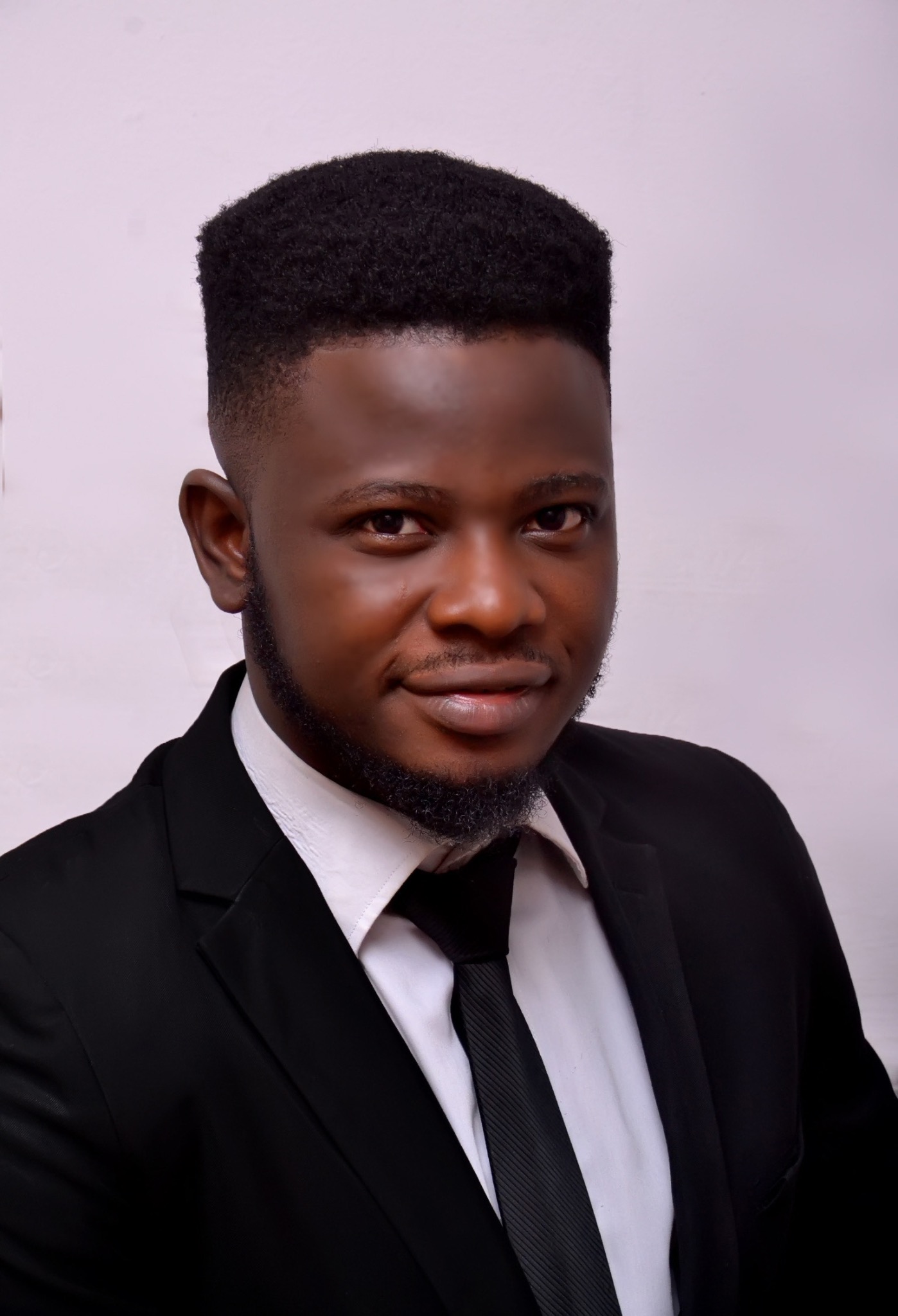
But what if the most powerful AI wasn't the biggest, but the smartest for its purpose? What if it could understand Wolof, Hausa, or Swahili with the same nuance as English, and do so without needing a supercomputer in every village? This is the vision that guides Moustapha Cissé, a name many in the global AI community recognize, and one that resonates deeply across our continent. He is the head of Google AI in Accra, Ghana, a hub of innovation that feels like a beacon of hope for African technologists.
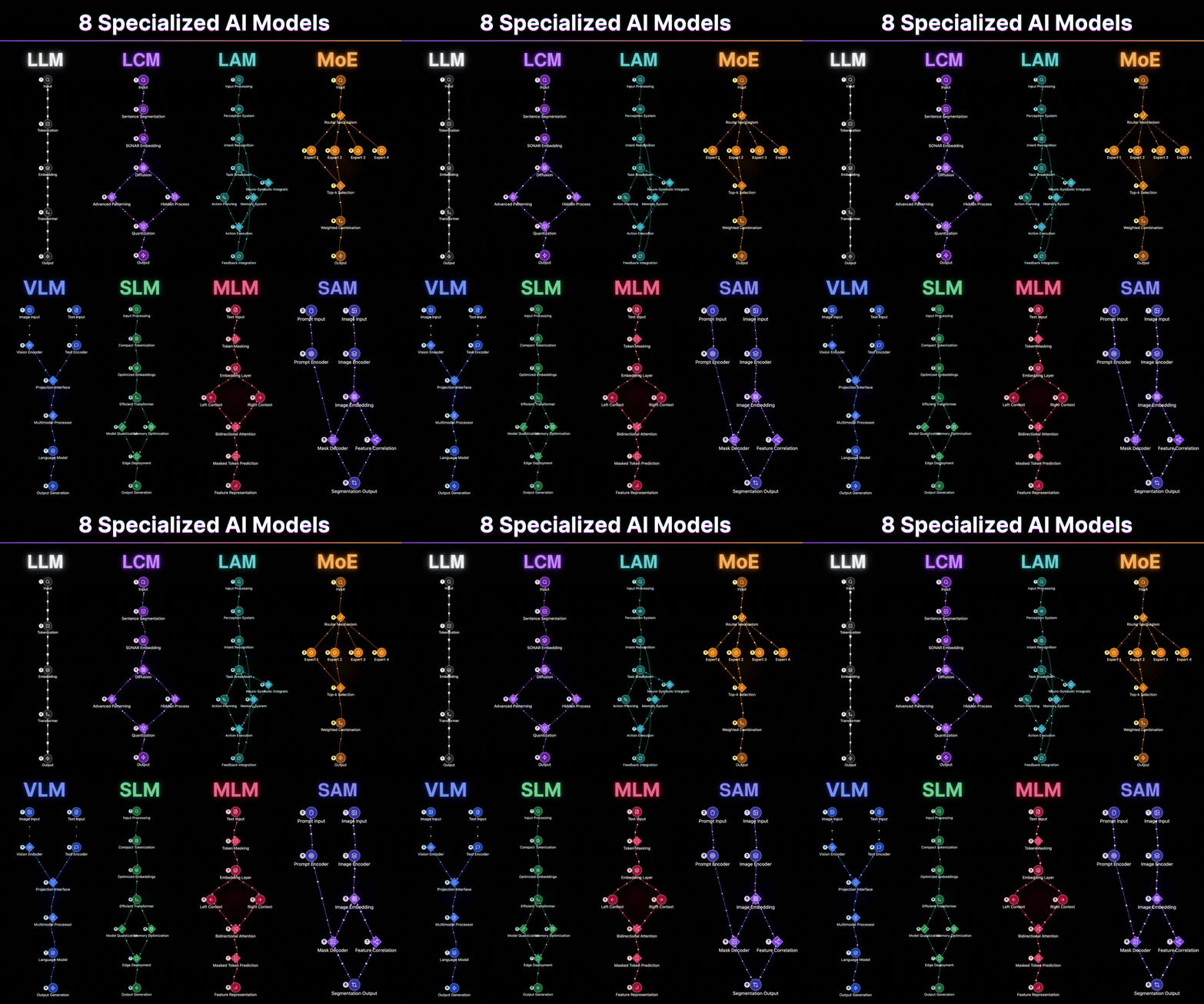
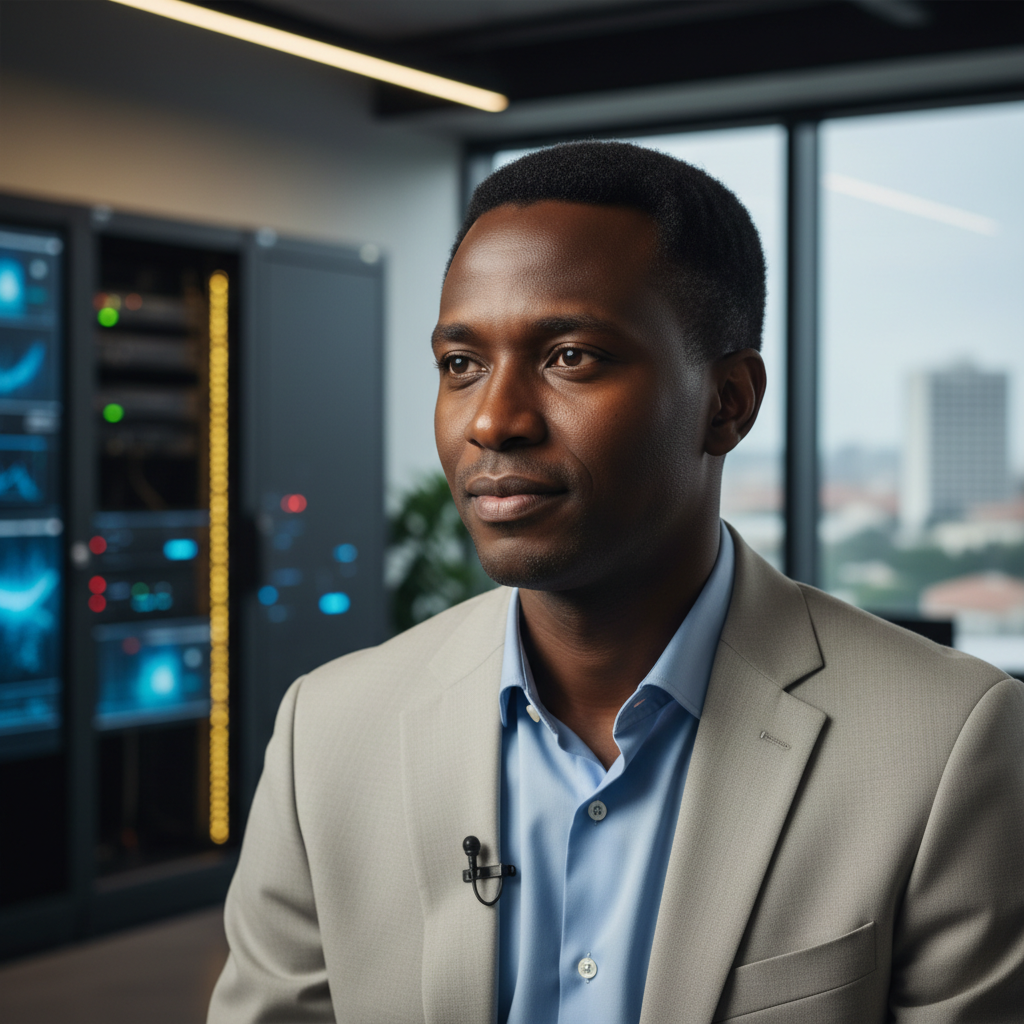
I sat down with Moustapha, albeit virtually, from my desk here in Dakar, and his passion for localized, efficient AI was palpable. His eyes lit up when he told me about the potential of smaller language models, or SLMs, to democratize access to advanced AI capabilities. “The future of AI is not just about building bigger models,” he explained, “it's about building smarter, more efficient models that can run on less computational power, consume less energy, and critically, be fine-tuned for specific languages and cultural contexts.” This is a story about people, not algorithms, and Moustapha embodies that spirit.
Born and raised in Senegal, Moustapha's journey is an inspiring one. He studied mathematics and computer science, eventually earning his PhD from Pierre and Marie Curie University in Paris. His career has seen him contribute to cutting-edge research at institutions like Facebook AI Research, now Meta AI, before returning to Africa to lead Google AI's efforts. His decision to come back home, to build an AI center right here on the continent, speaks volumes about his commitment to local empowerment. He understands, perhaps better than many, that for AI to truly serve Africa, it must be built by Africans, for Africans.
The challenge with large language models, like OpenAI's GPT-4 or Google's Gemini, is their sheer scale. They require immense computing resources to train and run, making them expensive and often inaccessible for many regions. This is where Moustapha and his team see the immense potential of SLMs. Imagine a model, perhaps a fraction of the size of its larger cousins, trained specifically on a rich dataset of African languages and local knowledge. Such a model could power educational tools in rural schools, assist healthcare workers with diagnostic support, or help farmers optimize their yields, all on devices with limited internet access or processing power.
“We are exploring architectures and training methodologies that allow us to achieve high performance with significantly fewer parameters,” Moustapha shared. “This isn't just about cost savings, though that's a huge factor. It's about sustainability, about energy efficiency, and about making AI truly deployable in environments where a constant, high-bandwidth connection to a massive cloud server isn't a given.” He emphasized that the goal is not to simply mimic the larger models, but to create tools that are fit for purpose, delivering comparable or even superior results for specific tasks within their designated domains. This approach aligns with the growing global interest in making AI more efficient, as highlighted by discussions on MIT Technology Review.
The impact of this work is profound, particularly for linguistic diversity. Africa is home to over 2,000 languages, a treasure trove of human expression and knowledge. Yet, many of these languages are underrepresented in the digital world. Large, general-purpose models often struggle with low-resource languages, perpetuating a digital divide. By focusing on SLMs, Moustapha's team can develop models that are deeply fluent in these languages, preserving cultural heritage and opening up new avenues for communication and education. “Imagine a young student in a remote village, able to ask questions about their lessons in their mother tongue, and get an intelligent, nuanced answer from an AI tutor,” he mused. “That's the kind of transformative power we are striving for.”
Indeed, the economic implications are equally significant. For startups and small businesses across Africa, the cost of accessing and deploying powerful AI has been a major barrier. If SLMs can deliver near GPT-4 level performance for specific applications at a fraction of the cost, it levels the playing field. It means a local entrepreneur in Nairobi can develop an AI-powered customer service chatbot for their business, or a health tech startup in Lagos can create an AI assistant for doctors, without needing to invest in prohibitively expensive infrastructure or API calls to distant, proprietary models. This democratizes innovation, fostering a vibrant ecosystem of local AI development. The discussions around AI's economic impact are increasingly common, as seen on Bloomberg Technology.
Moustapha also touched upon the ethical considerations, a topic close to my heart. With smaller, more focused models, there's a greater opportunity for transparency and control. “When you build a model for a specific community, you can involve that community in its development, ensuring it reflects their values and addresses their specific needs,” he stated. This localized approach can help mitigate biases that often creep into large, globally trained models, which might inadvertently reflect the biases of the data they were trained on, often from Western contexts. It's about building trust, a cornerstone of any truly useful technology.
The work being done at Google AI in Accra, under Moustapha's leadership, is not just about technical breakthroughs, it's about building bridges. Bridges between cutting-edge research and everyday needs, between global technology and local communities. It's about showing the world that innovation doesn't only happen in Silicon Valley, but right here, where the challenges are unique and the solutions must be equally so. The potential for these smaller, potent AI models to reshape education, healthcare, and economic opportunity across Africa is immense. It reminds me of another Wolof saying, « Ku nekk sa bopp, sa bopp la », meaning, “Everyone for themselves, but together we are strong.” It's a reminder that while individual efforts are important, true progress often comes from collective action and shared vision.
As our conversation concluded, I was left with a powerful sense of optimism. Moustapha Cissé and his team are not just developing algorithms; they are cultivating a future where AI is an enabler for all, a tool that respects our diverse cultures and empowers our people. This is the kind of AI that truly matters, the kind that will help Africa write its own digital story. The world is watching, and I, for one, am excited to see the next chapter unfold. For more on AI advancements, I often turn to TechCrunch for the latest news and insights. It's a testament to the fact that the global AI conversation is finally becoming a truly global one.