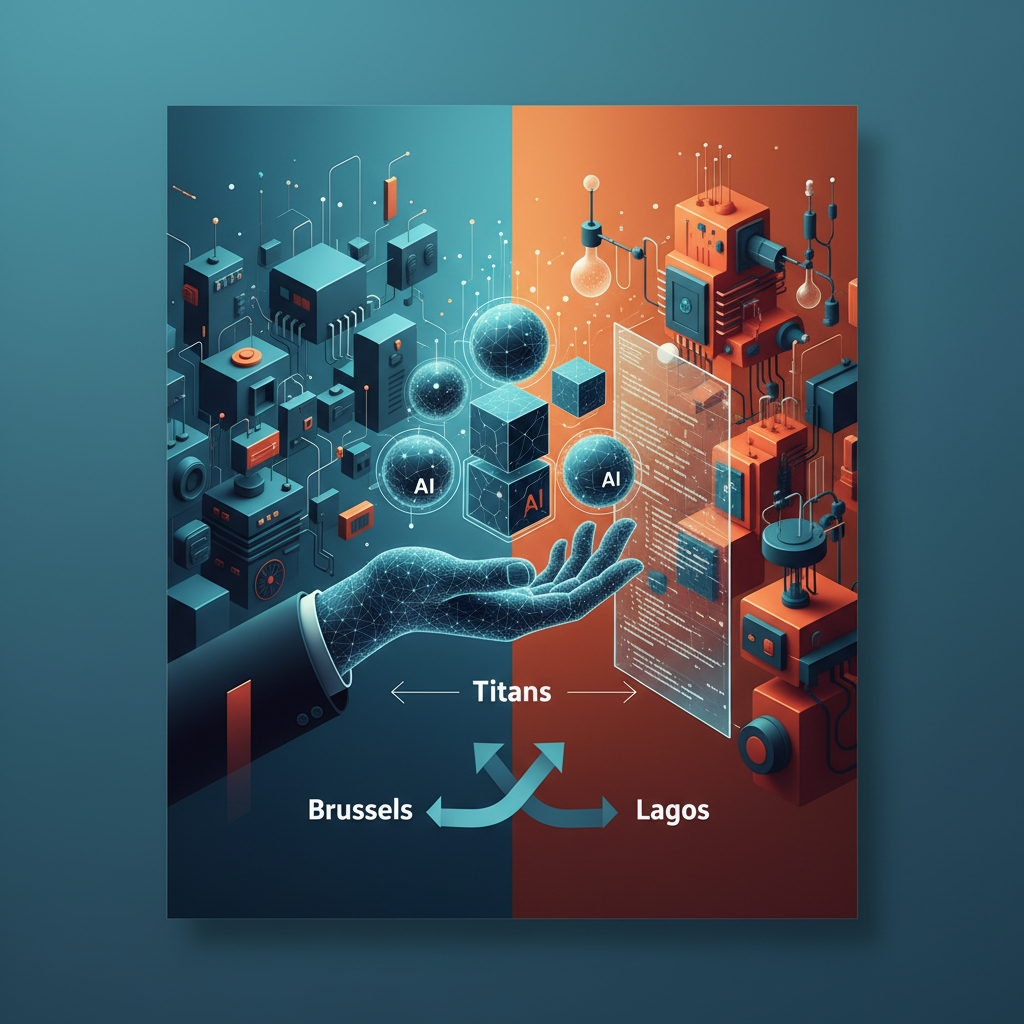
Is it just me, or does it feel like everyone suddenly woke up to the fact that AI is not just a fancy chatbot, but a force that could reshape our very existence? For years, while Silicon Valley was busy moving fast and breaking things, some of us were already seeing the storm gathering on the horizon. Now, in April 2026, the global conversation has shifted dramatically, with governments worldwide rushing to establish what they call 'AI safety institutes.' They want to test these powerful AI systems before they are unleashed upon the world. My question, from my perch here in Lagos, is simple: Is this a genuine effort to safeguard humanity, or just another exercise in bureaucratic control that risks stifling innovation, particularly in places like Nigeria where the future is being built from the ground up?
Let us cast our minds back a little, shall we? The idea of regulating powerful technologies is hardly new. We have seen it with nuclear energy, with biotechnology, even with the early days of the internet. The pattern is familiar: a new, transformative technology emerges, its potential both awe-inspiring and terrifying, and then the slow, deliberate machinery of government begins to grind into action. For AI, this urgency has been amplified by the rapid advancements in large language models and generative AI. Suddenly, the abstract risks of 'superintelligence' and 'existential threats' are no longer confined to science fiction novels, but are being debated in the halls of power in Washington, London, and Brussels.
Historically, the approach has often been reactive, playing catch-up after the technology has already embedded itself into society. Think of social media and its impact on elections, or the privacy concerns that arose long after data collection became ubiquitous. With AI, there is a palpable sense that this time, we must get ahead of it. The stakes, they argue, are too high. The potential for misuse, for bias amplification, for job displacement, for autonomous weapons, and for deepfakes to erode trust, is immense. This is the narrative driving the formation of these institutes.
Today, the landscape is dotted with these new entities. The UK, for instance, launched its AI Safety Institute with much fanfare, focusing on evaluating the capabilities and risks of advanced AI models. The United States followed suit, establishing its own AI Safety Institute under the National Institute of Standards and Technology, aiming to develop benchmarks and standards for AI safety. The European Union, with its landmark AI Act, is also pushing for rigorous conformity assessments and risk management systems. These initiatives are not just about technical evaluations; they are about setting global norms, influencing research directions, and ultimately, controlling the narrative around AI development. According to Reuters, these governmental bodies are rapidly expanding their mandates and budgets.
But what do the people building these systems, and those who stand to gain or lose the most, actually think? I have spoken to a few. Dr. Aisha Bello, a lead researcher at the African AI Institute in Abuja, expressed a healthy skepticism.