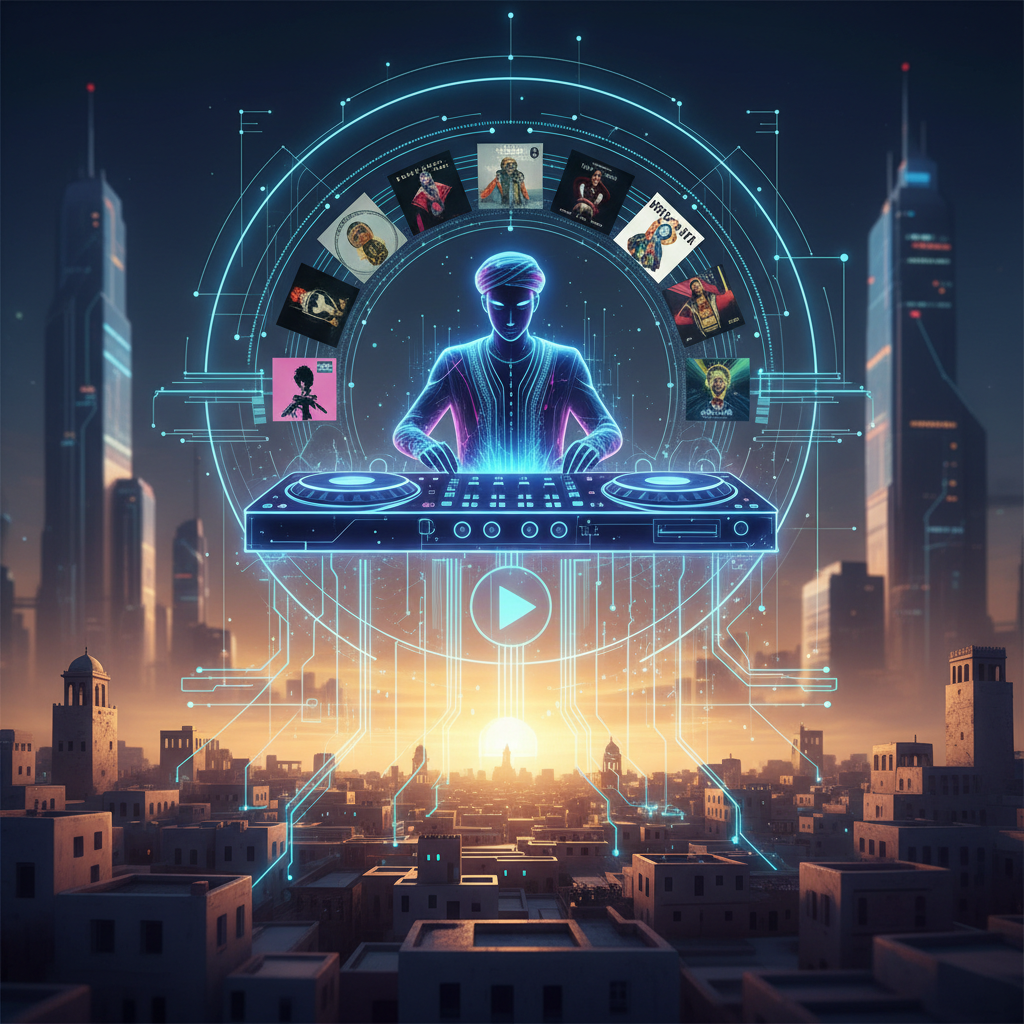

The air in Algiers, much like any bustling city across the globe, vibrates with a symphony of sounds. From the traditional melodies of Chaabi echoing through the Casbah to the pulsating rhythms of modern Rai emanating from coastal cafes, music is an intrinsic part of our daily lives. Yet, in an era of seemingly infinite musical choices, how do we navigate this vast ocean of sound to find our next beloved track? The answer, increasingly, lies not with human curators alone, but with sophisticated artificial intelligence, particularly exemplified by Spotify's AI DJ and its powerful personalization engine.
For many, the idea of an AI DJ might conjure images of a robotic voice announcing tracks. While that is a component, the true marvel lies beneath the surface, in the complex algorithms that predict, suggest, and even narrate our musical journeys. This is not merely a playlist generator; it is a dynamic, evolving entity designed to understand your unique sonic fingerprint. Let me walk you through the architecture of this fascinating system.
The Big Picture: More Than Just a Playlist
At its core, Spotify's personalization engine, of which the AI DJ is a prominent interface, aims to solve the paradox of choice. With over 100 million tracks available, human curation alone cannot scale. The system's objective is to deliver the right song to the right person at the right time, fostering deeper engagement and discovery. Think of it as a highly skilled hakawati, a traditional storyteller, but instead of tales, it weaves a narrative of music tailored precisely to your mood, history, and even the time of day. This is particularly relevant in regions like North Africa, where diverse musical traditions coexist and often fuse, creating a rich, complex tapestry that a simple genre-based algorithm would struggle to comprehend.
The Building Blocks: Key Components Explained Simply
To achieve this level of intimacy, Spotify employs a multi-layered AI architecture. From a technical standpoint, three primary pillars underpin its personalization efforts: collaborative filtering, content-based filtering, and natural language processing (NLP).
- Collaborative Filtering: This is perhaps the most famous and foundational component. It operates on the principle that if two users share similar tastes in some songs, they are likely to enjoy other songs that the other user likes. Imagine a bustling souk in Ghardaïa; if you and another shopper both buy similar spices, the vendor might suggest a new tea that the other shopper also enjoys. Spotify analyzes billions of listening patterns, identifying clusters of users with shared preferences. This forms the basis for many of its