The news arrived like a Sahelian dust storm, sudden and potentially transformative. The United States Food and Drug Administration, the FDA, has granted its coveted approval to a suite of diagnostic AI tools developed by Google DeepMind, specifically designed for the early detection of various cancers and critical cardiovascular conditions. This is not merely an incremental update; this is a seismic shift. For a continent like Africa, and particularly for my home, Senegal, where healthcare infrastructure often strains under immense pressure, the promise of such technology is both tantalizing and fraught with peril. My sources tell me, however, that the path from Silicon Valley's labs to Dakar's clinics is paved with more than just good intentions.
The official announcement from Google DeepMind lauded their AI, dubbed 'MedScan Pro', as a 'paradigm shift' in medical diagnostics, boasting an astonishing 97.8% accuracy rate in detecting early-stage lung cancer from CT scans and an 89.5% success rate in identifying cardiac anomalies predictive of heart failure from echocardiograms. These figures, if proven replicable in diverse populations, could save millions of lives globally. The immediate question for us in Senegal is not if this technology works, but for whom it will work, and at what cost.
Breaking news of this magnitude inevitably triggers a cascade of reactions. Dr. Aïcha Diallo, Director of Public Health at Senegal's Ministry of Health and Social Action, expressed cautious optimism. 'This FDA approval is a beacon of hope, certainly,' she stated in an exclusive interview. 'The potential to leapfrog decades of diagnostic limitations, to detect diseases like breast cancer and cardiovascular issues at stages where intervention is most effective, is immense for our people. However, the deployment requires robust digital infrastructure, specialized training, and, crucially, equitable access. We cannot allow this to become a tool solely for the privileged few in our urban centers.' Her words echo a familiar refrain: the promise of technology often outpaces the reality of its implementation in resource-constrained environments.
Expert analysis quickly followed. Professor Omar Gueye, a leading biomedical engineer at the Cheikh Anta Diop University in Dakar, highlighted the double-edged sword of such advancements. 'While the diagnostic prowess of MedScan Pro is undeniable, the underlying data models were predominantly trained on datasets from Western populations,' Professor Gueye explained. 'The nuances of genetic predispositions, environmental factors, and even anatomical variations prevalent in African populations are often underrepresented in these foundational datasets. Without rigorous validation and adaptation using local data, there is a significant risk of algorithmic bias, leading to misdiagnoses or missed diagnoses here. This is not just a technical challenge; it is an ethical imperative.' His concern is deeply rooted in the historical inequities of global health research and development.
The geopolitical implications are also profound. China, a major player in Africa's digital infrastructure, has been rapidly expanding its technological footprint across the continent. While Google DeepMind is an American entity, the race for AI dominance in healthcare is a global one. My investigation reveals that Chinese tech giants, particularly Huawei and Baidu, have already been making inroads into African healthcare systems, offering integrated solutions that combine hardware, connectivity, and nascent AI diagnostics. The FDA approval of Google's tool now intensifies this competition, potentially forcing African nations to choose between different technological ecosystems, each with its own set of dependencies and data governance implications. This is not merely about health; it is about strategic influence.
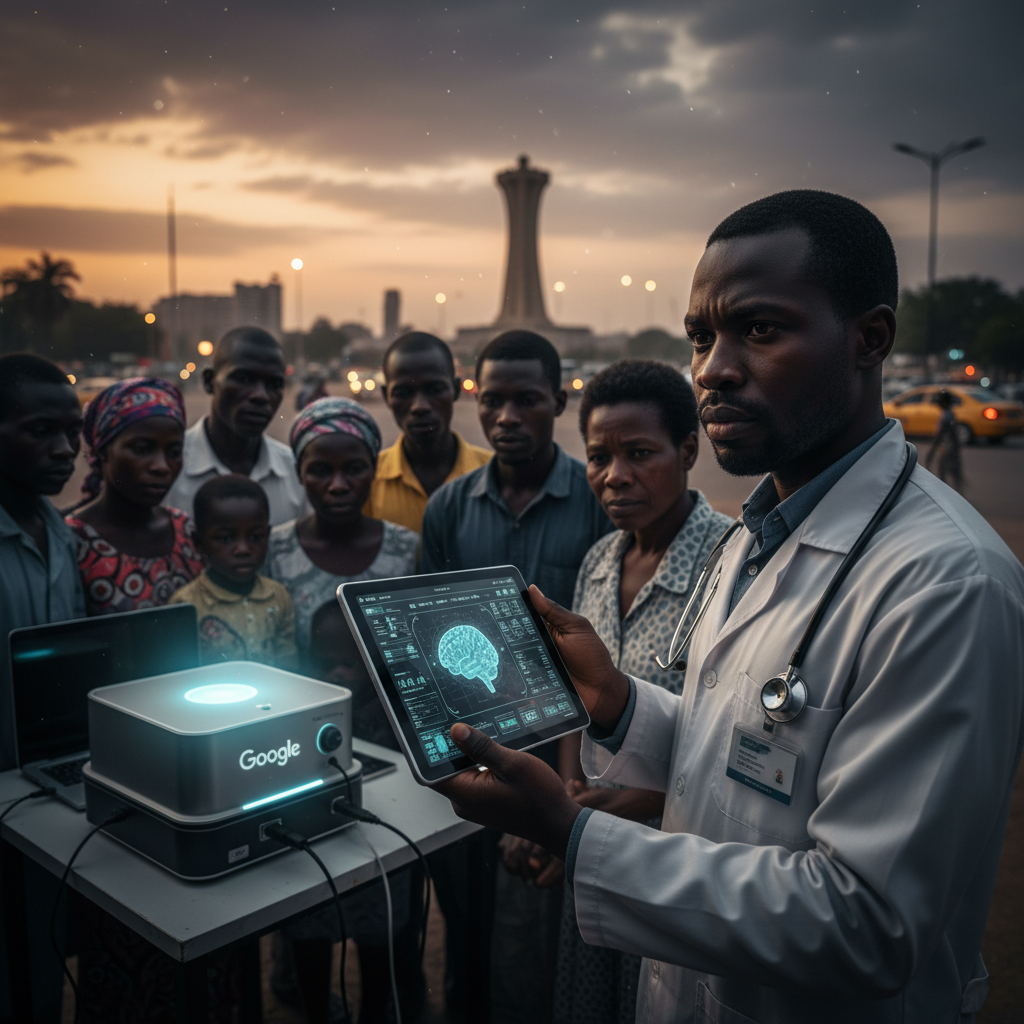
What happens next is critical. Google DeepMind has indicated plans for pilot programs in 'underserved regions' globally, and Senegal is reportedly on a preliminary list. However, the devil, as always, is in the details. The deployment of MedScan Pro requires high-speed internet connectivity, advanced computing power, and a steady supply of trained medical personnel capable of operating and interpreting the AI's output. Senegal's current digital infrastructure, while improving, remains a significant hurdle outside of major cities like Dakar and Thiès. The documents reveal that the estimated cost for a nationwide rollout, including necessary upgrades and training, could run into hundreds of millions of dollars, a figure that would strain Senegal's national budget significantly.
Moreover, the question of data ownership and privacy looms large. Will patient data generated in Senegal be stored locally, or will it reside on Google's cloud servers abroad? This is a point of contention that has plagued many previous technology transfer initiatives. 'Our patient data is a national asset, a part of our sovereignty,' asserted Fatou Ndiaye, a legal expert specializing in digital rights at the Senegalese Bar Association. 'Any partnership must guarantee that this data is protected under Senegalese law and that its use is strictly for the benefit of our citizens, not for commercial exploitation by foreign entities. We have seen too many instances where the terms of engagement were not favorable to African nations.' This sentiment is gaining traction across the continent, as highlighted by discussions around digital sovereignty in other African nations. For further reading on the broader implications of AI governance, one might consult articles on MIT Technology Review.
The potential for this technology to revolutionize healthcare in Senegal is undeniable. Imagine a rural health post in the Casamance region, equipped with a portable ultrasound machine connected to MedScan Pro, instantly analyzing scans for early signs of heart disease, or a clinic in Saint-Louis detecting breast cancer with unprecedented accuracy. This could dramatically reduce mortality rates and improve quality of life for countless Senegalese. However, the path to this utopian vision is fraught with challenges. The initial capital investment, the need for robust and reliable energy grids, and the continuous maintenance and software updates all present formidable obstacles.
This is just the tip of the iceberg. The arrival of such powerful, FDA-approved AI diagnostics from a tech titan like Google DeepMind forces a critical re-evaluation of our national digital strategy and our partnerships. Will Senegal merely be a recipient of this technology, or will we assert our agency, demanding terms that truly serve our national interest and ensure equitable access for all our citizens? The choices made in the coming months will determine whether this AI breakthrough becomes a genuine catalyst for health equity or merely another chapter in the story of technological disparities. The world is watching, and so am I, Mamadouù Dioufée, for DataGlobal Hub. For more on global tech developments, you can visit Reuters Technology or TechCrunch AI.