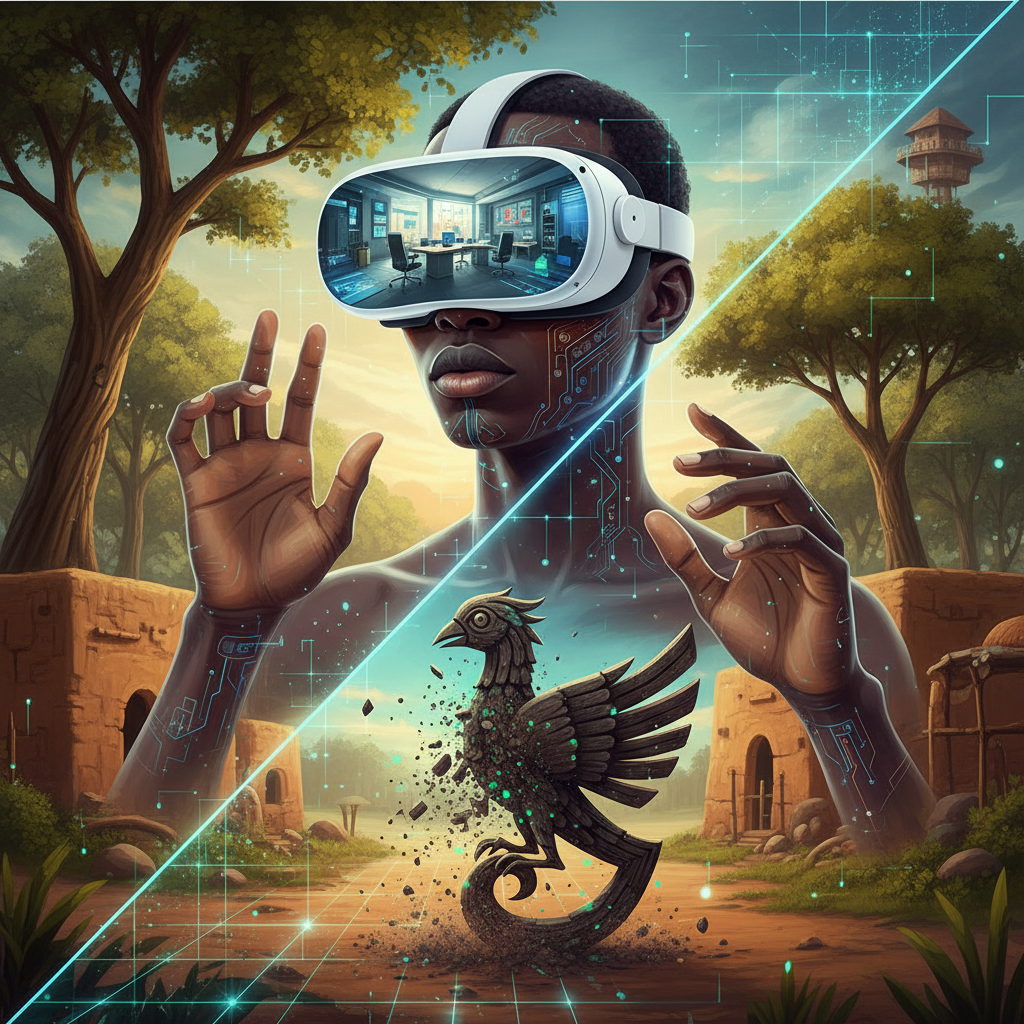

The market at Makola is a symphony of life. The vibrant kente cloths, the rhythmic calls of vendors, the aroma of waakye and kelewele, the jostle of bodies, the shared laughter. It is a sensory overload, a beautiful chaos that grounds us in our Ghanaian identity. Now, imagine walking through that same market, but half your attention is pulled into a digital overlay, a virtual world projected onto your vision, guided by Apple's latest spatial computing marvel, the Vision Pro. This isn't science fiction; it is the reality Apple is selling, and its implications, particularly for places like Ghana, are profound and frankly, a little unsettling.
I have seen the videos, read the glowing reviews from tech enthusiasts in Silicon Valley. They speak of seamless integration, of productivity boosts, of new forms of entertainment. They talk about AI-powered interfaces that anticipate your needs, digital avatars that feel more present, and virtual screens that expand your workspace infinitely. It sounds revolutionary, doesn't it? But as a journalist from Ghana, my first thought isn't about the gadgets and the gizmos. My first thought is always about the people, about our culture, about what we stand to gain and, more importantly, what we risk losing.
We need to talk about this. The arrival of spatial computing, powered by sophisticated AI, is not just another technological upgrade. It is a fundamental shift in how we perceive and interact with our environment, with each other, and with our own minds. In a society like Ghana, where communal bonds, face-to-face interactions, and the rich tapestry of non-verbal communication are paramount, what happens when a significant portion of our reality becomes mediated by a device on our face?
Consider the concept of 'Sankofa,' an Akan Adinkra symbol meaning 'go back and get it.' It teaches us that we must look to the past to understand the present and build the future. It is about wisdom, heritage, and not forgetting where you come from. When AI-driven spatial computing promises to augment our reality, to layer digital information onto our physical world, does it enhance our ability to 'Sankofa,' or does it create a new, distracting layer that pulls us further away from the tangible, the traditional, the truly human interactions that define us?
Early research, though still nascent, suggests that prolonged engagement with augmented and virtual realities can have significant cognitive effects. Dr. Kwesi Botchway, a cognitive psychologist at the University of Ghana, voiced his concerns in a recent seminar. He stated,