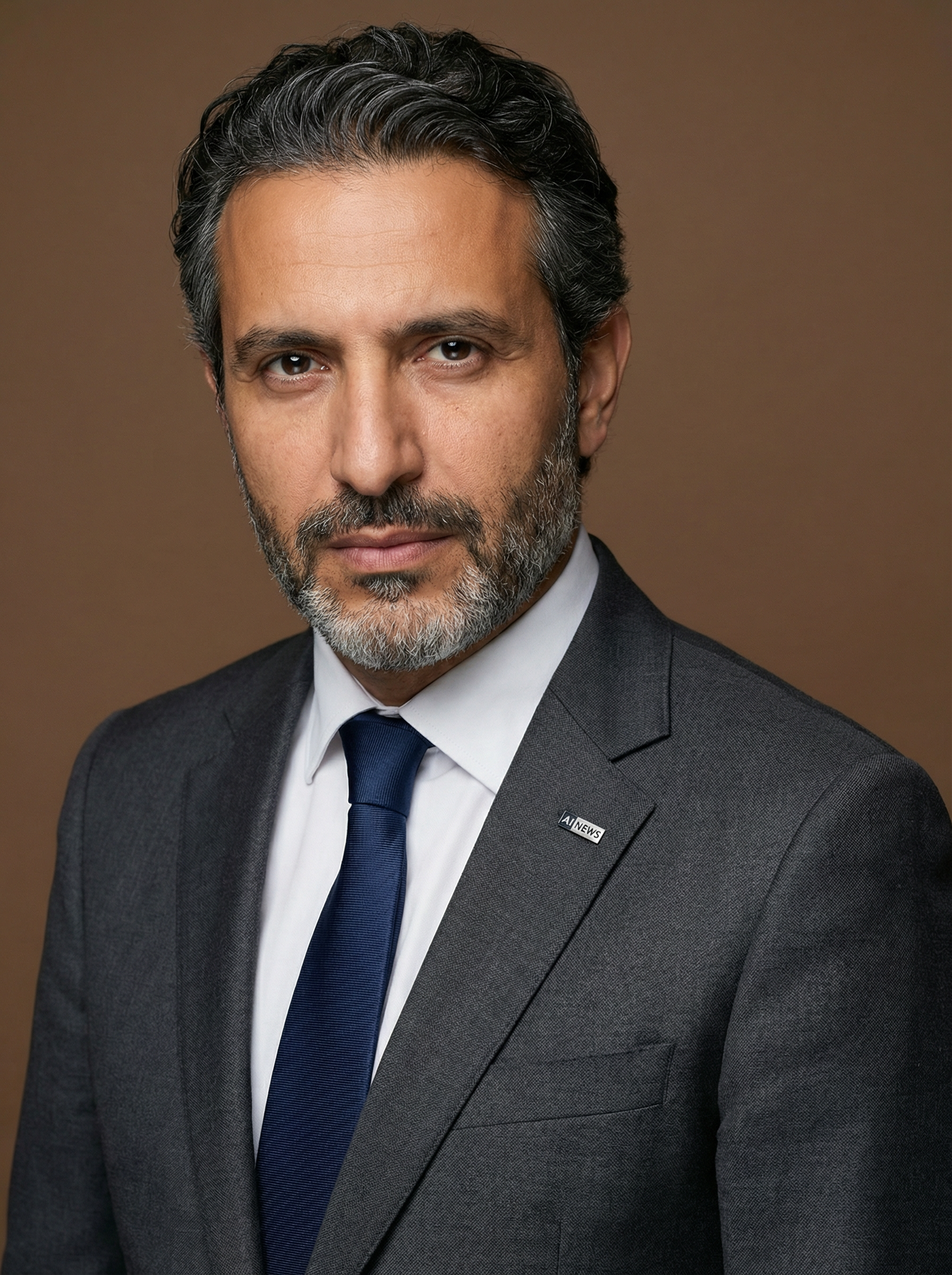
The announcement from the Algerian Ministry of National Education in February 2026 sent ripples across the Maghreb and beyond. A comprehensive, multi-phase strategy to integrate AI powered chatbots into the national secondary education curriculum was not merely a policy shift, it was a declaration. Minister Abdelkader Benali, speaking from the historic halls of the Ministry in Algiers, framed it as an imperative for a nation striving to empower its youth for the 21st century. This initiative, dubbed 'Nour AI' meaning 'Light AI' in Arabic, seeks to equip every secondary student with access to personalized learning assistants, powered by a localized version of Google's Gemini and OpenAI's GPT models, tailored for Algerian cultural and linguistic nuances.
The Strategic Move: Nour AI and the Digital Classroom
The core of the Nour AI strategy involves a phased rollout of AI-powered educational platforms. Phase one, already underway in pilot schools across Algiers, Oran, and Constantine, provides students with access to a bespoke chatbot interface. This interface, designed in collaboration with local Algerian tech startups and international AI giants, offers assistance with homework, explains complex concepts, provides instant feedback on written assignments, and even helps students prepare for baccalaureate examinations. The Ministry projects that by September 2027, over 80% of secondary students nationwide will have access to these tools, with a significant investment in infrastructure to bridge the digital divide in rural areas.
From a technical standpoint, the architecture involves a hybrid model. Core large language models from Google and OpenAI are fine-tuned on a massive corpus of Algerian educational materials, including textbooks, historical documents, and classical Arabic literature. This localization effort is crucial, aiming to imbue the AI with a deep understanding of Algerian pedagogy and cultural context. "The mathematics behind this is elegant," remarked Dr. Lamine Cherif, head of the AI Ethics and Education Lab at the University of Science and Technology Houari Boumediene (usthb) in Algiers. "It is not simply translation, but a contextual immersion, ensuring the AI speaks not just in Arabic, but as an Algerian educator would." This bespoke approach is intended to mitigate biases inherent in globally trained models and ensure relevance to the Algerian curriculum.
Context and Motivation: Bridging Gaps and Fostering Innovation
Algeria, like many nations, grapples with educational challenges: large class sizes, resource disparities, and the need to prepare students for a rapidly evolving global economy. The Ministry's motivation is multifaceted. Firstly, it aims to democratize access to high-quality, personalized education. A student in a remote village in the Aurès mountains, with limited access to tutors or specialized instructors, could theoretically receive the same level of academic support as one in the capital. Secondly, it seeks to reduce the burden on overworked teachers, allowing them to focus on critical thinking, project-based learning, and individual student needs, rather than repetitive tasks. Thirdly, and perhaps most strategically, Algeria views this as an opportunity to cultivate a domestic AI talent pool. The collaboration with local startups, the data localization efforts, and the emphasis on ethical AI development are all designed to foster a burgeoning AI ecosystem within the country.
"Our vision is not merely to consume technology, but to create it, to adapt it, and to lead with it," stated Minister Benali in a recent press conference. "We are investing 300 billion Algerian Dinars over five years, approximately 2.2 billion US dollars, into this initiative, a testament to our commitment to our youth and our future." This figure, while substantial, reflects a national priority to leapfrog traditional educational models.
Competitive Analysis: A Race for Educational Supremacy
Globally, the integration of AI in education is a hot topic. Nations like Singapore and Estonia have been pioneers, while others, including France and the United States, are still navigating the ethical and practical complexities. What sets Algeria's strategy apart is its bold, top-down national implementation, rather than a fragmented, school-by-school approach. While countries like Morocco and Tunisia are exploring similar pilot programs, Algeria's scale and dedicated budget position it as a regional leader in this domain. The Ministry is keenly aware of the 'cheating crisis' narrative that often accompanies AI in education. Their response has been proactive, developing sophisticated AI detection tools in parallel with the learning assistants, and integrating ethical guidelines into the curriculum itself.
Companies like Google and OpenAI, eager to expand their global footprint and demonstrate the positive societal impact of their technologies, are key partners. Their involvement provides credibility and cutting-edge technology, while the Algerian government ensures localization and regulatory oversight. This partnership model is a clever way for Algeria to access advanced AI capabilities without relying solely on foreign expertise or infrastructure, fostering a degree of digital sovereignty. For more on the broader implications of AI in education, one might consult articles on MIT Technology Review.
Strengths and Weaknesses: A Double-Edged Sword
Strengths:
- Personalized Learning at Scale: AI chatbots can offer individualized support, adapting to each student's pace and learning style, a luxury previously unavailable to most Algerian students.
- Teacher Empowerment: By automating routine tasks, teachers can dedicate more time to mentorship, creative instruction, and addressing complex student needs.
- Digital Literacy and AI Fluency: Early exposure to AI tools will undoubtedly boost students' digital literacy and prepare them for an AI-driven workforce.
- Cultural Relevance: The rigorous localization effort ensures the tools are not just functional, but culturally resonant and pedagogically appropriate for Algeria.
- Economic Catalyst: The investment in local startups and infrastructure could stimulate Algeria's burgeoning tech sector, creating jobs and fostering innovation.
Weaknesses:
- The Cheating Conundrum: Despite detection efforts, the temptation for students to rely excessively on AI for answers remains a significant challenge. "We must redefine what 'cheating' means in an AI-augmented world," observed Professor Fatima Zohra Djebbar, a renowned educational psychologist at the University of Algiers. "The focus must shift from rote memorization to critical analysis and ethical use of tools." This requires a fundamental shift in assessment methodologies.
- Digital Divide Persistence: While infrastructure investment is planned, ensuring equitable access in remote areas, where internet connectivity can be sporadic, will be a monumental task. A recent report by the Algerian Telecommunications Regulatory Authority indicated that only 65% of rural households have reliable broadband access, a figure that must improve significantly for Nour AI to succeed universally.
- Teacher Training and Adoption: The success of Nour AI hinges on teachers embracing these tools, not resisting them. Extensive training and ongoing support will be critical to prevent technophobia and ensure effective integration into lesson plans. A survey conducted by the Ministry in late 2025 revealed that 40% of secondary school teachers expressed concerns about their ability to effectively utilize AI tools in their classrooms.
- Ethical Oversight and Data Privacy: Handling vast amounts of student data requires robust ethical frameworks and stringent privacy protocols. The Ministry has established an independent AI Ethics Board, but maintaining public trust will be an ongoing challenge. For insights into global AI ethics debates, Wired often provides excellent coverage.
- Over-reliance and Skill Erosion: There is a risk that students may become overly dependent on AI, potentially hindering the development of fundamental cognitive skills such as problem-solving, critical thinking, and independent research. This is a concern echoed by many educators across the globe, and Algeria is not immune.
Verdict and Predictions: A Calculated Risk with High Stakes
Algeria's Nour AI strategy is a bold, ambitious undertaking. It represents a calculated risk, one that could either propel the nation's educational system into a new era of personalized learning and innovation or create unforeseen challenges related to academic integrity and digital equity. The motivations are clear: to modernize education, empower teachers, and prepare a new generation for the complexities of the digital age.
My assessment is that the Ministry's proactive approach to localization and ethical considerations, including the development of AI detection tools and the establishment of an ethics board, demonstrates a thoughtful engagement with the potential pitfalls. However, the success of Nour AI will ultimately depend on three critical factors: the efficacy of teacher training programs, the successful bridging of the digital divide, and a fundamental shift in pedagogical approaches to embrace, rather than merely tolerate, AI as an educational partner. If these elements are managed effectively, Algeria could indeed emerge as a beacon for AI integration in education, demonstrating that with careful planning and cultural sensitivity, AI can be a powerful force for progress, rather than merely a source of crisis. The journey will be long, but the potential rewards, for the students of Algeria and for the nation's future, are immense. This is a strategy worth watching closely. For more on AI strategy in other regions, one might look to Reuters Technology for global business perspectives.