
AI's Promise for Romanian Women's Health: Early Cancer Detection & Personalized Care
AI is set to revolutionize women's health in Romania, offering advanced tools for early cancer detection and personalized treatment, addressing long-standing disparities and improving outcomes across the country.
Click play to listen to this article read aloud using text-to-speech.


AI's Promise for Romanian Women's Health: Early Cancer Detection & Personalized Care
BUCHAREST, April 2026 – The integration of Artificial Intelligence (AI) into Romania's healthcare system is no longer a distant dream but a tangible reality, poised to significantly impact women's health. From breast cancer screening to personalized fertility treatments, AI-driven solutions are emerging as powerful allies in our ongoing quest for better health outcomes, particularly for the women of our nation.
For too long, Romanian women, especially those in rural areas, have faced challenges in accessing timely and accurate diagnoses for critical conditions like breast and cervical cancer. Traditional screening methods, while vital, often contend with resource limitations and geographical barriers. This is where AI offers a transformative advantage.
Dr. Elena Popescu, a leading oncologist at the 'Prof. Dr. Alexandru Trestioreanu' Institute of Oncology in Bucharest, emphasizes the paradigm shift. "AI algorithms, trained on vast datasets of mammograms and histopathological slides, can detect subtle anomalies that might escape the human eye, even that of an experienced radiologist. This isn't about replacing our dedicated medical professionals, but empowering them with an unparalleled diagnostic tool. For Romanian women, this means earlier detection, which is unequivocally linked to higher survival rates and less aggressive treatment protocols. It’s a game-changer, particularly for our sisters in the more remote regions where specialist access is limited."
Beyond diagnostics, AI is also making strides in personalized medicine. Imagine an AI system analyzing a woman's genetic profile, lifestyle, and medical history to recommend the most effective treatment plan for endometriosis or polycystic ovary syndrome (PCOS). "This level of tailored care is what we've always strived for," says Professor Ana Coman, Head of Gynecology at the University Emergency Hospital Elias. "For conditions that uniquely affect women, often with complex and varied presentations, AI can synthesize information far beyond human capacity, leading to truly individualized therapeutic strategies. It respects the unique biological tapestry of each woman, moving beyond a 'one-size-fits-all' approach."
The European Union's recent push for a common European Health Data Space (EHDS) is also crucial for Romania. This initiative will facilitate the secure exchange of health data across member states, providing the necessary fuel for AI model development and validation. For Romanian researchers and clinicians, access to such a rich, diverse dataset means AI tools can be developed and refined to better suit the specific demographic and genetic profiles of our population, ensuring relevance and efficacy.
However, the path forward is not without its challenges. Ensuring data privacy, addressing ethical considerations, and building trust in AI systems among both patients and healthcare providers are paramount. "We must educate our communities, especially women, about the benefits and safeguards of these technologies," adds Dr. Popescu. "Transparency and ethical deployment are non-negotiable. Our goal is to augment, not diminish, the human touch in healthcare, ensuring that technology serves to uplift and protect the health of every Romanian woman."
As Romania continues its digital transformation journey, AI in women's health stands as a beacon of hope, promising a future where advanced diagnostics and personalized care are accessible to all, fostering healthier lives for generations to come.
Related Articles
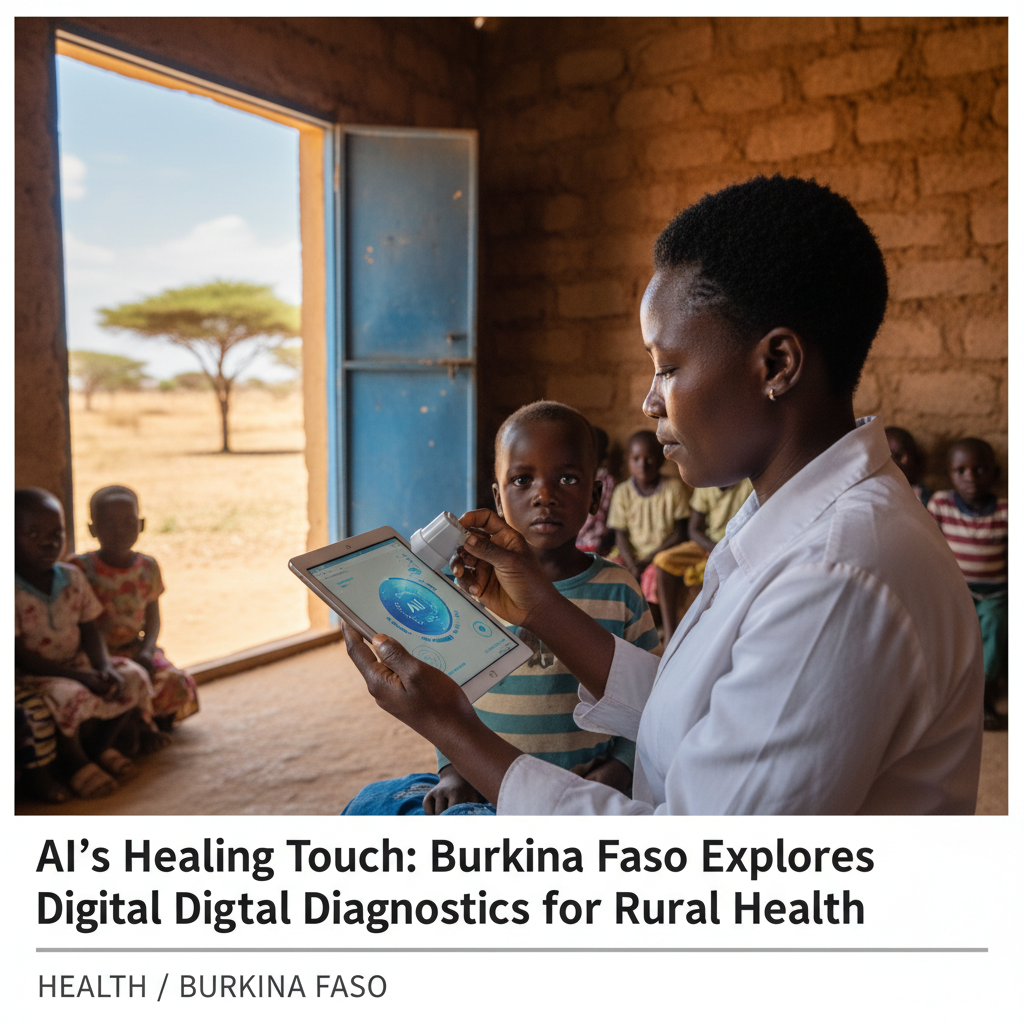
AI's Healing Touch: Burkina Faso Explores Digital Diagnostics for Rural Health
 Youssoufaù Traoré
Serbia's AI Strategy: Balancing Innovation and Sovereignty in a Digital Europe
 Nikolàs Petrovicì
AI's Icelandic Touch: Revolutionizing Women's Health Screenings
 Sigríður Björnsdóttìr
AI's Ethical Compass in Canadian Healthcare: Bridging Innovation and Indigenous Wisdom
 Ingridè Bjornssòn