
AI's Icelandic Embrace: Revolutionizing Women's Health Screenings
Iceland is pioneering AI integration in healthcare, with a new initiative focused on enhancing early detection for women's health conditions, promising a significant leap in diagnostic accuracy and accessibility across the island.
Click play to listen to this article read aloud using text-to-speech.
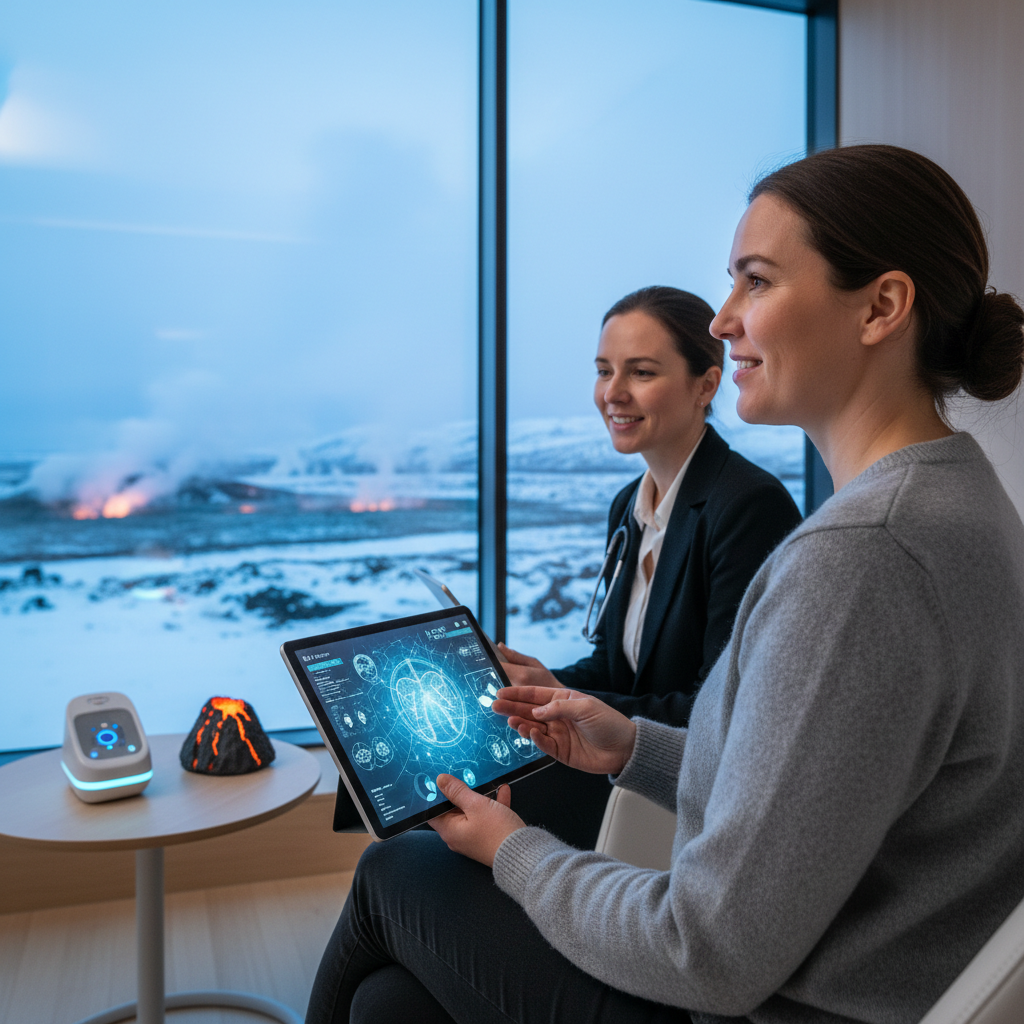

REYKJAVÍK – In a move poised to redefine healthcare paradigms, Iceland is at the forefront of integrating Artificial Intelligence into its national health services, with a particular focus on improving early detection and diagnostic accuracy for women. The 'HeilsaKvenna AI' initiative, launched this spring, aims to leverage advanced machine learning algorithms to analyze mammograms, cervical smear tests, and even genetic predispositions, offering a more nuanced and timely approach to women's health.
For generations, Icelandic women have faced unique challenges in healthcare access, particularly in remote regions. While our national healthcare system, Landspítali, strives for equity, the sheer geography of our island can create disparities. This is where AI offers a transformative promise, according to Dr. Elín Jónsdóttir, a leading gynaecologist and project lead for HeilsaKvenna AI at Landspítali-háskólasjúkrahús. "Our goal is to augment the incredible work of our healthcare professionals, not replace it," Dr. Jónsdóttir explained at a recent press conference in Harpa. "By employing AI to pre-screen and highlight anomalies in diagnostic images, we can significantly reduce the burden on radiologists and pathologists, allowing them to focus their expertise on the most complex cases. This means faster results, and crucially, earlier intervention for conditions like breast and cervical cancer."
The initiative is a collaboration between the Ministry of Health, Landspítali, and a Reykjavík-based tech firm, Vísindalausnir ehf., specializing in medical AI. Their algorithms, trained on anonymized data from thousands of Icelandic women over the past decade, are reportedly achieving accuracy rates exceeding human interpretation in certain preliminary screenings. This is particularly significant for conditions that can be subtle in their early stages.
Guðrún Ólafsdóttir, a 58-year-old from Akureyri, shared her cautious optimism. "My mother and grandmother both battled breast cancer. The thought of an AI helping catch something sooner, especially for those of us far from the capital, is incredibly reassuring. It's about empowering us with knowledge, earlier." Her sentiment echoes a broader hope among Icelandic women who value proactive health management.
The ethical implications, particularly concerning data privacy and algorithmic bias, have been rigorously addressed. The Icelandic Data Protection Authority (Persónuvernd) has been deeply involved, ensuring that all data used is anonymized and securely managed under the strictest European GDPR guidelines, with additional national safeguards. "Transparency and trust are paramount," stated Katrín Magnúsdóttir, Director of Persónuvernd. "We have implemented robust frameworks to ensure that the AI systems are fair, accountable, and that the privacy of every Icelandic woman's health data is unequivocally protected."
While the HeilsaKvenna AI is still in its pilot phase, initial results are promising. This initiative not only positions Iceland as a leader in digital health transformation but also underscores a commitment to leveraging technology for the betterment of its citizens, particularly in areas that have historically presented unique challenges for women's health across our rugged yet beautiful landscape.
Related Articles

AI Revolutionizes Portuguese Football: Benfica Leads the Charge with Data Analytics
 Luís Ferreiràs
AI's Gentle Touch: Revolutionizing Maternal Healthcare in Vietnam
 Ngo Thi Huừngé
Algeria's AI Health Revolution: A New Dawn for Public Well-being, Says Experts
 Abderrahmàn Bensoussàn
AI Revolutionizes Rural Healthcare in Punjab: A New Dawn for 'Pind' Clinics
 Arjùn Sharmà