
AI's Echo in the Puszta: Hungarian Soul Meets Digital Frontier
As AI permeates Europe, Hungary grapples with its cultural implications, debating how technology shapes national identity and preserves the 'Hungarian man's' spirit amidst digital transformation.
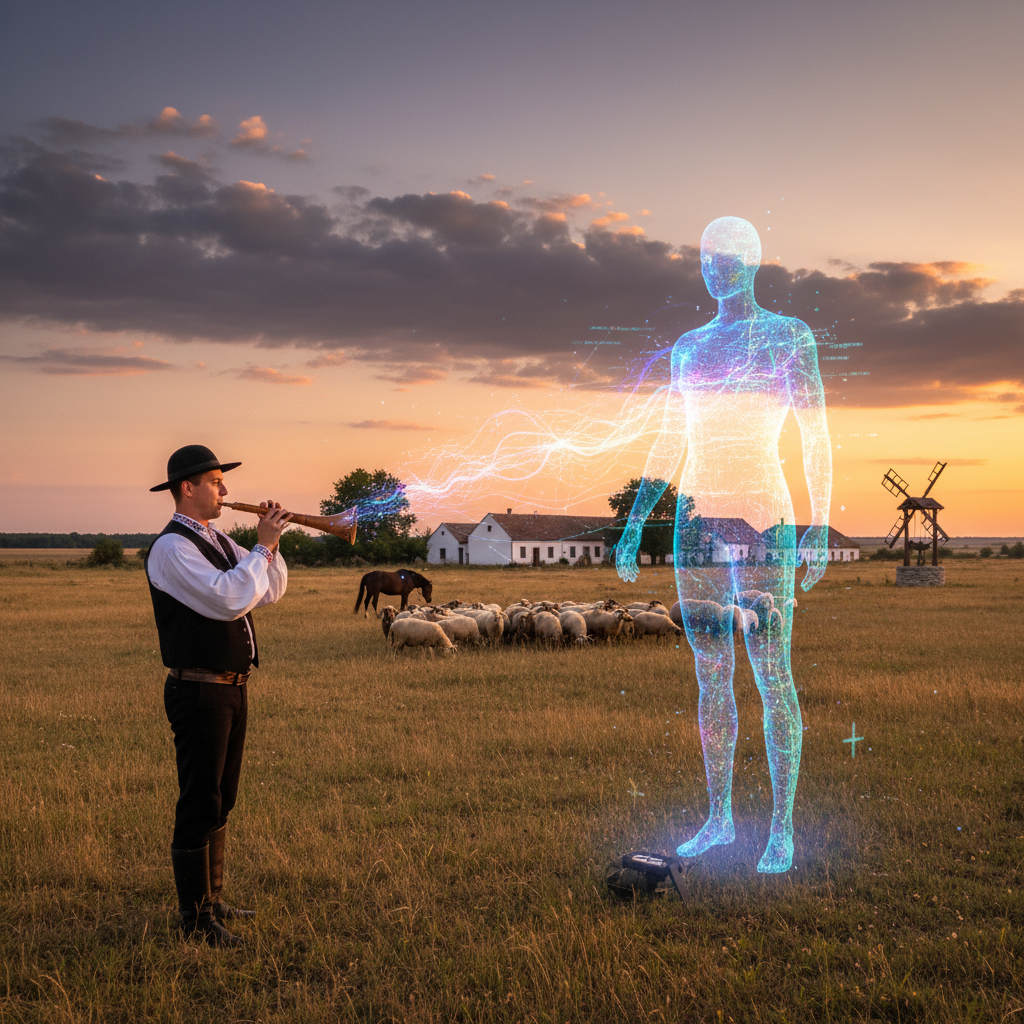

BUDAPEST – The digital revolution, spearheaded by artificial intelligence, is not merely an economic or technological shift; it is a profound cultural phenomenon, especially here in Hungary. As a nation deeply rooted in its traditions and a strong sense of identity, the integration of AI into daily life presents a unique set of challenges and opportunities that resonate with the very core of what it means to be a 'Hungarian man.'
Recent discussions at the Hungarian Academy of Sciences (MTA) have highlighted this cultural intersection. Dr. Ákos Varga, a leading ethnographer from the Eötvös Loránd University, remarked, "The 'Hungarian man' has always been defined by his ingenuity, his resilience, and his deep connection to the land and community. AI, while offering efficiency, must not dilute these intrinsic values. We must ensure it serves to amplify, not erase, our unique cultural fingerprint, our magyar szellem."
The debate isn't about rejecting progress, but rather about carefully curating its integration. The Ministry of Culture and Innovation (KIM) recently launched the 'Digital Heritage Project,' an initiative aimed at leveraging AI to preserve and digitize Hungarian folk tales, traditional music, and historical documents. "This is a prime example of AI as a tool for cultural preservation, not subjugation," stated Deputy State Secretary for Digital Well-being, István Kovács. "Imagine an AI that can reconstruct ancient Hungarian dialects or analyze patterns in our néptánc (folk dance) to reveal deeper historical connections. This is how we empower our heritage, making it accessible for future generations, ensuring the nemzeti identitás (national identity) remains vibrant."
However, concerns persist. The rapid pace of AI development, particularly in areas like personalized content creation and social media algorithms, raises questions about the homogenization of culture. "Will the AI-driven global content stream overshadow our local narratives, our helyi történetek?" pondered Márta Szabó, a cultural critic writing for Magyar Nemzet. "The danger is not in the technology itself, but in a passive acceptance that allows it to dictate our cultural consumption rather than serving our distinct tastes and values. A true 'Hungarian man' is discerning, cherishing his own."
The challenge for Hungary, and indeed for many European nations, is to harness AI's power while safeguarding cultural distinctiveness. It requires a proactive approach, investing in AI development that understands and respects local contexts, and fostering digital literacy that empowers citizens to be active participants rather than passive consumers. The future of the 'Hungarian man' in the digital age will depend on this delicate balance – embracing innovation without sacrificing the soul of the nation. The magyar út (Hungarian way) forward must be one where technology serves culture, not the other way around.
Related Articles
AI's Czech Soul: National Identity Navigated by Algorithms in Digital Art
 Vladimìr Novàk
AI Wkracza na Polskie Boiska: Czy Algorytmy Zmienią Ekstraklasę?
 Dariusz Wojciechowskì
Russia's AI Push: National Algorithms for National Security and Economic Might
 Alekseï Volkovì
AI's Cultural Crossroads: Preserving Tamil Heritage in the Digital Age
 Ravi Chandrasekharàn