
AI's Czech Soul: National Identity Navigated by Algorithms in Digital Art
Czech artists and cultural institutions are grappling with how AI influences national identity in digital art, sparking debate on authenticity and cultural preservation. This exploration highlights the unique challenges and opportunities for Czechia in the AI era.
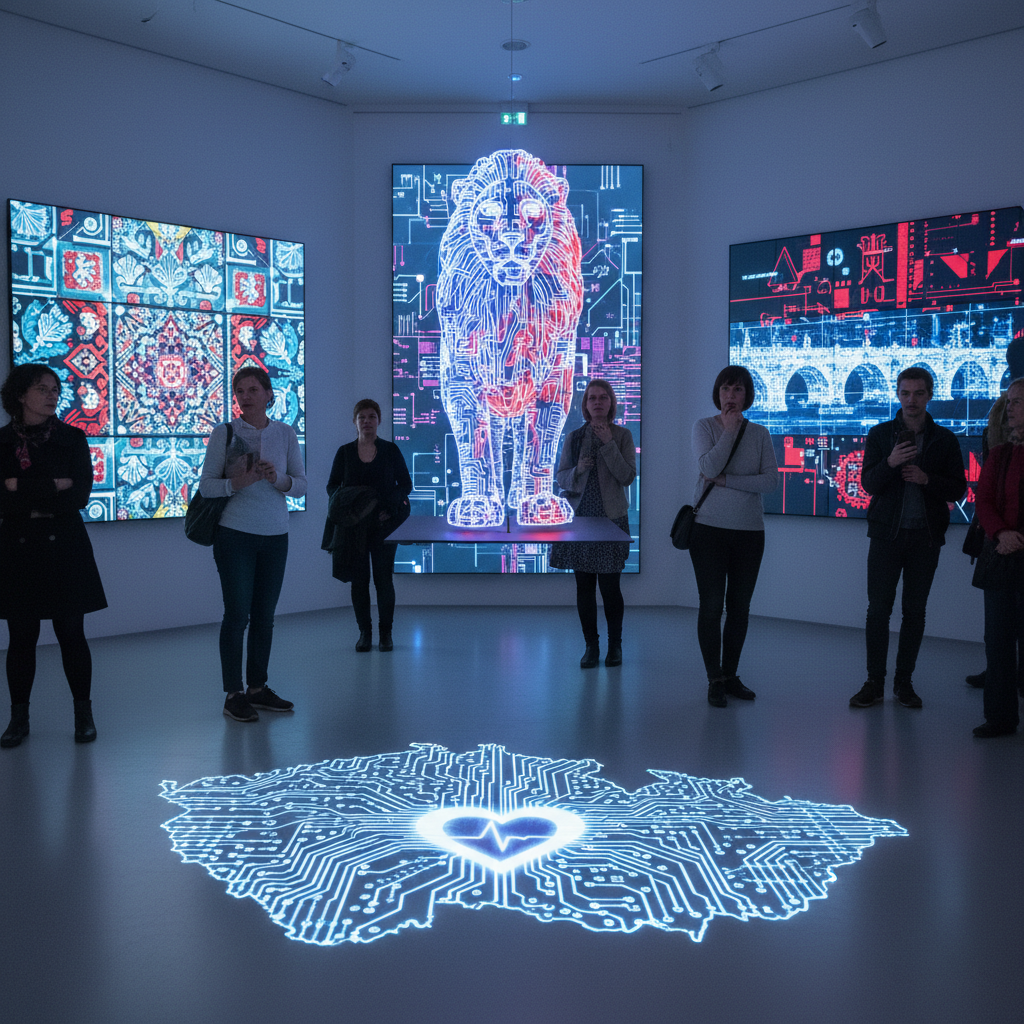

PRAGUE – As artificial intelligence continues its inexorable march into every facet of our lives, its impact on culture, particularly national identity, is becoming a focal point for Czech intellectuals and artists. The question isn't whether AI will change art, but how it will reshape our understanding of what it means to be 'Czech' in the digital realm.
Just last month, the Národní galerie Praha hosted a provocative exhibition titled 'Algorithmic Bohemia,' showcasing AI-generated art inspired by traditional Czech motifs, from Mucha's Art Nouveau to Hrabal's literary landscapes. While visually stunning, the exhibition ignited a fervent discussion among the Česká akademie věd and the public. Is an AI-generated image of Karlštejn Castle, rendered in the style of Josef Lada, truly 'Czech' art, or merely a sophisticated pastiche?
"The 'Czech man' has always been defined by a unique blend of resilience, wit, and a deep connection to our history and landscape," states Dr. Karel Svoboda, a leading ethnographer from Univerzita Karlova's Faculty of Arts. "When an algorithm, devoid of lived experience, attempts to replicate this, it raises profound questions about authenticity. It's not just about aesthetics; it's about the soul of our nation being interpreted by code."
The debate extends beyond visual arts. AI-powered tools are now capable of generating texts in the style of prominent Czech authors, composing music reminiscent of Dvořák, and even crafting narratives that echo the melancholic humor often associated with Czech cinema. While some see this as a powerful tool for creative exploration and accessibility, others, particularly within the Svaz českých spisovatelů, express concern over the potential dilution of original human expression and the risk of homogenizing cultural output.
Filip Novák, a Prague-based digital artist who utilizes AI in his work, offers a more optimistic view. "AI is a brush, not the painter. The intent, the prompt, the curation – that's where the 'Czech man' comes in. I can guide an AI to explore themes of 'švejkism' or the 'golden age of Czech animation' in ways that open new dialogues, not close old ones. It's about collaboration, not replacement."
However, the challenges are significant. Ensuring that AI models are trained on diverse and representative datasets of Czech culture, rather than predominantly Western or globalized content, is crucial. The Ministerstvo kultury ČR has recently announced a working group to develop ethical guidelines for AI in cultural production, recognizing the urgency of the matter.
As Europe grapples with its digital future, Czechia's unique cultural heritage presents a compelling case study. The 'Czech man' has historically adapted to various influences while maintaining a distinct identity. The AI revolution is but the latest, and perhaps most complex, test of this enduring spirit. The outcome will depend not just on technological advancements, but on a thoughtful, culturally informed approach to integrating these powerful tools into our national narrative.
Related Articles
AI's Silk Road: Preserving Uzbek Cultural Heritage Through Digital Innovation
 Bintà Yusupovà
AI Wkracza na Polskie Boiska: Czy Algorytmy Zmienią Ekstraklasę?
 Dariusz Wojciechowskì
Russia's AI Push: National Algorithms for National Security and Economic Might
 Alekseï Volkovì
AI's Cultural Crossroads: Preserving Tamil Heritage in the Digital Age
 Ravi Chandrasekharàn