
AI's Double-Edged Sword: Preserving Afghan Heritage Amidst Digital Divides
AI offers a lifeline for documenting Afghanistan's rich cultural heritage, but concerns linger about equitable access and the digital exclusion of women in its development and use.
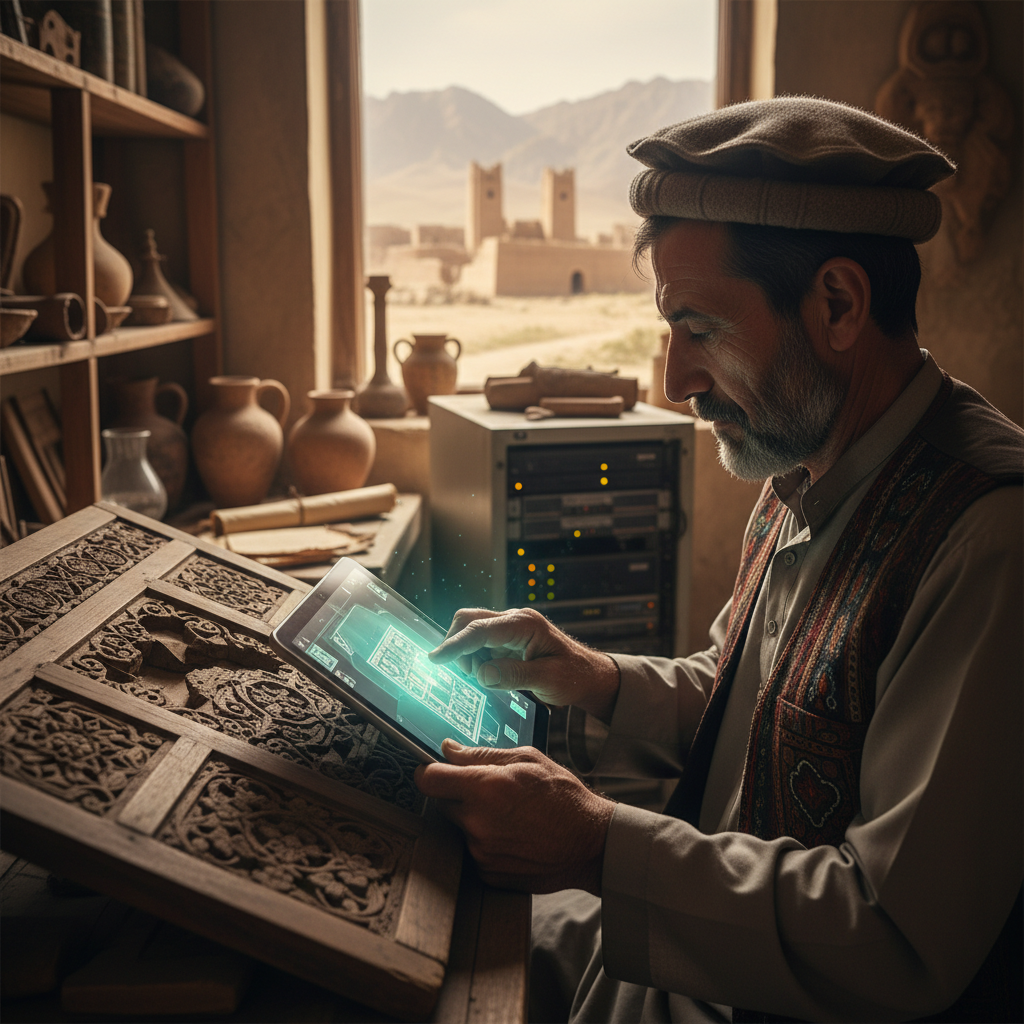
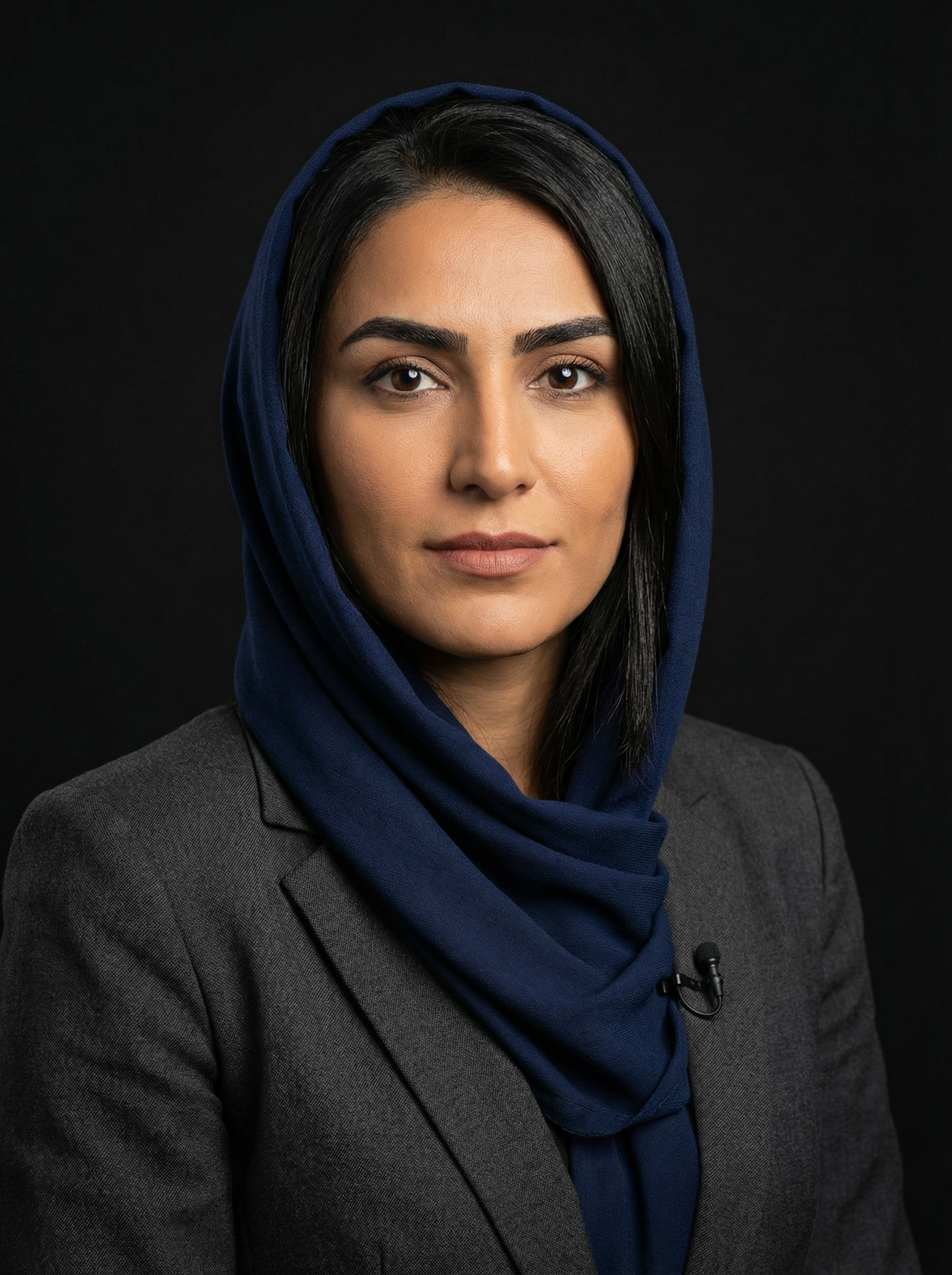
KABUL, Afghanistan – In a nation grappling with decades of conflict and cultural erosion, the advent of Artificial Intelligence (AI) presents a paradoxical opportunity: a tool to both preserve and potentially redefine Afghanistan's ancient heritage. As a journalist observing the digital landscape from Kabul, particularly its impact on Afghan women, the conversation around AI's role in culture is complex and fraught with both hope and apprehension.
Globally, AI is revolutionizing cultural preservation, from digitizing ancient manuscripts to reconstructing historical sites. In Afghanistan, where countless artifacts have been lost or damaged, and where access to educational institutions remains a challenge, especially for zanān (women), this technology holds immense promise. Imagine AI-powered platforms translating Dari and Pashto historical texts, or virtual reality experiences allowing future generations to explore the Buddhas of Bamiyan as they once stood.
Dr. Laila Ahmadi, a prominent Afghan cultural anthropologist and director of the fictional 'Afghan Institute for Digital Heritage' in Kabul, emphasizes this potential. "AI can be our digital rūḥ (soul) keeper, safeguarding our stories and traditions for posterity. It offers a non-physical repository, resilient to conflict and natural disasters," she stated in a recent interview. "However, the critical question remains: who builds these systems, and who benefits from them?" Her concern resonates deeply within the context of Afghanistan's prevailing digital divide, which disproportionately affects women.
The 'Culture' category for AI in Afghanistan isn't just about artifacts; it's about the living culture, the oral traditions, the handicrafts, and the narratives of its people. For Afghan women, who are often the primary custodians of these intangible cultural assets – from weaving intricate carpets to passing down folk tales – AI could offer new avenues for economic empowerment and cultural expression. Imagine AI-driven marketplaces connecting female artisans directly to global buyers, or language models preserving endangered dialects spoken primarily by women in remote villages.
However, the current reality paints a starker picture. Access to technology, digital literacy, and opportunities in STEM fields are severely limited for women across much of Afghanistan. "If AI systems are developed without the input or representation of Afghan women, they risk perpetuating existing biases and further marginalizing our voices," warns Ms. Zohra Hashimi, an activist working on digital inclusion for women in Herat. "We need initiatives that specifically train dokhtarān (girls) and women in AI development, ensuring our perspectives are embedded from the ground up, not as an afterthought."
The challenge, therefore, is not merely to adopt AI, but to ensure its equitable and inclusive development. For AI to truly serve as a tool for cultural preservation and enrichment in Afghanistan, it must bridge the digital gap, empower marginalized communities, and reflect the diverse tapestry of its people. Otherwise, this powerful technology, rather than being a nūr (light) for our heritage, could inadvertently cast shadows of further exclusion. The future of Afghan culture, in this digital age, hinges on our ability to navigate this delicate balance.
Related Articles
UAE Pioneers AI-Powered Green Hydrogen for a Sustainable Future, Empowering Women in STEM
 Layla Al-Mansourì
AI Coaches Revolutionize Muay Thai Training Across Thailand
 Chaiyapòn Srisomboòn
Kerala's AI Policy: A Blueprint for Inclusive Digital Governance, Says Minister
 Priyà Nairé
AI's 'She-Power' in China's Rural Health: Bridging Gaps for Women
 Mei-Líng Zhāng