
AI's Algorithmic Bias: A New Frontier for Civil Rights in Digital America
As AI integrates deeper into critical sectors across North America, concerns are mounting over algorithmic bias disproportionately affecting African American communities. Experts and advocates are calling for robust oversight and equitable development to prevent a digital redlining.
Click play to listen to this article read aloud using text-to-speech.
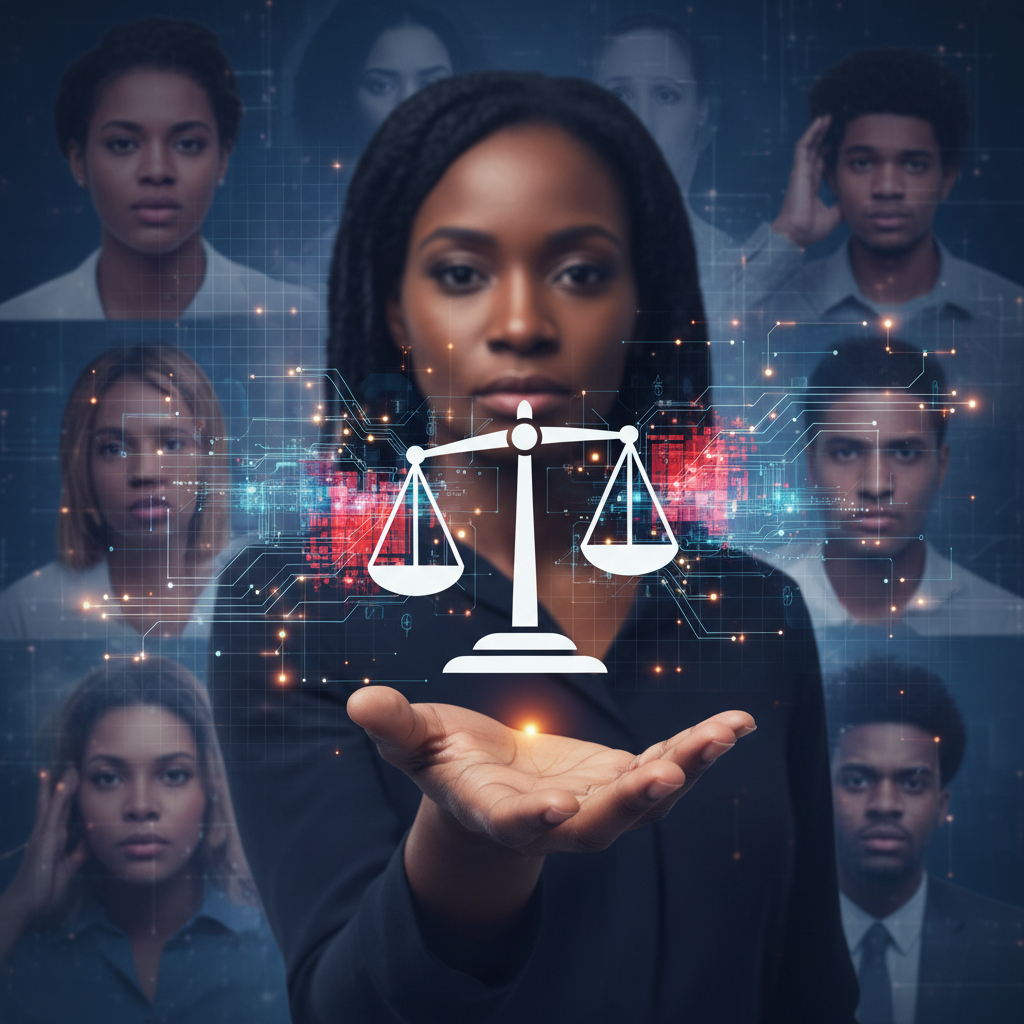

WASHINGTON D.C. – April 22, 2026 – The rapid proliferation of Artificial Intelligence (AI) across North American industries, from predictive policing to loan applications and hiring algorithms, is raising urgent questions about its impact on civil rights, particularly within African American communities. What was once a theoretical concern is now a tangible reality for many, as biased datasets and flawed design perpetuate and amplify systemic inequalities.
"We're witnessing a digital redlining," states Dr. Nia Washington, a leading ethicist at Howard University's Center for AI and Social Justice. "If the foundational data used to train these algorithms reflects historical disparities – whether in housing, education, or criminal justice – then the AI will simply learn to replicate those biases, often with greater efficiency and less transparency than human actors." Dr. Washington, whose groundbreaking work on algorithmic accountability has garnered national attention, emphasizes that this isn't just a technical glitch; it's a societal challenge demanding a comprehensive, equity-first approach.
Recent reports from organizations like the Algorithmic Justice League and the NAACP Legal Defense and Educational Fund have highlighted alarming instances. In one notable case in Atlanta, an AI-powered recidivism prediction tool used in sentencing was found to disproportionately assign higher risk scores to Black defendants, even when controlling for similar criminal histories. Similarly, a major financial institution in Chicago faced scrutiny after its AI-driven mortgage approval system showed a pattern of denying loans to applicants from predominantly Black neighborhoods, despite comparable creditworthiness.
"This isn't about AI being inherently racist; it's about the biases of our society being encoded into the very fabric of these systems," explains Marcus 'MJ' Jones, co-founder of 'Tech for Justice,' a grassroots advocacy group based in Oakland, California. "For too long, the tech industry has operated in a vacuum, without sufficient input from the communities most impacted by their innovations. We need Black engineers, data scientists, and ethicists at the table, not just as token voices, but as integral architects of this future."
Policymakers are beginning to respond. Senator Kamala Harris (D-CA) recently introduced the 'Algorithmic Equity and Transparency Act' (AETA), which proposes mandatory bias audits for AI systems deployed in sensitive areas like employment, credit, healthcare, and criminal justice. The bill also calls for greater transparency in how AI models make decisions and establishes a federal task force to investigate and address AI-related discrimination.
However, implementation remains a significant hurdle. Many tech companies argue that rigorous bias detection and mitigation are complex and can stifle innovation. Advocates counter that equitable innovation is the only sustainable path forward. "We cannot afford to repeat the mistakes of the past, where technological advancements left entire communities behind," Dr. Washington asserts. "The promise of AI must be a promise for all, ensuring that this powerful tool serves to uplift, not further marginalize, the African American community and other vulnerable populations across North America."
The coming years will be critical in shaping how AI integrates into the fabric of American life. The battle for algorithmic justice is not just a technological one; it is a fundamental civil rights struggle for the 21st century.
Related Articles

Guatemala's Digital Divide: AI's Promise and Peril for Indigenous Communities
 Xiomàra Hernándèz
Vietnamese Women Lead AI Ethics Dialogue Amidst Rapid Digital Transformation
 Ngo Thi Huừngé
AI's 'Digital Concierge' Boom: Japanese Women Leading the Charge in Service Sector
 Yuki Tanakà
Taiwan's AI Chip Dominance Bolstered by TSMC's Advanced Packaging for Edge Computing
 Wei-Chéng Liú