
AI-Powered Early Dementia Detection: A Ray of Hope for Japan's Aging Society
Japanese researchers are pioneering AI models for early dementia detection, offering a crucial intervention for the nation's rapidly aging population. This initiative, spearheaded by institutions like RIKEN and utilizing J-ADNI data, promises to revolutionize geriatric care and empower women in caregiving roles.
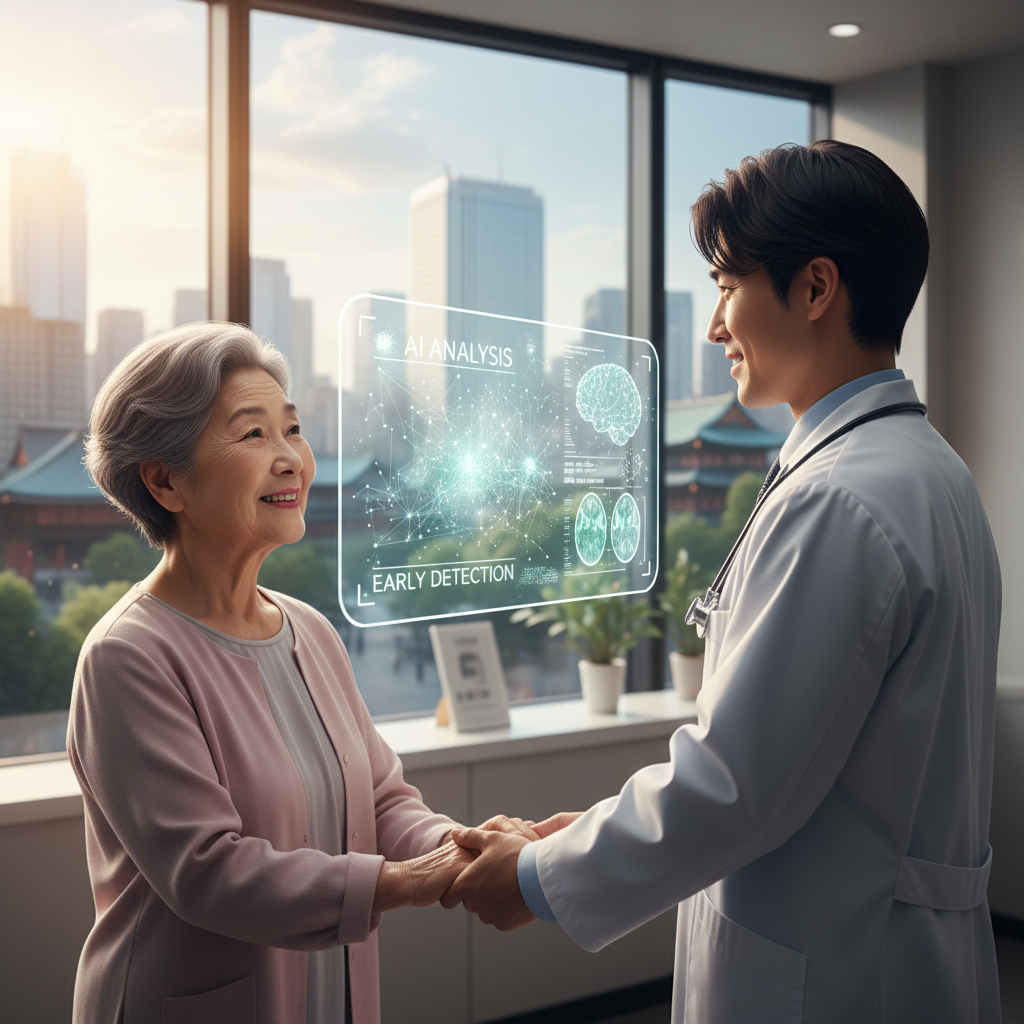
TOKYO, April 24, 2026 – Japan, a nation grappling with one of the world's most rapidly aging populations, is turning to artificial intelligence as a beacon of hope in the fight against dementia. Researchers across the archipelago are making significant strides in developing AI models capable of detecting early signs of neurodegenerative diseases, potentially transforming geriatric healthcare and easing the burden on families, particularly women.
At the forefront of this innovation is a collaborative effort involving institutions such as RIKEN's Center for Advanced Intelligence Project (AIP) and leading university hospitals. Their focus is on leveraging vast datasets, including those from the Japanese Alzheimer's Disease Neuroimaging Initiative (J-ADNI), to train sophisticated machine learning algorithms. These algorithms analyze subtle changes in brain imaging (MRI, PET scans), cognitive test results, and even speech patterns, often identifying markers years before clinical symptoms become apparent.
"Early detection is paramount," states Dr. Akari Sato, a prominent neurologist and lead researcher at the National Center for Geriatrics and Gerontology. "For conditions like Alzheimer's, interventions are most effective when initiated in the pre-symptomatic or mild cognitive impairment (MCI) stages. AI offers an unprecedented ability to identify these subtle shifts, allowing for proactive lifestyle adjustments, pharmacological treatments, and crucial care planning. This empowers not just the patient, but also their families, predominantly the wives and daughters who often shoulder the primary caregiving responsibilities in our society."
Indeed, the social implications are profound. In Japan, the cultural expectation often falls upon female family members to provide elder care, a responsibility that can significantly impact their careers and personal well-being. By enabling earlier diagnosis, AI tools can facilitate timely support systems, respite care, and financial planning, thereby alleviating some of the immense pressure on these caregivers.
The development isn't without its challenges. Ensuring data privacy, addressing potential biases in AI models, and integrating these advanced tools seamlessly into existing clinical workflows are critical considerations. "We are meticulously working on ethical AI guidelines and ensuring the interpretability of our models," explains Professor Hiroshi Tanaka, a computational neuroscientist at the University of Tokyo. "Patient consent, data security, and the transparency of AI decision-making are non-negotiable. Our goal is to augment, not replace, the expertise of our medical professionals."
Pilot programs are already underway in several prefectures, including Kanagawa and Osaka, where AI-assisted diagnostic tools are being trialed alongside traditional methods. Initial results are promising, showing improved diagnostic accuracy and reduced diagnostic lead times. The Ministry of Health, Labour and Welfare (MHLW) has expressed keen interest, signaling potential future policy support for wider adoption.
As Japan navigates the complexities of its demographic future, AI-powered early dementia detection stands out as a testament to the nation's commitment to innovation and its deep-seated societal values of care and community. For women across Japan, this technological leap offers not just medical advancement, but a renewed sense of hope and empowerment in their vital roles within the family and society.
Related Articles

AI in Malian Healthcare: A Double-Edged Sword for Our Communities
 Mouhamadouù Bâ
AI's Cultural Crossroads: Preserving Tamil Heritage in the Digital Age
 Ravi Chandrasekharàn
AI Diagnostics: A New Frontier in Russian Men's Health, Says Ministry of Health
 Alekseï Volkovì
UAE Pioneers AI-Driven Mentorship for Emirati Women in STEM Education
 Layla Al-Mansourì