
AI-Powered Climate Resilience: Burkina Faso's Farmers Embrace Digital 'Zaï' for a Greener Future
Burkina Faso pioneers AI integration into traditional 'Zaï' farming, offering a beacon of hope against climate change. This digital transformation, championed by local expertise, promises enhanced food security and environmental sustainability.
Click play to listen to this article read aloud using text-to-speech.
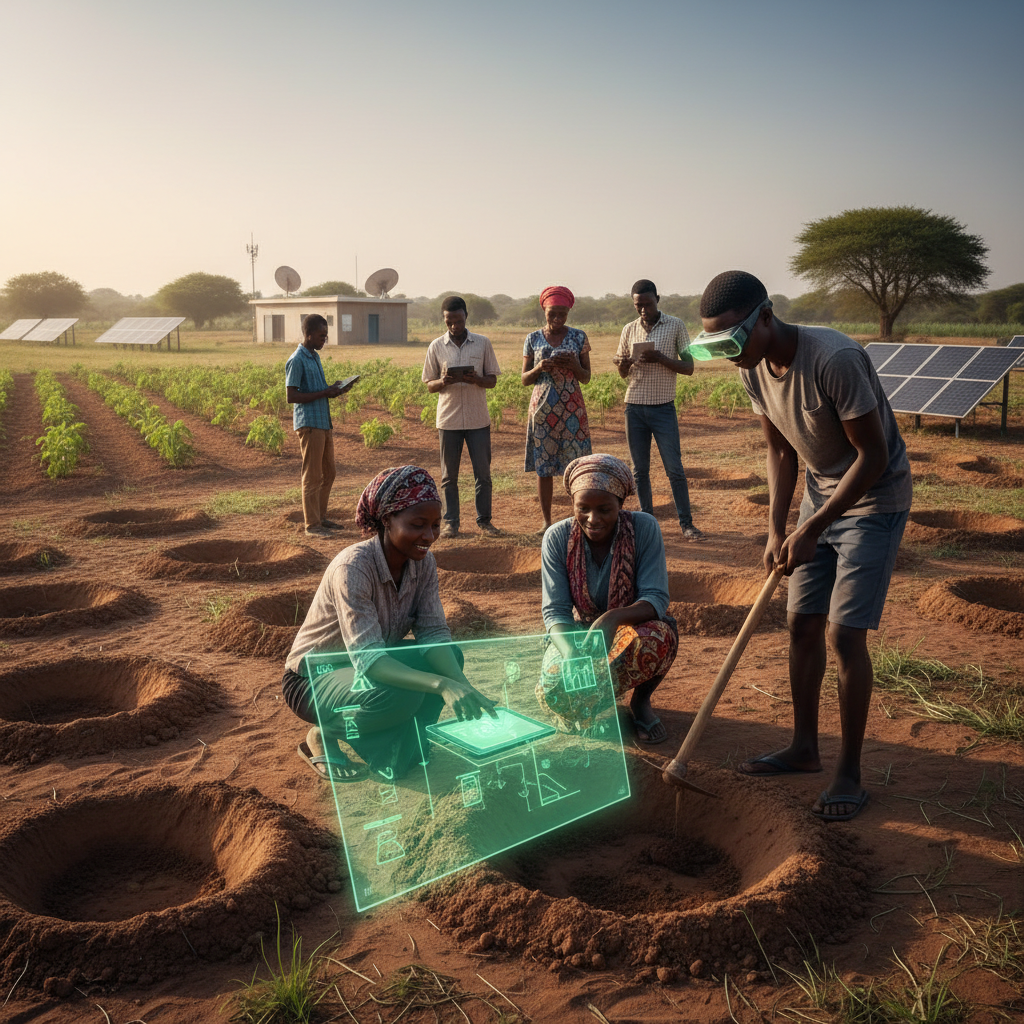
OUAGADOUGOU, BURKINA FASO – In the sun-baked landscapes of the Sahel, where the rhythm of life has long been dictated by the capricious skies, a quiet revolution is taking root. Burkina Faso, a nation deeply intertwined with its ancestral agricultural practices, is now at the forefront of integrating Artificial Intelligence (AI) into its age-old farming techniques, particularly the revered 'Zaï' system. This initiative, dubbed 'Digital Zaï,' is not just a technological upgrade; it's a profound cultural affirmation, leveraging modern tools to preserve and enhance the wisdom of our ancestors.
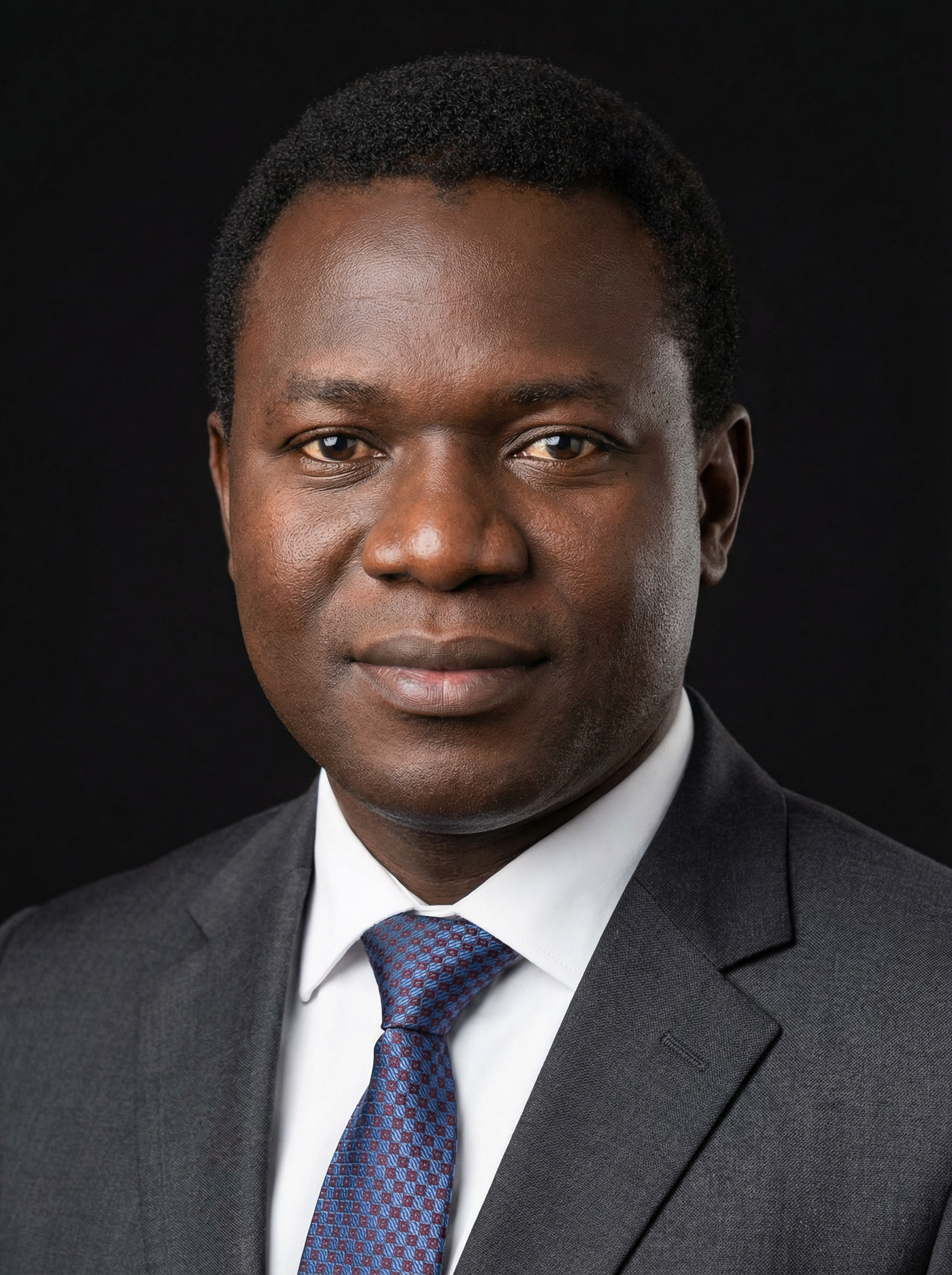
The 'Zaï' technique, a traditional Mossi practice of digging small planting pits to concentrate water and organic matter, has been a lifeline for generations of farmers in the arid regions. Now, with climate change intensifying droughts and erratic rainfall, the need for precision and foresight is paramount. "Our grandfathers understood the land intimately, but today's challenges demand more," explains Dr. Alassane Kaboré, a prominent agronomist and director of the National Institute for Environment and Agricultural Research (INERA) in Ouagadougou. "AI algorithms, fed with satellite imagery, localized weather patterns, and soil data, can predict optimal 'Zaï' pit locations, ideal planting times, and even suggest drought-resistant indigenous crops with unprecedented accuracy. This is not replacing tradition; it's empowering it."
The 'Digital Zaï' project, a collaboration between INERA, the Ministry of Agriculture, and a consortium of local tech startups, is currently piloting in the Yatenga and Sanmatenga provinces, areas historically vulnerable to desertification. Farmers are equipped with ruggedized tablets and smartphones, accessing AI-driven recommendations tailored to their specific plots. These tools, often powered by solar energy, provide real-time advice on water management, nutrient application, and pest detection, all delivered in local languages like Moore and Fulfulde.
"Before, we relied on intuition and the wisdom passed down, which was good, but sometimes the rains would deceive us," says Poko Sawadogo, a farmer from Gourcy, gesturing towards his flourishing millet field. "Now, the 'machine' tells us exactly where to dig the 'Zaï' and when to plant. My harvest has improved, and I use less water. It's like having a wise elder who sees everything from the sky." His words echo a sentiment of cautious optimism, a blend of ancestral respect and embrace of innovation.
This initiative is a testament to Burkina Faso's commitment to sustainable development and food security, a critical pillar of our national resilience. It demonstrates how technology, when tailored to local contexts and cultural nuances, can become a powerful ally in the fight against environmental degradation. As Youssouf Ouédraogo, a cultural expert specializing in Mossi traditions, often reminds us, "Our strength lies in our ability to adapt while honoring our heritage. The 'Digital Zaï' is a modern-day griot, telling the story of our future through the language of our past and the promise of technology."
The success of 'Digital Zaï' could serve as a blueprint for other Sahelian nations grappling with similar environmental adversities. It's a powerful narrative of self-reliance, where AI isn't just a global phenomenon, but a localized tool for survival and prosperity, deeply rooted in the soil and spirit of Burkina Faso.
Related Articles
AI-Powered Mangrove Conservation: A 'Hijau Digital' Leap for Malaysia's Coastlines
 Siti Nurhalizah Rahimàn
Morocco's AI Health Revolution: Berber Communities on the Forefront of Digital Wellness
 Tariqù Benaì
AI's Green Promise: Can Tech Bridge Environmental Gaps in Black Communities?
 Dontè Jacksoneè
Ghana's 'Adinkra AI' Initiative: Bridging Tradition and Technology for Digital Inclusion
 Akosùa Mensàh