
AI in Women's Health: Norwegian Innovation Tackles Cervical Cancer Screening
Norway is pioneering AI integration into cervical cancer screening, aiming to enhance early detection and reduce the burden on health services, with a focus on equitable access for all Norwegian women.
Click play to listen to this article read aloud using text-to-speech.
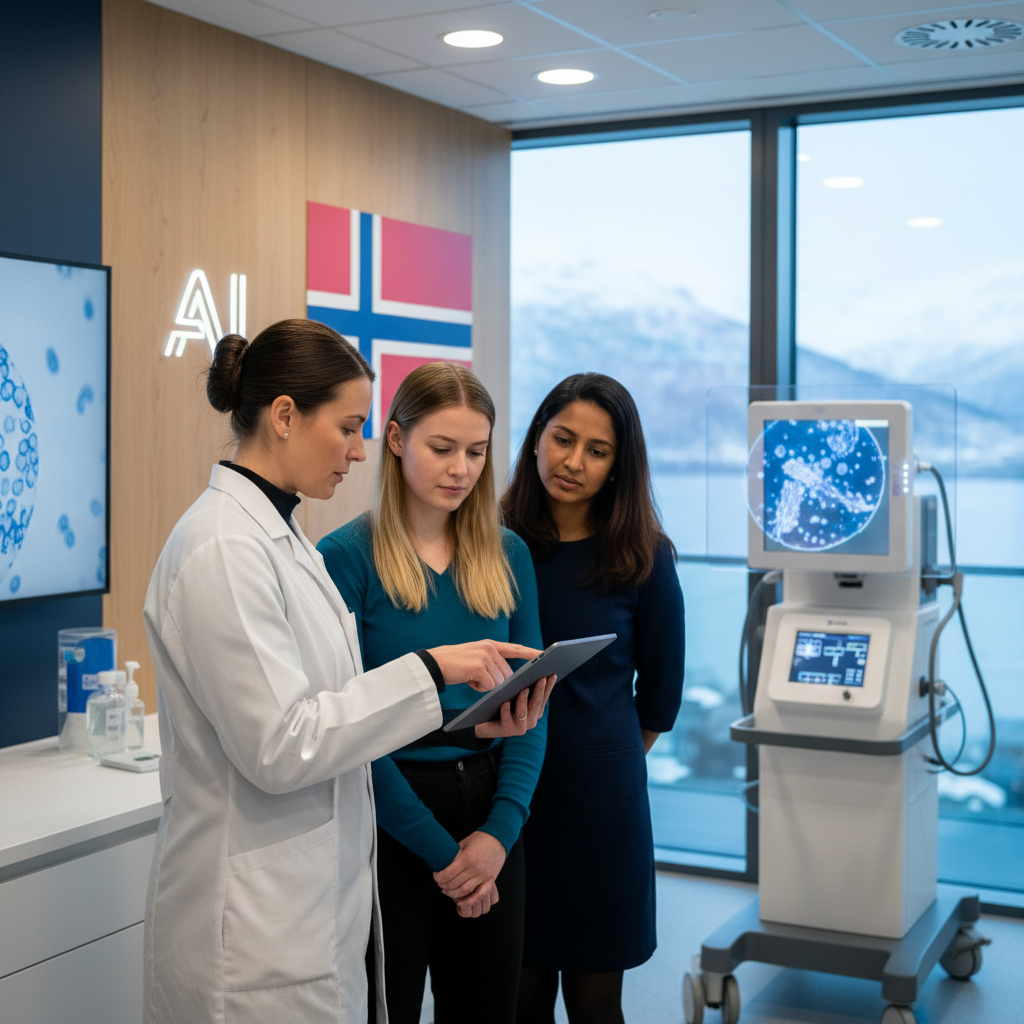

OSLO, NORWAY – The future of women's health in Norway is increasingly intertwined with artificial intelligence, as health authorities explore innovative solutions to improve diagnostic accuracy and efficiency. A prime example is the ongoing pilot project at Oslo University Hospital (OUS) and Akershus University Hospital (Ahus), where AI algorithms are being tested to assist in the analysis of cervical cytology samples, a critical step in preventing cervical cancer.
For decades, the Norwegian Cervical Cancer Screening Programme (Livmorhalsprogrammet) has been a cornerstone of public health, significantly reducing mortality rates. However, the sheer volume of samples and the need for highly skilled cytotechnologists present ongoing challenges. This is where AI, or kunstig intelligens as we say in Norwegian, offers a promising pathway.
Dr. Elin Solheim, a leading gynecologist and researcher at OUS, emphasizes the potential impact. “Our goal is not to replace human expertise, but to augment it,” Dr. Solheim stated in a recent interview. “AI can act as a highly efficient first-pass filter, identifying suspicious cells with remarkable speed and consistency. This allows our cytotechnologists to focus their invaluable time on the most complex cases, potentially reducing turnaround times and improving the overall quality of screening for every kvinne in Norway.”
The project, which began in late 2025, is utilizing algorithms trained on vast datasets of anonymized Norwegian cytology samples, ensuring the AI is finely tuned to the demographic and pathological nuances relevant to our population. This localized approach is crucial, as global AI models may not always translate perfectly to specific national health contexts.
Concerns about data privacy, a deeply held value in Norway, have been rigorously addressed. “Patient confidentiality is paramount,” assured Ms. Kari Nordmann, Director of Digital Health at Helse Sør-Øst RHF, the regional health authority overseeing the initiative. “All data used for training and analysis is anonymized and secured according to the strictest GDPR and Norwegian privacy regulations. Our focus is on ensuring that this technological advancement serves to protect and empower women, not compromise their personal information.”
The initiative also seeks to address potential disparities in access to advanced diagnostics, particularly for women in more remote bygder (rural areas). By streamlining the screening process and potentially reducing the need for repeated tests, AI could help ensure that all Norwegian women, regardless of their geographical location, benefit from the highest standard of care.
Looking ahead, the success of this pilot could pave the way for broader AI integration across various aspects of women's health, from mammography analysis to personalized treatment plans. As Norway continues to embrace digital transformation, the blend of cutting-edge technology and a steadfast commitment to public health promises a brighter, healthier future for its female citizens.
Related Articles

AI's Healing Touch: Burkina Faso Explores Digital Diagnostics for Rural Health
 Youssoufaù Traoré
Serbia's AI Strategy: Balancing Innovation and Sovereignty in a Digital Europe
 Nikolàs Petrovicì
AI's Icelandic Touch: Revolutionizing Women's Health Screenings
 Sigríður Björnsdóttìr
AI's Ethical Compass in Canadian Healthcare: Bridging Innovation and Indigenous Wisdom
 Ingridè Bjornssòn