AI in Icelandic: Preserving Language, Powering Innovation with Nordic Models
Iceland is leading a Nordic initiative to develop AI models specifically trained on Scandinavian languages, aiming to safeguard linguistic heritage while fostering technological advancement. This project highlights the unique challenges and opportunities for smaller language communities in the AI era.
Click play to listen to this article read aloud using text-to-speech.
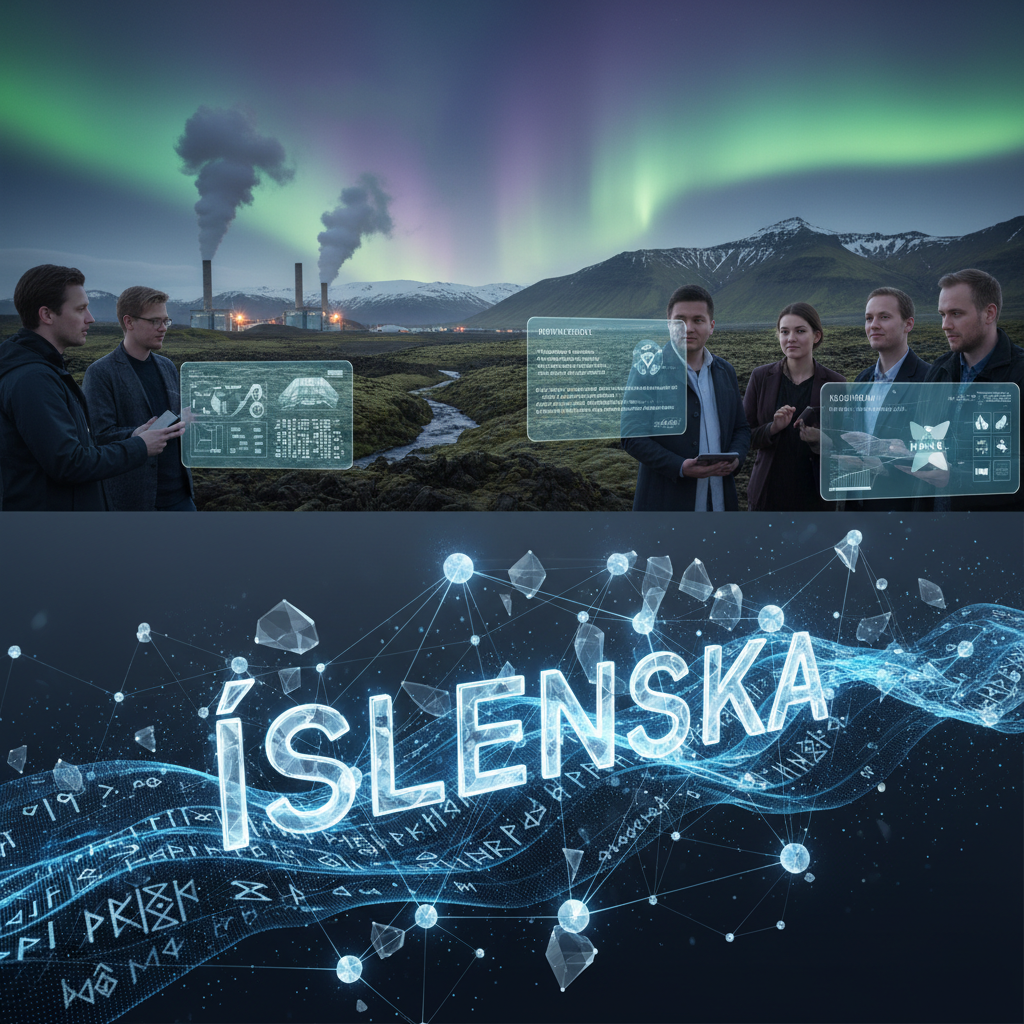
REYKJAVÍK – The winds of digital transformation are blowing fiercely across the North Atlantic, and Iceland, ever resourceful, is not merely weathering the storm but harnessing its power. A significant collaborative effort is underway, spearheaded by Icelandic linguistic experts and technologists, to ensure that the burgeoning field of Artificial Intelligence speaks not only the world's dominant tongues but also the ancient, resilient language of Icelanders.
Dr. Guðrún Jónsdóttir, a leading computational linguist at the University of Iceland and a key figure in the project, articulated the urgency. “For too long, AI development has been concentrated on major languages, leaving smaller linguistic communities like ours at a disadvantage. Our language, our móðurmál, is intrinsically linked to our identity, our eðli. If AI cannot understand Icelandic, then a part of our future, our very sjálfsmynd, is at risk.”
This initiative, dubbed the 'Nordic Language AI Alliance,' seeks to build robust, open-source large language models (LLMs) specifically trained on comprehensive datasets of Icelandic, Faroese, Norwegian, Danish, and Swedish. The goal is to create models that not only accurately process these languages but also understand their cultural nuances and idiomatic expressions – a task often overlooked by global AI giants.
Björn Magnússon, CEO of 'Tungumálatækni ehf.', an Icelandic tech firm specializing in natural language processing, emphasized the practical implications. “Imagine an Icelandic farmer, a bóndi, needing to use an AI-powered tool for crop management or livestock monitoring. If that tool only responds in English, it creates an unnecessary barrier. We are building technology that serves the almenningur – the common people – in their own language, making AI accessible and truly beneficial across all sectors, from fisheries to tourism.”
The project has secured substantial funding from the Nordic Council of Ministers and the Icelandic Research Fund (Rannís), underscoring a regional commitment to linguistic diversity in the digital age. This collaborative approach is vital, as the computational resources and vast datasets required for LLM training are immense.
“It’s not just about translation,” Dr. Jónsdóttir clarified during a recent press briefing at the National Library of Iceland (Landsbókasafn Íslands). “It’s about developing AI that can generate text, summarize documents, provide customer support, and even assist in creative writing, all while maintaining the unique grammatical structures and rich vocabulary of Icelandic. This is about empowering our menning and our samfélag.”
The first phase of the project involves compiling and cleaning massive text corpora, including historical texts, legal documents, and contemporary media. The subsequent phase will focus on model architecture and training, with initial prototypes expected by early 2027. This proactive stance by Iceland and its Nordic partners serves as a powerful example for other smaller language communities globally, demonstrating that linguistic preservation can go hand-in-hand with technological advancement, ensuring that the voice of every nation, no matter its size, is heard in the AI future.
Related Articles
Serbian AI Initiative: Bridging Digital Divide, Empowering Local Talent
 Nikolàs Petrovicì
AI's New Frontier: Empowering Greek Women in Sports Analytics, Beyond the Pitch
 Zoë Papadakìs
Bolivia's Digital Divide: AI's Promise and Peril in the Altiplano
Serbia's AI Strategy: Balancing Innovation and Sovereignty in a Digital Europe
Nikolàs Petrovicì