
AI in Argentine Classrooms: Bridging the Digital Divide for Women and Girls
Argentina launches a groundbreaking initiative to integrate AI education into public schools, with a strong focus on empowering young women and girls in STEM fields, aiming to close the gender gap in technology.
Click play to listen to this article read aloud using text-to-speech.
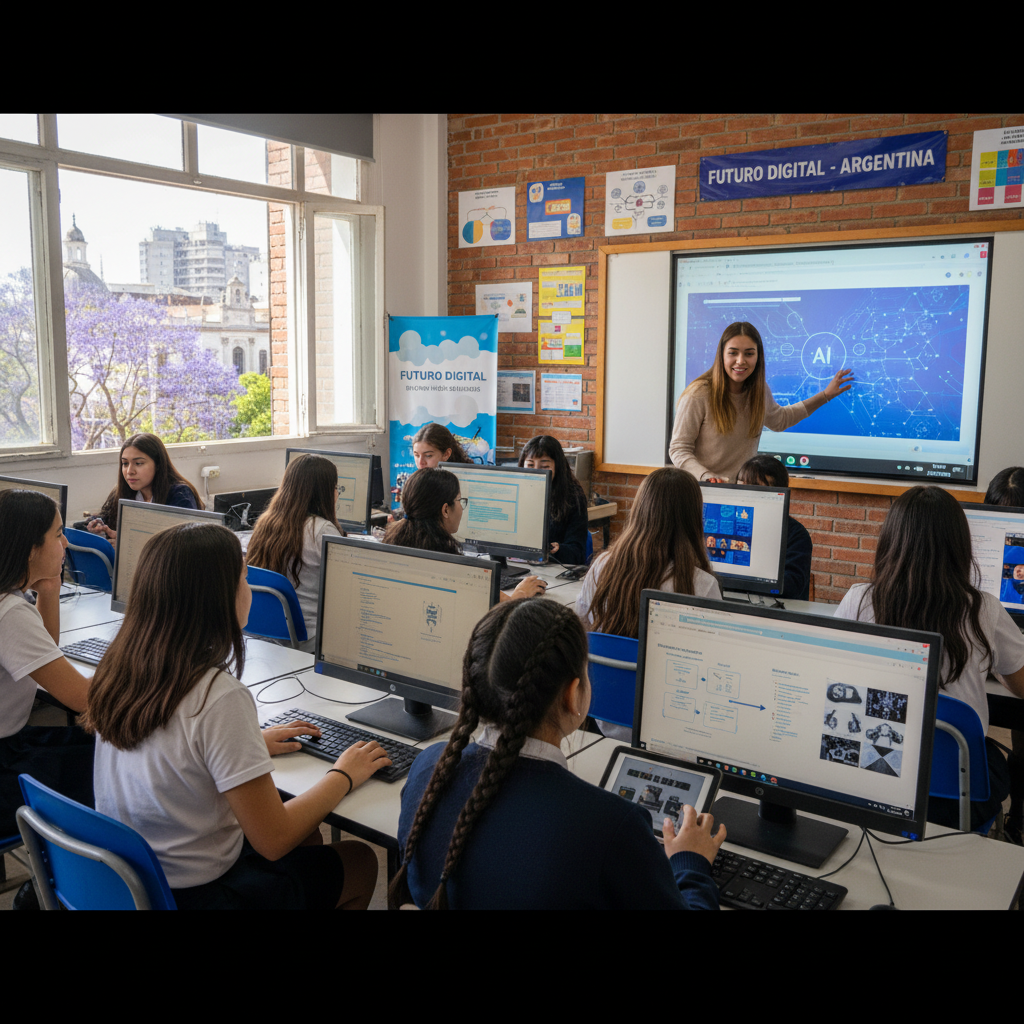

BUENOS AIRES, Argentina — The future of education in Argentina is taking a significant leap forward, with the Ministry of Education announcing a comprehensive national strategy to integrate Artificial Intelligence (AI) literacy into the public school curriculum. This ambitious plan, dubbed "Futuro Digital: Inclusión y Aprendizaje" (Digital Future: Inclusion and Learning), emphasizes not just technological advancement, but also a crucial social dimension: ensuring equitable access and fostering the participation of young women and girls in the burgeoning AI sector.
For too long, the digital divide has disproportionately affected women, particularly in developing nations. In Argentina, while strides have been made, the representation of women in STEM fields, especially in advanced technology, remains a challenge. "This initiative isn't just about teaching code; it's about dismantling systemic barriers and cultivating a generation of innovators who reflect the diversity of our society," stated Dr. Elena Rojas, Undersecretary of Educational Innovation, during a press conference at the Centro Cultural Kirchner.
Dr. Rojas, a prominent advocate for gender equality in technology and a former researcher at CONICET, highlighted the program's unique approach. "We're not waiting for university. We're introducing AI concepts – from machine learning basics to ethical considerations – as early as primary school, using age-appropriate, interactive modules. And critically, we're training our maestras and profesoras to be at the forefront of this transformation, providing them with the tools and confidence to inspire their female students."
The program, which is set to pilot in 500 schools across various provinces, including Buenos Aires, Córdoba, and Salta, will feature specialized workshops for girls, mentorship programs connecting them with Argentine women leaders in tech, and curriculum materials designed to challenge gender stereotypes. "We've seen in our research at the Universidad Nacional de La Plata that early exposure and positive role models are paramount," commented Dr. Sofía Pereyra, a sociologist specializing in gender and technology. "When young girls see women like Carolina Barone leading AI projects, or hear about Dr. Laura Alonso's work in computational linguistics, it shifts their perception of what's possible for them. This program is a vital step towards achieving a more inclusive sociedad del conocimiento."
The Ministerio de Educación has partnered with several local tech companies and NGOs, including Chicas en Tecnología, to develop content and provide teacher training. The goal is not merely to create users of AI, but creators and critical thinkers. "Our vision is that by 2030, Argentina will be a regional leader in AI education, with a significant increase in the number of women pursuing careers in this field," added Dr. Rojas. "This is an investment in our human capital, ensuring that the benefits of AI are shared broadly, and that our pibas have every opportunity to shape the digital future of our patria."
The initiative is expected to be fully rolled out nationwide by late 2027, promising a brighter, more equitable future for Argentine education and its impact on the country's technological landscape.
Related Articles

Slovak Universities Embrace AI: A New Era for STEM Education and Gender Equality
 Katarína Novákovà
Greek Universities Embrace AI: Bridging the Digital Divide for Women in STEM
 Zoë Papadakìs
AI's Healing Touch: Revolutionizing Rural Healthcare in Peru's Andes
 Ximènà Castillò
AI Combats Deforestation in Venezuelan Amazon: A New Hope for the Patria
 Sebastiàn Vargàs