Ah, Italy. The land of ancient history, breathtaking art, and a culinary tradition that makes the world swoon. But beneath this beautiful veneer, a new kind of battle is being fought every single day, one that rarely makes the headlines of our beloved Corriere della Sera or La Repubblica. I'm talking about the silent, relentless war against cyber threats, a conflict that has found a formidable ally in artificial intelligence.
For too long, cybersecurity felt like a game of catch-up, a frantic sprint to patch vulnerabilities after the digital barbarians had already breached the gates. But now, something is changing. Italy does AI differently, with style, and our approach to digital defense is no exception. We are seeing a profound shift from reactive defense to proactive prediction, and it's powered by algorithms that learn, adapt, and anticipate.
Think about it. Every day, Italian businesses, from the small family-run bottega to the sprawling multinational corporation, are bombarded with millions of potential threats. Phishing attempts, ransomware attacks, sophisticated state-sponsored espionage, the list goes on. It's a digital labyrinth, and navigating it requires more than just human vigilance; it demands the relentless, tireless eye of AI.
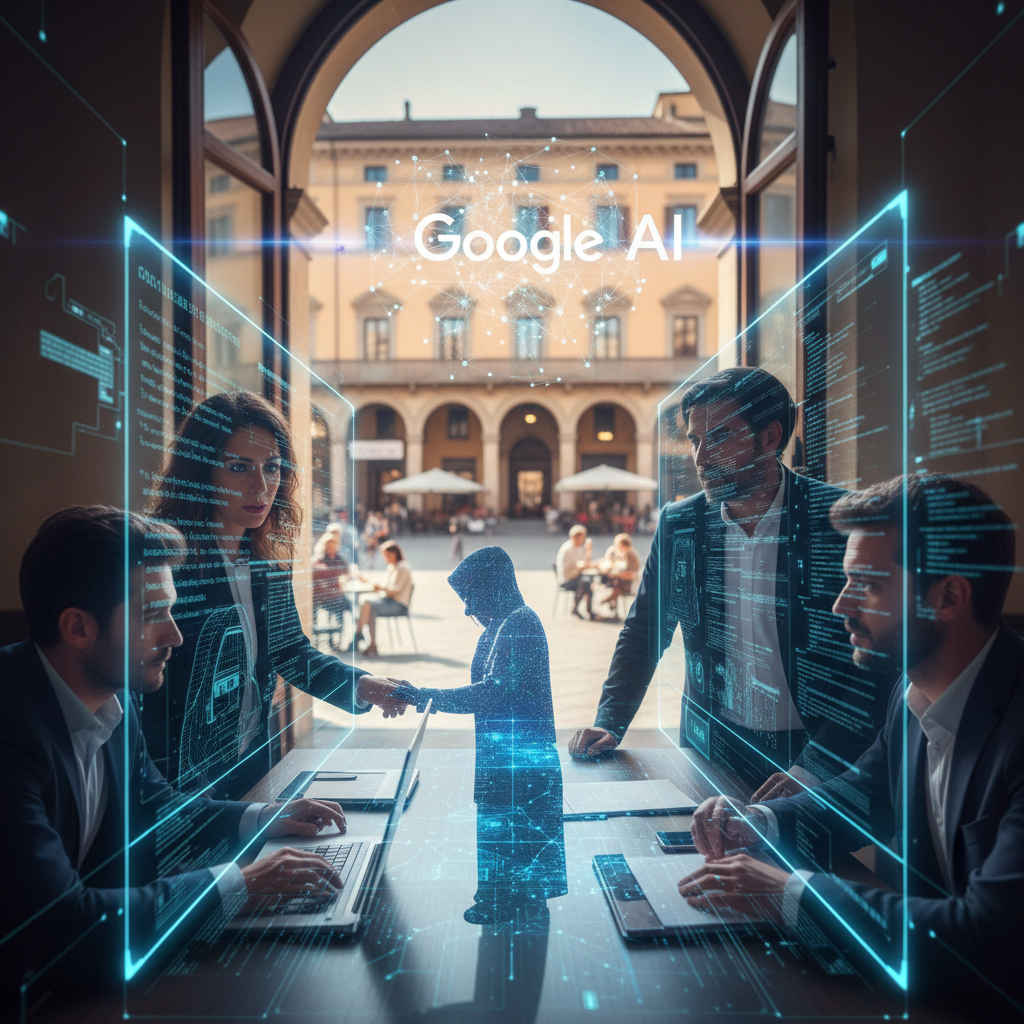
One of the most compelling developments I've witnessed recently is how Italian enterprises are integrating AI-powered solutions to detect threats in real-time across their complex networks. It's like having a digital carabiniere on duty 24/7, not just patrolling, but predicting where the next crime might occur. Companies like CyberSec Italia, a homegrown firm based just outside Rome, are leading this charge. They've developed a platform that uses machine learning models, often leveraging advanced frameworks from giants like Google's DeepMind, to analyze network traffic patterns, user behavior, and system logs at speeds no human team could ever match.
“We’re moving beyond signature-based detection, which is like looking for a known face in a crowd,” explained Dr. Sofia Rossi, Chief Technology Officer at CyberSec Italia, during a recent conference in Bologna. “Our AI models, trained on billions of data points, can identify anomalous behavior, subtle deviations that signal a zero-day attack or an insider threat, even if we’ve never seen that specific attack vector before. It’s about understanding intent, not just recognizing a pattern.” She added that their systems have reduced the average threat detection time by 75% for their clients in the last year alone, a staggering improvement.
This isn't just theory; it's making a tangible difference. Consider the case of a prominent Italian luxury goods manufacturer, a name you would recognize instantly, with workshops nestled in the heart of Tuscany. Their brand identity, their very soul, is intertwined with their unique designs and proprietary manufacturing processes. A breach of their intellectual property would be catastrophic. Before adopting AI, they faced constant, low-level intrusions. Now, their network is guarded by AI that learns the 'normal' rhythm of their digital operations. When an unusual data transfer attempt occurs, perhaps from an unfamiliar IP address in the middle of the night, the AI flags it instantly, isolates the potential threat, and alerts human analysts for verification. This proactive stance has saved them from several near-misses with industrial espionage.
“The human element remains crucial, of course,” noted Marco Bianchi, Head of Cybersecurity for a major Italian automotive supplier based in Turin, a city synonymous with engineering excellence. “AI provides the eyes and ears, the early warning system. But it’s our human experts who interpret the nuanced alerts, make the strategic decisions, and ultimately, close the loop. It’s a beautiful symbiosis, a true collaborazione between man and machine.” Bianchi’s team recently thwarted a sophisticated ransomware attack that targeted their production lines, thanks to an AI system that detected unusual file encryption attempts originating from a compromised employee workstation, long before the attack could fully propagate.
Indeed, the collaboration is key. We are not talking about AI replacing human cybersecurity professionals, but rather augmenting their capabilities, freeing them from the mundane task of sifting through endless logs so they can focus on higher-level strategic defense and incident response. It's a testament to the Italian spirit of innovation, where technology serves humanity, not the other way around.
The European Union, always keen on data privacy and digital sovereignty, is also playing a significant role. The NIS2 Directive, for instance, is pushing companies across critical sectors to bolster their cybersecurity postures, and AI is emerging as an indispensable tool to meet these stringent requirements. Italy, with its strong industrial base and rich cultural heritage, has a particular stake in this. Protecting our digital infrastructure means protecting our economy, our history, and our future.
According to a recent report published by MIT Technology Review, global spending on AI in cybersecurity is projected to exceed $50 billion by 2028, with a significant portion of that growth coming from Europe. This indicates a clear recognition of AI’s transformative potential in this domain. What we are seeing here in Italy is a microcosm of a much larger global trend, but with our own unique flavor.
La dolce vita meets machine learning, you might say. It’s not just about stopping hackers; it’s about preserving the integrity of our digital lives, ensuring that the innovations born in a workshop in Milan or the artistic treasures digitized in Florence remain safe from those who seek to exploit them. The future of cybersecurity, steeped in intelligence and foresight, is already here, and it’s speaking Italian, among other languages. It’s a future where vigilance is automated, and human ingenuity is amplified, ensuring that our digital landscape remains as beautiful and resilient as our physical one.
For more insights into the evolving landscape of AI and enterprise security, you can explore articles on TechCrunch or The Verge. It's a conversation that touches every corner of our interconnected world, and Italy is contributing its own vital chapter. This is Mattèo Ferrarì, signing off from Rome, reminding you that even in the digital realm, humanity and ingenuity will always prevail.