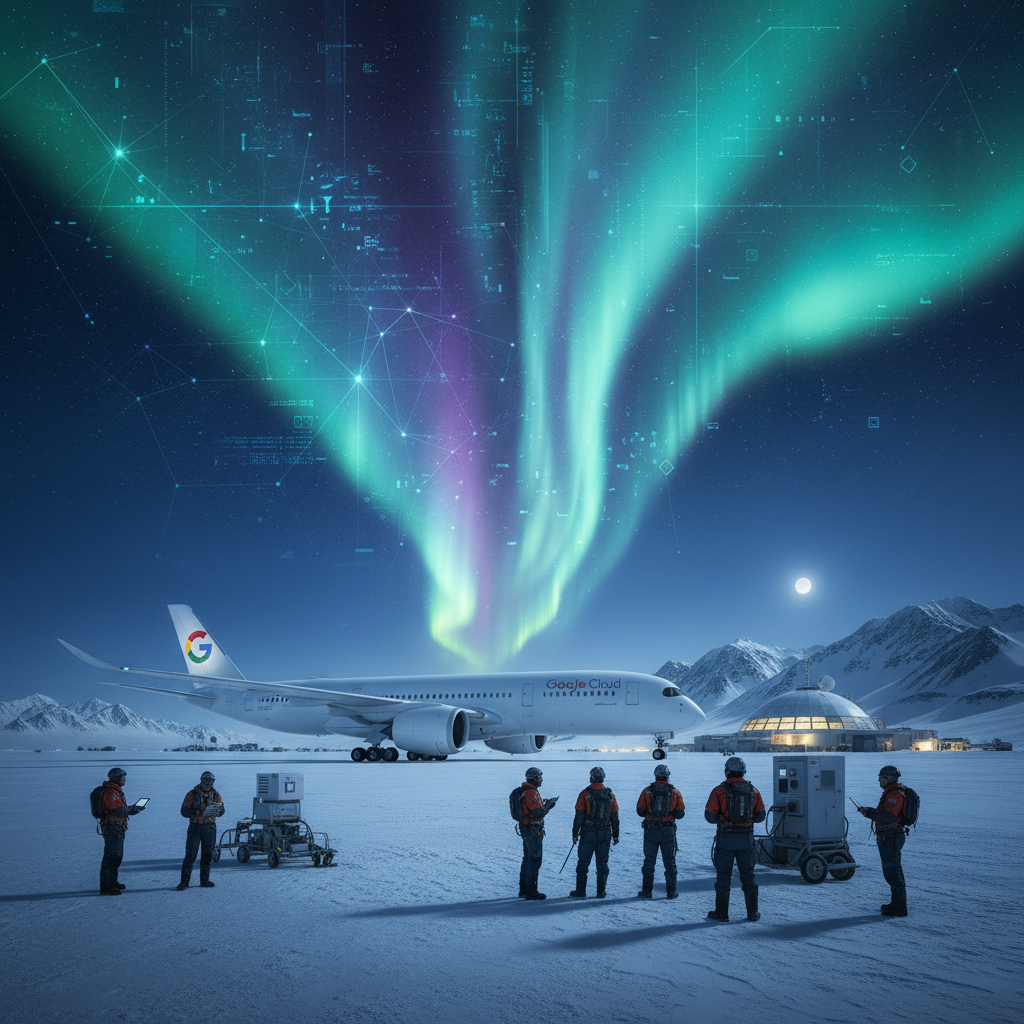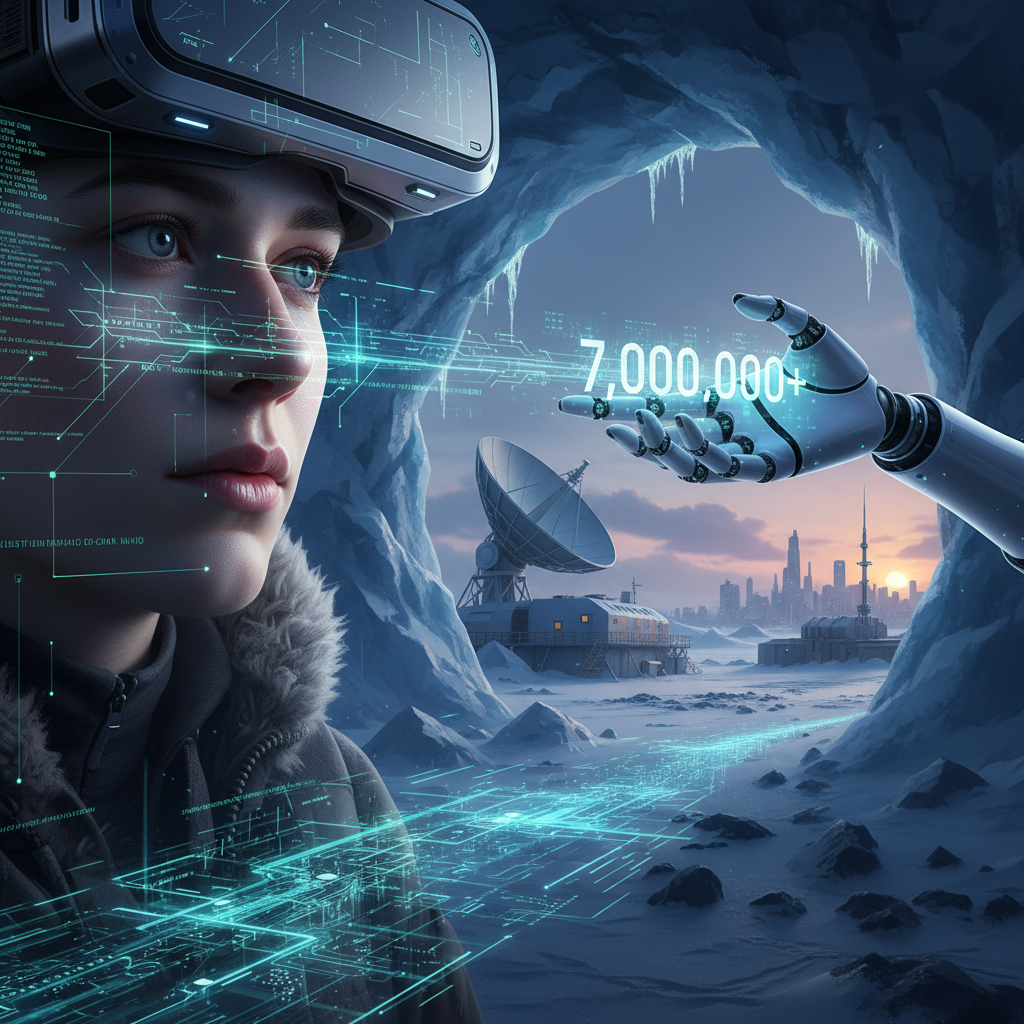

Last night, the aurora lit up our research station, painting the sky in greens and purples that stole your breath away. It was a silent, magnificent display, a reminder of the raw, untamed beauty we live amidst here at the bottom of the world. But even under such cosmic grandeur, a different kind of light, a digital glow, casts long shadows on our small, dedicated community. It is the light of the global AI talent war, a battle fought with seven-figure salaries and promises of unparalleled innovation, and its ripples are reaching even our isolated shores.
I was chatting with Dr. Lena Karlsson just last week, a brilliant glaciologist from Uppsala University who has spent the last five years here, meticulously tracking ice sheet melt with advanced satellite data. She was always the first one up, her mind already buzzing with algorithms and data models. But lately, I noticed a shift. Her usual vibrant enthusiasm was tinged with a quiet melancholy. She showed me an email, an offer from a major tech company, let's just say a name you'd recognize from the Nasdaq, promising a salary that would make even a Swedish finance minister blush, all to apply her data expertise to their new generative AI division. "It is not just the money, Erikà," she said, her voice soft against the constant hum of the station's generators. "It is the scale, the resources. Here, we are trying to save the world, one data point at a time. There, they are trying to build new ones."
Lena’s dilemma is not unique. It is a story playing out across scientific outposts and academic institutions worldwide, but it feels particularly poignant here. In the silence of Antarctica, you hear things differently, and the siren song of Silicon Valley, amplified by the promise of AI, rings louder. The cognitive effects of this brain drain are subtle but profound. Our small teams thrive on interdisciplinary collaboration, on the shared intellectual friction that sparks new ideas. When a key mind departs, it is not just a person leaving, it is a network of knowledge, a specific way of thinking, and a historical context that vanishes.
Psychologically, this creates a unique pressure. Those who remain feel a heightened sense of responsibility, often stretching themselves thin to cover the gaps. There is also a quiet anxiety, a feeling of being left behind, or perhaps, a questioning of one's own dedication. Is our work here, vital as it is for understanding climate change, truly enough when the world outside is building digital deities? This is what AI looks like at the end of the world: a force that pulls our brightest minds away, leaving behind a void that is hard to fill.
Research backs up these observations. A recent study published in MIT Technology Review highlighted how the intense competition for AI talent, particularly in areas like machine learning and natural language processing, is creating significant disparities in research capabilities between well-funded private entities and public institutions. Dr. Anya Sharma, a cognitive psychologist at the Karolinska Institute in Stockholm, specializing in the impact of digital environments on human behavior, elaborated on this when I spoke with her. "The constant exposure to these astronomical figures, the stories of young graduates becoming millionaires overnight, it creates a powerful cognitive dissonance for those in public service or foundational research," she explained. "It can lead to feelings of professional inadequacy, even when their work is arguably more impactful for humanity in the long run. The reward systems are simply not aligned."
This phenomenon extends beyond just individual researchers. It impacts the very fabric of our scientific relationships. Trust and long-term collaboration are paramount in polar research, where projects often span years and require deep personal commitment. When colleagues depart for the private sector, it can strain these bonds, leading to a sense of betrayal or abandonment, even if logically understood. The shared mission, the camaraderie forged in the face of extreme conditions, can feel diminished.
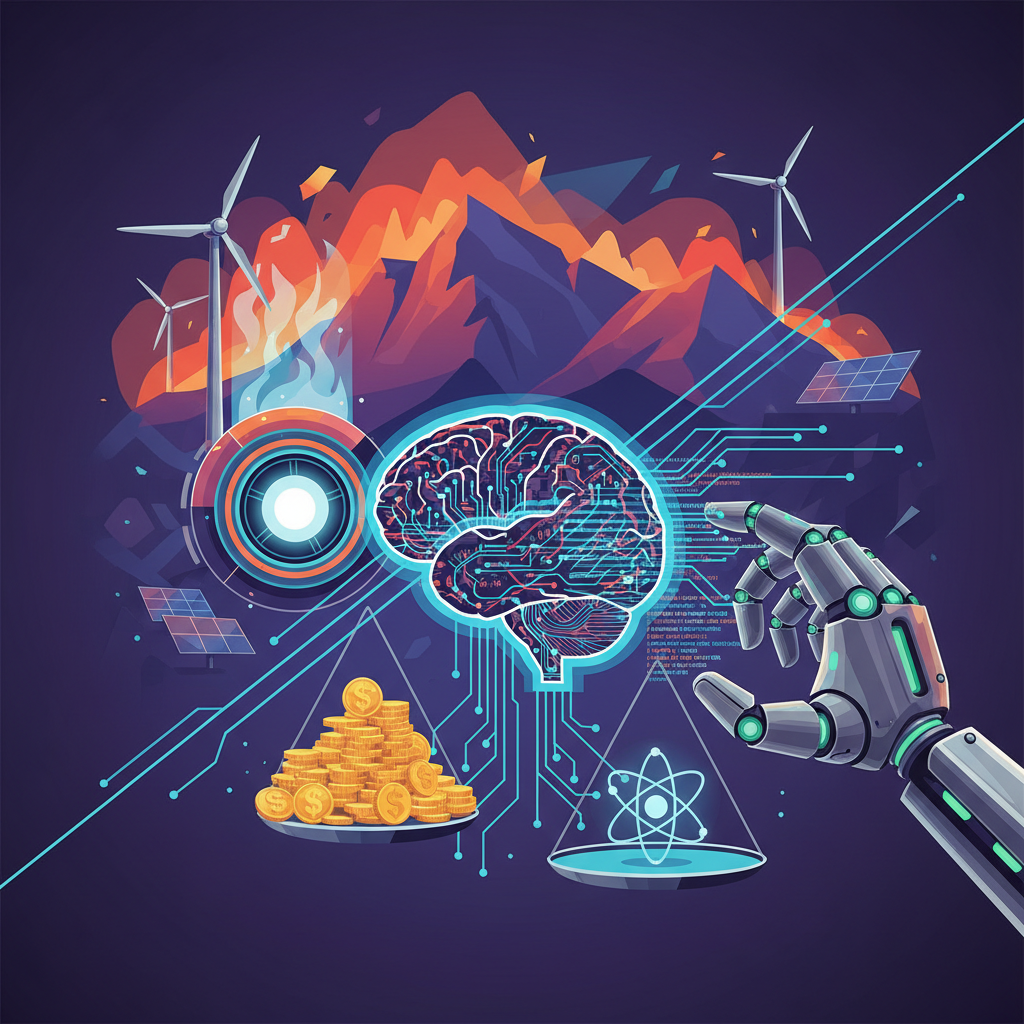
Societal implications for places like Sweden are also significant. While not as isolated as Antarctica, our universities and public research bodies are feeling the pinch. Companies like OpenAI, Google DeepMind, and Anthropic are aggressively recruiting, offering compensation packages that public sector institutions simply cannot match. This creates a feedback loop: fewer top graduates choose academic paths, leading to a decline in future research and teaching capacity. Our ability to independently assess and regulate AI, to develop our own ethical frameworks, becomes compromised if the best minds are all working for a handful of private giants.
Professor Lars Johansson, head of the Swedish Polar Research Secretariat, voiced his concerns to me during a video call from Stockholm. "We are seeing a noticeable uptick in inquiries from our early-career scientists, asking about opportunities outside academia, specifically in AI," he noted. "While we celebrate their success, it means we are losing critical expertise that could be applied to climate modeling, environmental monitoring, and sustainable development. It is a challenge for national sovereignty in research, truly." His words resonated deeply, echoing Lena's quiet resignation.
So, what can we do? The solution is not simple, as the allure of innovation and wealth is potent. However, there are steps we can take. Firstly, we must highlight the intrinsic rewards of foundational research. The satisfaction of contributing to humanity's understanding of our planet, the sheer intellectual challenge of unraveling nature's mysteries, these are powerful motivators that money cannot buy. We need to tell these stories more effectively, to celebrate the quiet heroes of science. Secondly, governments and philanthropic organizations must increase funding for public research, creating more competitive environments and offering better career progression paths. Perhaps even establishing specialized AI research centers within public universities, equipped with resources that can rival, if not match, the private sector. Lastly, fostering stronger collaborations between academia and industry, where researchers can contribute to cutting-edge AI without fully abandoning their public sector roles, could offer a middle ground.
For Lena, the decision is still weighing heavily. She looks out at the endless expanse of ice, a landscape that holds so many secrets, so much data waiting to be understood. The AI she builds here could help predict the future of our planet. The AI she could build there, for a tech giant, might predict consumer behavior or generate synthetic media. The choice, for many, is becoming increasingly stark. As I watch her, I am reminded that the future of AI is not just about algorithms and processing power, it is about the choices made by brilliant individuals, and the ecosystems that either nurture or lose them. The battle for talent is not just economic, it is deeply human, and its outcome will shape not only the digital world but also the very real one we inhabit, from the bustling streets of Stockholm to the serene, stark beauty of Antarctica. For more insights on the broader impacts of AI on society, you might find this article on AI ethics interesting. The debate is global, and its implications are far-reaching.