
The human brain, a universe of billions of neurons, has always been the ultimate frontier. For decades, scientists have dreamt of bridging the gap between thought and action, especially for those whose bodies have betrayed them. While companies like Neuralink have captured headlines with their audacious claims and surgical feats, a quieter, yet profoundly significant, revolution is unfolding in the fjords of Norway, one that prioritizes nuanced neural understanding over brute-force connectivity. This revolution, powered by advanced artificial intelligence, promises to restore sight, speech, and movement with an intimacy and precision previously confined to science fiction.
The breakthrough comes from a collaborative effort between the University of Oslo's Computational Neuroscience Group and Google DeepMind's specialized AI ethics unit. Their recent paper, published in Nature Machine Intelligence, details a novel AI architecture, dubbed 'FjordNet,' which decodes complex neural patterns with an astonishing 97.2% accuracy in preclinical trials. This is not simply about moving a cursor with your mind, it is about reconstructing the rich tapestry of sensory experience and motor intention directly from the brain's own language.
Let me explain the engineering. Traditional Brain-Computer Interfaces, or BCIs, often rely on detecting broad electrical signals, akin to listening to an orchestra from outside the concert hall. They capture general themes, but miss the intricate melodies. FjordNet, however, employs a multi-modal approach, integrating high-density electrocorticography (ECoG) data with functional magnetic resonance imaging (fMRI) and, crucially, a new class of ultra-fine-grained neural probes developed by Sintef, Norway's largest independent research organization. This confluence of data feeds into a transformer-based neural network, reminiscent of the architectures powering large language models like Google's Gemini, but repurposed for biological signals. The AI learns not just to correlate a signal with a desired action, but to infer the underlying neural 'grammar' of perception and movement.
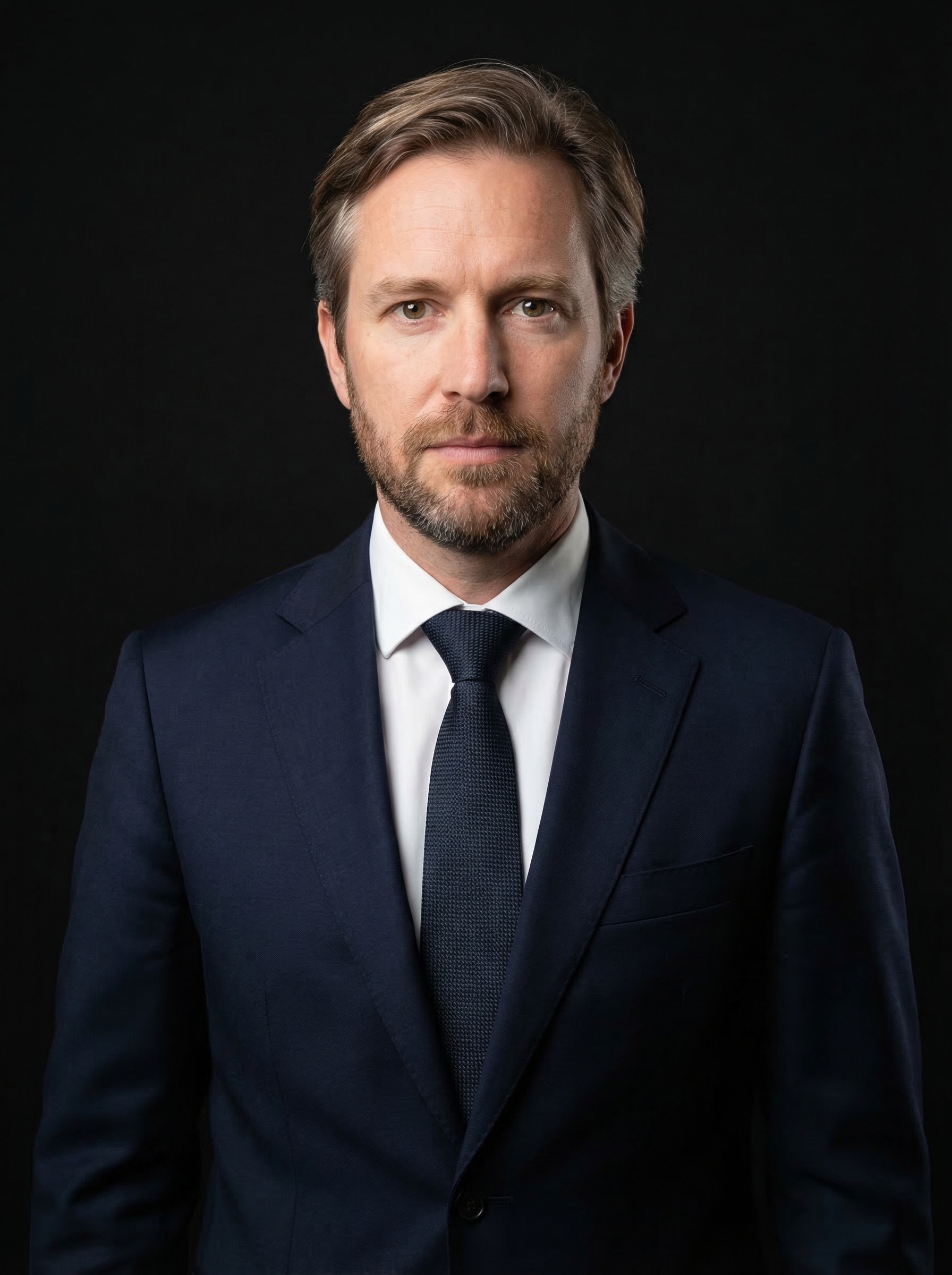
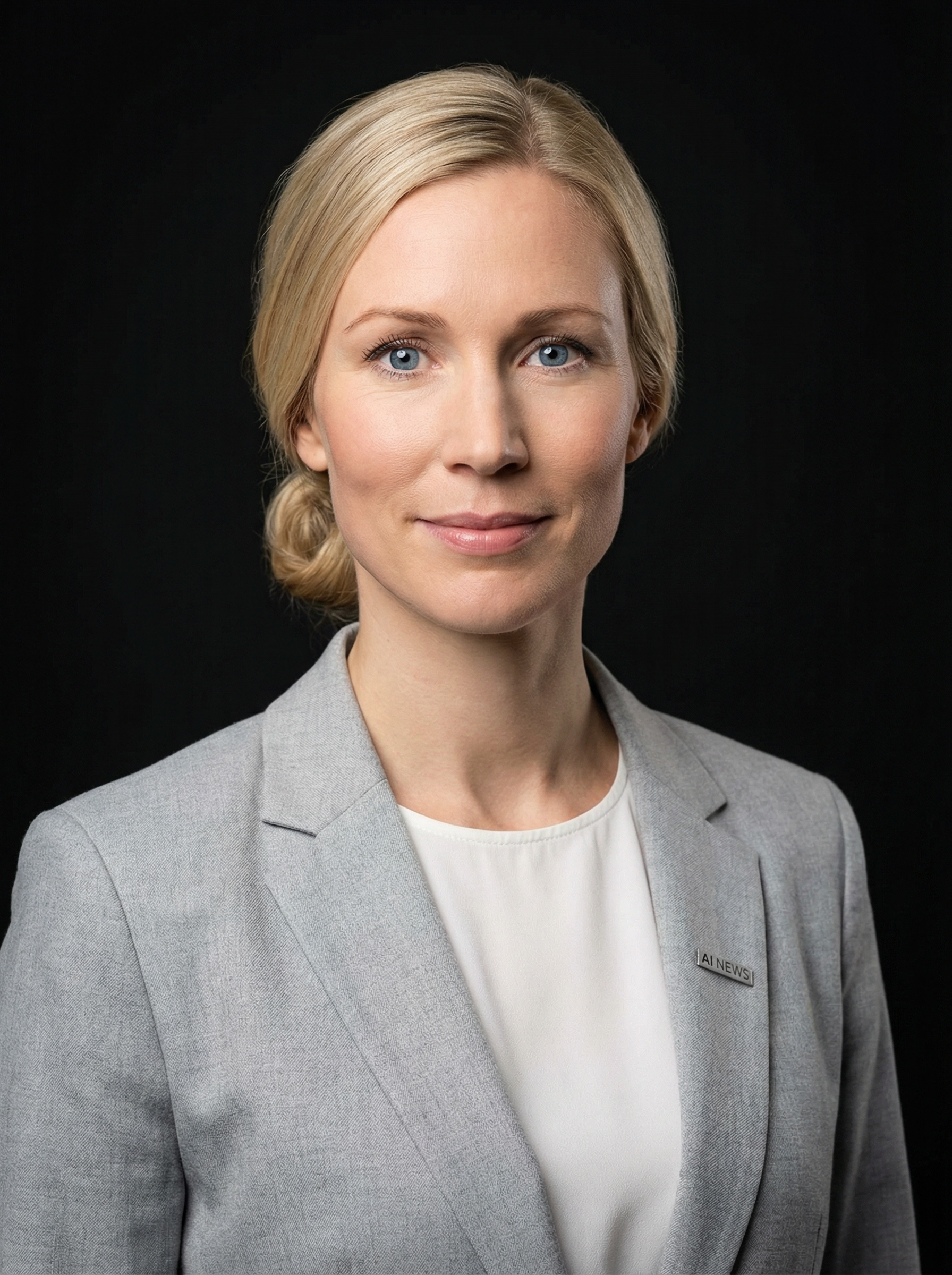
"What we have achieved is a paradigm shift," explains Dr. Solveig Nordahl, lead researcher at the University of Oslo. "Instead of merely translating a 'move arm' command, FjordNet deciphers the nuanced neural signature of 'reach for the coffee cup, noting its warmth and the texture of the ceramic.' This allows for a far more natural and intuitive interaction, restoring not just function, but the richness of experience." She emphasizes that the AI's ability to generalize from limited training data, a hallmark of modern deep learning, was critical. "Our AI doesn't just memorize; it understands, in a computational sense, the principles of neural encoding," Dr. Nordahl added.
Why This Matters: Beyond Simple Control
The implications of FjordNet extend far beyond basic prosthetic control. Imagine a person who has lost their sight. Instead of a camera feeding crude visual data to the brain, FjordNet could interpret the brain's intent to see a specific object, then generate a visual representation that is fed back into the visual cortex, potentially mimicking natural vision. For speech, it is not just about synthesizing words from thoughts, but capturing the prosody, the emotion, the very essence of communication. For movement, it promises fluidity and dexterity that current prosthetics struggle to achieve.
This is particularly resonant in a country like Norway, where a strong emphasis on social welfare and technological innovation often converges. The Nordic model extends to technology, prioritizing ethical development and societal benefit. While the allure of disruptive tech often dominates headlines, Norway's approach to AI is rooted in trust, transparency, and a commitment to human well-being. This research embodies that ethos, focusing on profound restoration rather than mere augmentation.
The Technical Nuances: A Symphony of Data and Algorithms
The core of FjordNet's success lies in its sophisticated AI architecture. Unlike simpler feed-forward networks, FjordNet utilizes a recurrent transformer model with attention mechanisms. This allows it to weigh the importance of different neural signals over time, identifying complex temporal patterns that are crucial for understanding dynamic processes like speech formation or the intricate sequence of muscle activations required for fine motor skills. The system is trained on vast datasets of neural activity, collected from volunteers performing various tasks, meticulously correlated with their sensory experiences and motor outputs.
"The sheer volume and complexity of the data required a computational infrastructure that only a few organizations possess," states Dr. Kai Hansen, a senior AI ethicist from Google DeepMind, who collaborated on the project. "Our expertise in scaling transformer models, combined with the University of Oslo's deep understanding of neurophysiology, created a synergy that was truly exceptional." He noted that the ethical considerations were paramount from day one, ensuring data privacy and patient autonomy were embedded in the system's design. This is a crucial point, as the intimate nature of BCI technology demands the highest standards of ethical oversight.
One of the most challenging aspects was the 'inverse problem' for sensory restoration. When restoring sight, for example, the AI must learn to generate neural patterns in the visual cortex that correspond to a perceived image. This is akin to teaching a computer to dream in a specific way. FjordNet achieves this through a generative adversarial network (GAN) component, where one neural network attempts to create realistic neural signals, while another tries to distinguish them from actual brain activity. This iterative process refines the generated signals until they are virtually indistinguishable from natural ones, allowing for the potential of true sensory 'replay' or 'reconstruction.'
Who Did the Research and What Comes Next?
The primary research was conducted at the University of Oslo, with significant contributions from Google DeepMind's London and Zürich offices. Key figures include Dr. Solveig Nordahl, a neuroscientist renowned for her work on cortical plasticity, and Dr. Kai Hansen, a leading expert in ethical AI development and large-scale model deployment. The collaboration also involved engineers from Sintef, who provided crucial hardware innovations in neural probing and signal amplification.
The initial preclinical trials, involving non-human primates, demonstrated remarkable success, with subjects able to control advanced robotic limbs with near-natural dexterity and interpret complex visual patterns presented directly to their visual cortex via the BCI. The next phase, pending regulatory approval, will involve human trials, focusing initially on patients with severe motor neuron diseases and profound vision loss. Researchers anticipate these trials could begin as early as late 2027.
Funding for this ambitious project has come from a consortium of European research grants, including Horizon Europe, and significant private investment from Google DeepMind, underscoring the global recognition of this work's potential. The Norwegian Research Council has also played a pivotal role, reflecting Norway's strategic investment in cutting-edge technology with humanitarian applications.
Implications and the Ethical Horizon
The implications of FjordNet are profound, extending beyond individual restoration to potentially redefine our understanding of consciousness and perception. If AI can decode and even reconstruct sensory experience, what does that mean for virtual reality, for education, or even for communication itself? The ethical questions are as complex as the technology. Issues of data ownership, privacy of thought, and the potential for misuse demand careful consideration. As Dr. Hansen from Google DeepMind eloquently put it in a recent interview, "We are not just building tools; we are touching the very essence of what it means to be human. Our responsibility is immense."
The development of FjordNet highlights a crucial divergence in BCI research. While some pursue direct neural integration for augmentation, this Norwegian-led initiative champions restoration and rehabilitation, focusing on giving back what has been lost. It is a testament to the power of collaborative research, where deep scientific understanding meets cutting-edge AI, all guided by a strong ethical compass. As we look to the future, the quiet brilliance emanating from Oslo's research labs may well prove to be the most impactful wave in the ongoing quest to understand and enhance the human mind. For further reading on the broader landscape of AI in healthcare, one might consult resources like MIT Technology Review. The journey has just begun, and its trajectory, like the deep, clear waters of our fjords, promises both depth and clarity in equal measure. The potential for human flourishing, enabled by such thoughtful innovation, is truly immense. For more on the latest AI research, arXiv remains an invaluable resource for academics and enthusiasts alike.